Rosebank: Life on the oil field at the centre of a political storm
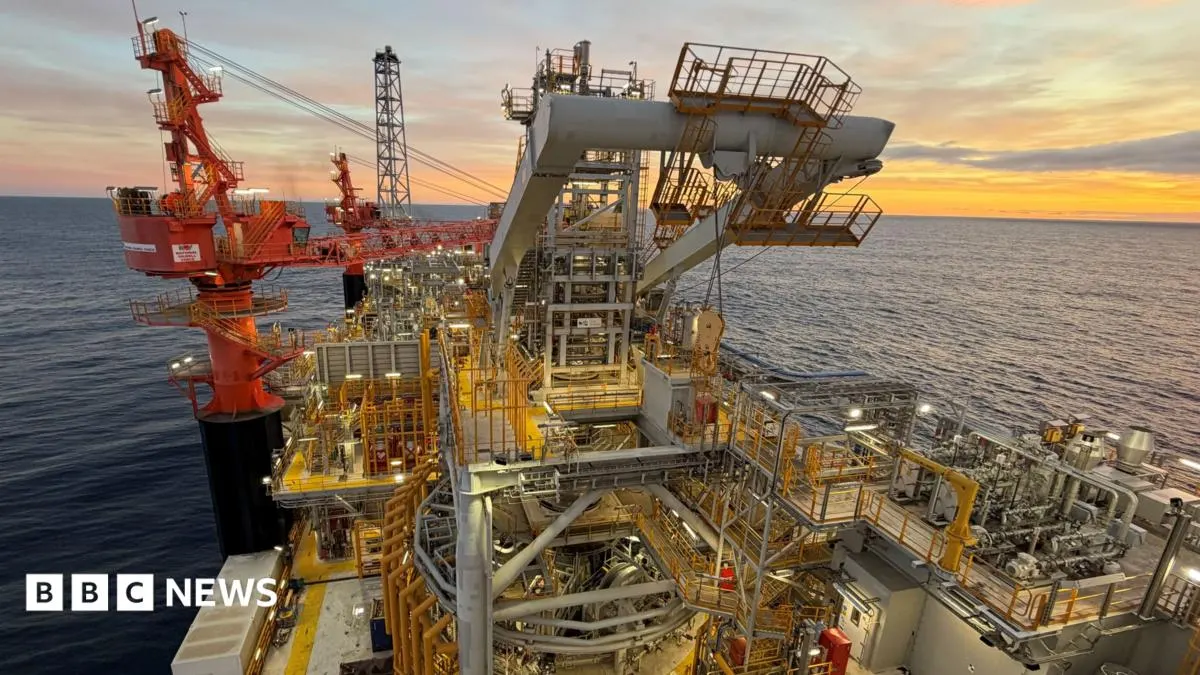
Rosebank is awaiting a UK government decision on whether it can begin production, putting the field at the centre of debate over climate change, energy policy and the economy. The article describes a visit to the offshore vessel where workers live and work, offering a glimpse of conditions at the site as well as the project’s political stakes.
The field lies 80 miles north-west of Shetland and uses a floating production, storage and offloading vessel, the Petrojarl Rosebank, rather than a fixed platform. Some 122 people are on board, including workers who spend two weeks offshore followed by three weeks’ leave; they describe good facilities and food, while noting that winter swells can be severe. Rosebank is larger than Jackdaw, whose gas production had just received government consent, and is expected to produce higher greenhouse gas emissions.
In short
- Rosebank awaits a decision on production.
- The field is larger than Jackdaw and would emit more greenhouse gases.
- Its offshore vessel houses 122 workers in demanding conditions.
Steelman: both sides, in good faith
The strongest fair case each way — we don't pick a winner.
The case for
Supporters argue that Rosebank could strengthen UK energy security, provide tax revenues and sustain skilled jobs, while domestic production may reduce reliance on imports during the transition to lower-carbon energy. They may also contend that oil demand will not disappear immediately, so producing some of it in the UK could bring economic benefits under stronger domestic oversight.
The case against
Opponents argue that approving a large new oil field would add emissions and lock in fossil-fuel infrastructure when climate goals require a rapid shift to cleaner energy. They may question whether Rosebank would materially improve energy security, since oil is traded internationally, and argue that investment and jobs should instead move towards low-carbon industries.
Explained simply
Rosebank is an undeveloped oil field in the North Sea, about 80 miles north-west of Shetland. It is designed to use a floating vessel to produce and store oil, with workers living on board in shifts.
The project is backed by energy companies, while the UK government must decide whether it can go ahead. Its future matters because it raises questions about the country’s energy supply, jobs and economy, as well as the climate impact of producing and burning more oil.