Science news and discussion on TalkFuse.
RSPB buys ‘magical’ 96-hectare landscape to reconnect habitats
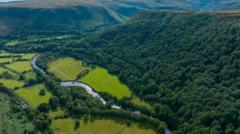
The RSPB has bought a 96-hectare upland area known as Gallt-y-bere in Carmarthenshire, describing it as the "vital missing link" between two separated parts of its Gwenffrwd-Dinas nature reserve in the Elenydd. Situated by the banks of the River Tywi, the purchase allows conservationists to reconnect a fragmented landscape for the first time in 60 years, enabling wildlife to move across the different areas and helping to build stronger, more diverse and sustainable ecosystems.
The site is home to internationally important habitats, including rare Atlantic oak woodlands (also known as Celtic rainforests), ffridd (upland fringe), ancient woodland and peat bogs, and supports species such as pied flycatchers, hen harriers, cuckoos, wood warblers, pine martens and whinchats. The acquisition was funded through a philanthropic loan and donations from thousands of people responding to a fundraising appeal, and the enlarged reserve is now big enough to support breeding hen harriers. Surveys over the summer, funded by Natural Resources Wales, will map the habitats and species present to inform future management, while the RSPB plans to work with local farming tenants and communities to combine nature recovery with sustainable farming.
In short
- RSPB buys 96-hectare Gallt-y-bere to link a fragmented Carmarthenshire reserve.
- Reconnects the landscape for the first time in 60 years.
- Protects rare Celtic rainforest, oak woodland and threatened bird species.
Explained simply
The Royal Society for the Protection of Birds (RSPB) is Britain's largest wildlife conservation charity. It has just purchased a 96-hectare area of upland landscape in Carmarthenshire, Wales, to reconnect two separated parts of one of its existing nature reserves.
Over decades, habitat loss has split many natural landscapes into isolated patches, making it much harder for wildlife to survive and maintain healthy populations. This purchase allows the RSPB to reunite a fragmented reserve for the first time in 60 years, creating a continuous habitat where animals and plants can move freely between different areas and build stronger populations.
The site contains rare woodlands, ancient forests, peat bogs and moorland. It is home to protected species including hen harriers, cuckoos, wood warblers and pine martens that depend on interconnected landscapes to thrive and breed successfully.