Drought reveals submerged Derbyshire villages as Ladybower Reservoir falls to 32 per cent
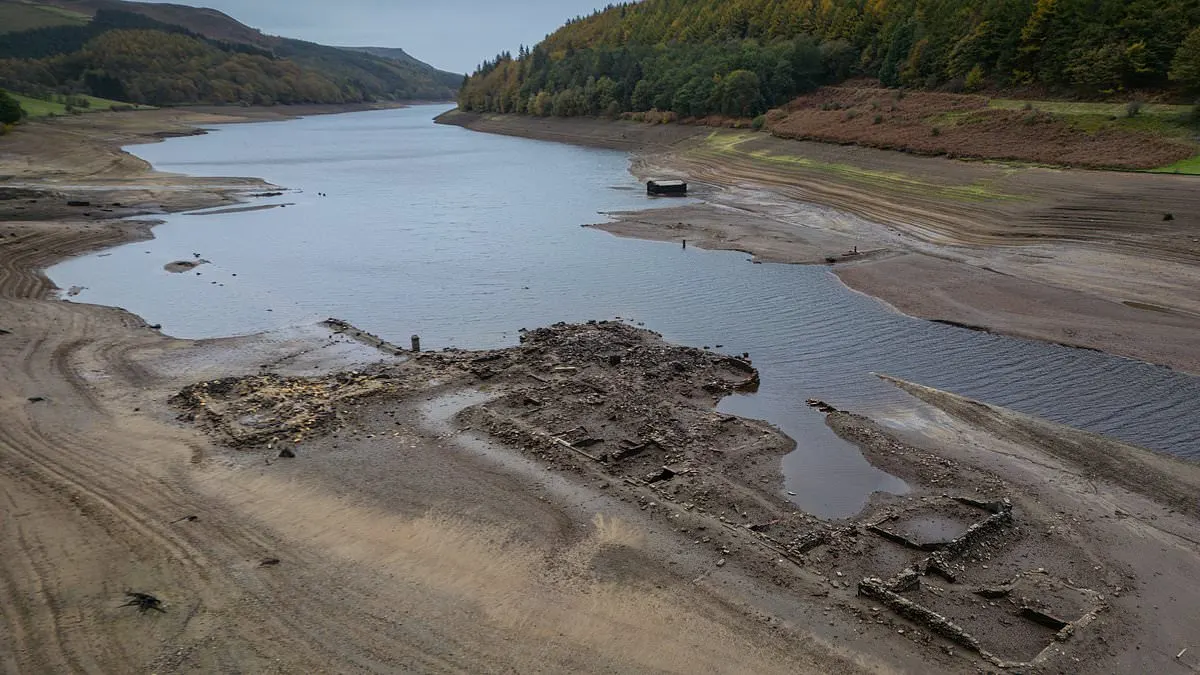
The ruins of Derwent and Ashopton have reappeared at Ladybower Reservoir in Derbyshire after drought lowered water levels to 32 per cent of capacity. The villages were flooded between 1935 and 1943 to create a reservoir that supplies water to Derby, Sheffield, Nottingham and Leicester; their exposure offers a rare view of places lost beneath the water.
Aerial images show streets, stonework and the outlines of dozens of limestone cottages that once housed more than 100 people. The discovery comes amid severe water shortages in parts of England: Wimbleball Reservoir is at 13 per cent and Ardingly at 17 per cent, while officials have considered scenarios in which some reservoirs run dry.
In short
- Drought has exposed the ruins of two flooded Derbyshire villages.
- Ladybower Reservoir is at 32 per cent capacity.
- Other English reservoirs remain critically low.
Explained simply
Ladybower Reservoir is part of a group of reservoirs in the Peak District, built to store water for nearby towns and cities. To make way for it, the villages of Derwent and Ashopton were flooded over several years, and their residents had to leave.
The villages once had homes, streets and other buildings, and their remains are usually hidden beneath the reservoir. Water levels can fall during dry periods, exposing parts of the old settlements. The reservoir is one source of water for Derby, Sheffield, Nottingham and Leicester, so its level also reflects pressure on supplies across the region.
Art Culture Entertainment Music World
Read the full article at the source →
Originally published by Daily Mail as “Ruins of two lost villages that were abandoned 80 years ago unearthed at drought-hit reservoirs”.