Rule Japanica: America and Japan are building the alliance China fears
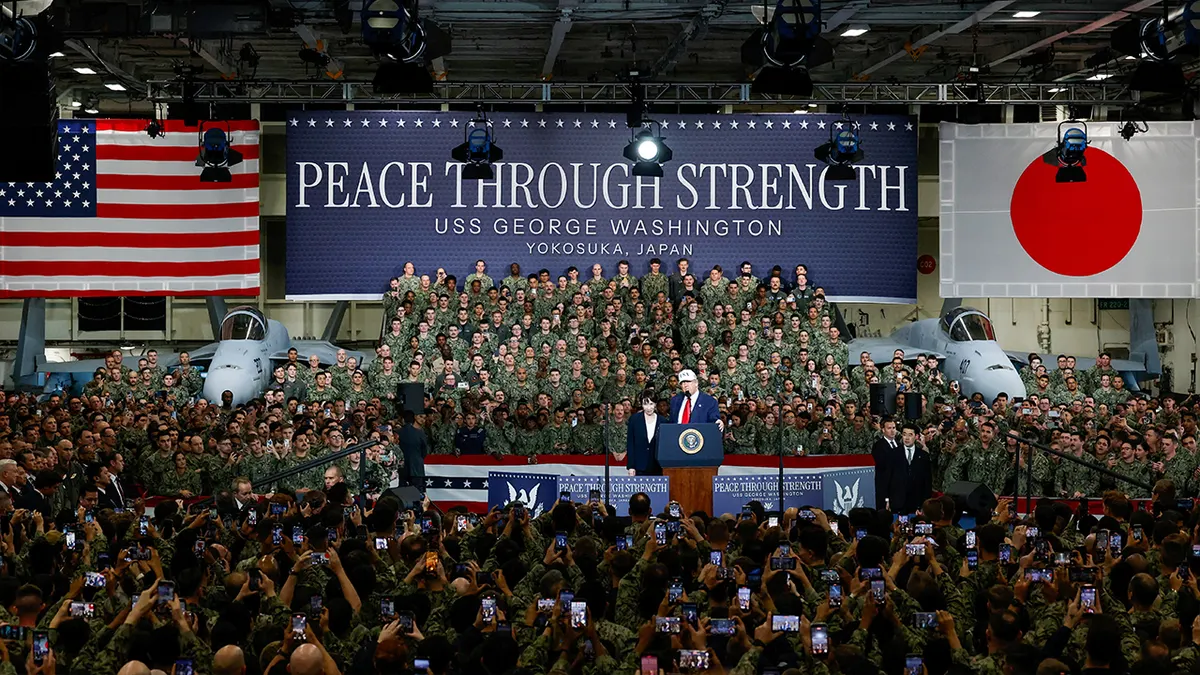
This opinion piece argues that Japan, rather than the United Kingdom, has become the United States' most crucial ally, particularly in the Indo-Pacific region. The author contends that Tokyo and Washington are now cooperating more closely and urgently than any other alliance globally, driven by shared concerns over Chinese and Russian assertiveness and the need to secure reliable supply chains. This matters because it signals a potential reordering of America's foreign policy priorities, with Japan positioned as a frontline partner against Beijing's regional ambitions.
The piece frames Japan as having made an "existential bet" on the United States, aligning its strategic interests closely with Washington's amid rising tensions with China. It suggests that, while the US-UK "special relationship" remains valued for historical and cultural reasons, policymakers privately recognise Japan's alliance as now of greater practical importance in countering threats in the world's most contested strategic region.
In short
- Opinion piece calls Japan America's key Indo-Pacific ally.
- Cooperation cited as response to Chinese and Russian assertiveness.
- Author says Japan now rivals the UK as top US ally.
Steelman: both sides, in good faith
The strongest fair case each way — we don't pick a winner.
The case for
Japan's geographic position in the Indo-Pacific, where competition with China will define the coming decades, makes it an essential partner for securing Western interests in the world's most economically vital region. Japan's technological prowess in semiconductors, recent strategic reorientation away from pacifism, and alignment with Washington on deterring Chinese assertiveness create genuine shared interests that justify prioritising this alliance as the most consequential for contemporary US security needs in its most contested strategic theatre.
The case against
The United States has enduring global interests that depend on multiple critical partnerships, and the UK's role as a permanent Security Council member, NATO anchor, and intelligence partner remains foundational to American security architecture. Rather than a binary hierarchy where Japan's importance implies the UK's decline, pragmatic statecraft involves cultivating all essential alliances according to their distinct but complementary roles; portraying them as competing for primacy oversimplifies how modern powers must operate across multiple theatres simultaneously.
Explained simply
Japan and the United States have been formal security allies since the early 1950s through military and defence agreements that continue to shape their relationship. Both countries host joint military facilities, share intelligence, and coordinate closely on security matters in the Indo-Pacific region, which stretches across East Asia and Southeast Asia.
The strategic importance of this partnership has grown as tensions have increased between the United States and China over trade, technology, and military influence in Asia. Japan sits on China's eastern border and hosts significant American military assets, giving it a direct stake in regional stability and in managing relations with China and Russia.
The Indo-Pacific region is vital to global commerce, containing major shipping lanes and critical supply chains for semiconductors, energy, and other essential goods. For Japan, the alliance with America provides security reassurance; for the United States, Japan offers military access, geographic advantage, and an economically advanced democratic partner in a strategically contested region.