Russell T. Davies Confirms Why ‘Tip Toe’ Had To End With That Shocking Moment
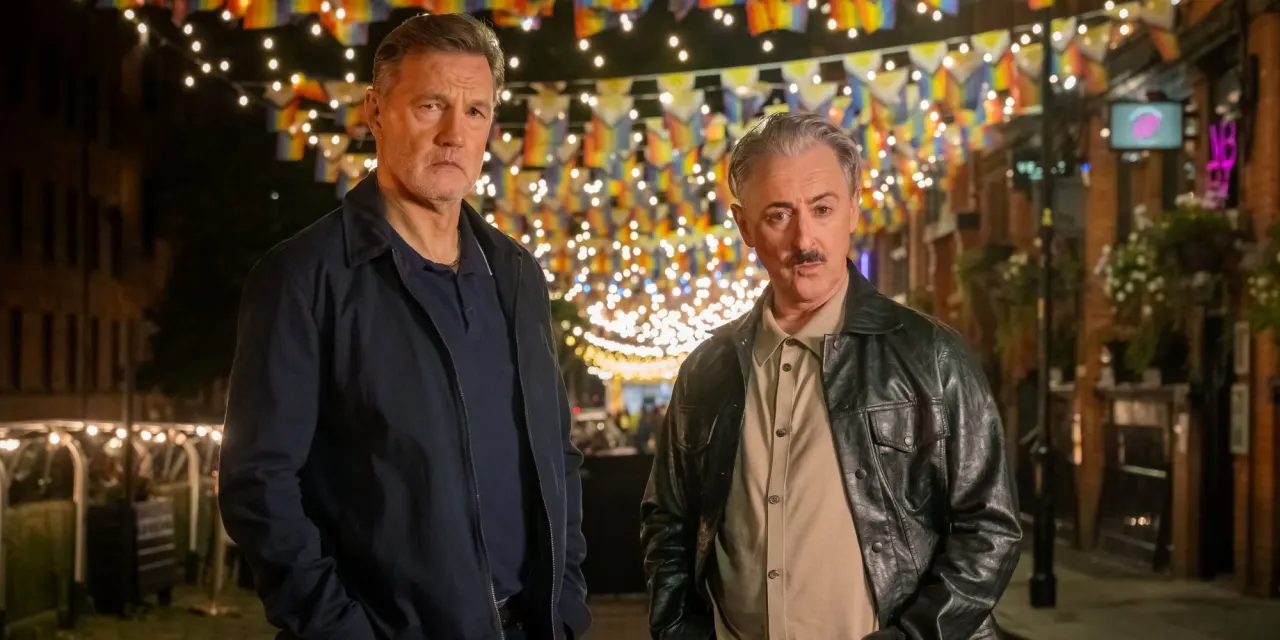
Russell T. Davies says he always intended *Tip Toe* to reveal Leo’s fate at the start, then revisit events from different angles as the story approaches it. He believes the opening prepares viewers for the tragedy and gives the series a persistent sense of unease, even in lighter scenes.
Davies said the approach was debated with producer Nicola Shindler and the channel, but the discussion ended after they saw the first edit. Without the opening, he felt the series could seem like a light domestic comedy before taking a sudden, unfair turn. The series follows neighbours Leo, a gay bar owner, and Clive, a family man whose online misinformation fuels suspicion and conflict.
In short
- Davies planned Leo’s fate reveal from the outset.
- The opening gives the series a warning tone.
- The first edit settled debate over the framing.
Steelman: both sides, in good faith
The strongest fair case each way — we don't pick a winner.
The case for
Revealing Leo’s fate at the start can prepare viewers for the tragedy and let the story explore how suspicion and misinformation build towards it. It also gives lighter scenes an underlying unease, while avoiding a sudden shift from domestic comedy to catastrophe that might feel arbitrary or unfair.
The case against
Withholding Leo’s fate could let viewers discover the tragedy alongside the characters, preserving suspense and making the consequences of misinformation unfold more directly. Showing the outcome first may reduce uncertainty about what will happen and risk making the characters’ choices feel like steps towards a foregone conclusion.
Explained simply
Tip Toe centres on Leo, a gay bar owner, and Clive, a family man who lives nearby. Their relationship is affected by misinformation Clive encounters online, which feeds suspicion and conflict between the neighbours.
The series was created by Russell T. Davies, a writer known for television dramas, and produced by Nicola Shindler. Its story moves between different viewpoints, returning to earlier events to show how people understand them differently.