Russian anti-war politician says he has fled the country
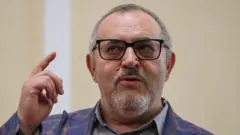
Boris Nadezhdin, the Russian anti-war politician who once tried to challenge Vladimir Putin for the presidency, says he has fled Russia after being designated a "foreign agent" by the justice ministry. He announced the news in a video filmed in front of the Eiffel Tower in Paris, saying he was "alive and free" but no longer in Russia. The development marks a further tightening of the space for anti-war dissent in Russia, as one of the few figures who had attempted to run against Putin on a peace platform is now unable to operate within the country at all.
Nadezhdin, 63, rose to prominence in early 2024 when he sought to stand for president on a manifesto calling for an end to the war in Ukraine, but was barred after officials ruled that more than 15% of his supporting signatures were flawed. He was labelled a "foreign agent" last month after announcing plans to run in September's Duma elections, accused of spreading false information and encouraging unauthorised rallies, and was also charged with "displaying extremist symbols" over a brief image of the late opposition leader Alexei Navalny in a reposted video. He told BBC Russian last week that his prospects were "vague" after abandoning his parliamentary campaign, before posting the Paris video on Monday saying he needed to "figure out what to do next".
In short
- Anti-war politician Boris Nadezhdin says he has fled Russia to Paris.
- He was declared a "foreign agent" after seeking to run in Duma elections.
- He previously tried, unsuccessfully, to challenge Putin in 2024's presidential race.
Steelman: both sides, in good faith
The strongest fair case each way — we don't pick a winner.
The case for
During active military conflict, governments may reasonably restrict political activities they believe threaten national stability or security, including the spread of what they consider false information and unauthorised demonstrations. The designation of foreign agents reflects legitimate concerns about destabilisation during a national security crisis, enforced through existing legal frameworks.
The case against
This case exemplifies how wartime security rhetoric can be deployed to suppress legitimate anti-war political dissent, as a candidate seeking peaceful electoral office faces increasingly questionable charges, including extremism allegations based on a fleeting image of a deceased opposition figure. The systematic removal of anti-war voices represents authoritarian suppression of fundamental democratic rights to dissent and political opposition during an ongoing conflict.
Explained simply
Boris Nadezhdin is a Russian politician who called for an end to Russia’s war in Ukraine. In 2024, he sought to run against Vladimir Putin for president, but election officials rejected his bid, saying too many of his supporters’ signatures were invalid.
Russia’s justice ministry uses the label “foreign agent” for people it says are influenced by or connected to foreign sources; those labelled face legal requirements and restrictions. Nadezhdin’s case comes amid wider limits on public opposition to the war, and the treatment of anti-war figures is closely watched as Russia’s parliament and political system operate under those restrictions.