Russian drones found near vital European offshore gas site, get blown up
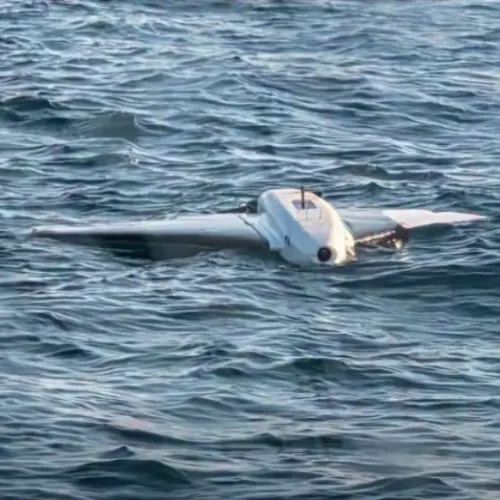
Romanian army divers used explosives to destroy two Russian-made drones found drifting in the Black Sea near the Neptun Deep site, a major offshore gas project that will make Romania the European Union's largest gas producer. Defence Minister Radu Miruță confirmed the incident in a video posted on 11 August, and said Ukraine had verified the drones did not belong to its forces. The find adds to a growing list of incursions and stray Russian weaponry affecting NATO member Romania since the full-scale invasion of Ukraine began in 2022.
The two Gerbera-type drones, a Russian-designed model typically used for one-way strikes, reconnaissance or as decoys, were spotted alongside debris by a ship working near Neptun Deep before a Coast Guard vessel and army personnel recovered and disposed of them. It remains unclear whether the drones carried explosives or why they ended up there. Romania has previously suffered damage from stray Russian drones, including a May 2026 strike on an apartment building that injured two people and forced 70 residents to evacuate. Neptun Deep, due to begin production in 2027, is intended to double Romania's gas output and supply countries including Germany and Moldova, making the area strategically sensitive as Europe reduces reliance on Russian energy.
In short
- Romania blew up two Russian drones near its Neptun Deep gas project
- Ukraine confirmed the drones were not its own
- Part of a wider pattern of Russian drone incursions into Romania
Steelman: both sides, in good faith
The strongest fair case each way — we don't pick a winner.
The case for
Russia's demonstrated pattern of military equipment intruding into Romanian territory, combined with its strategic interest in disrupting European energy independence, makes the discovery of drones near Europe's soon-to-be largest gas producer cause for legitimate concern. Romania's decision to destroy potential threats near critical infrastructure serves essential security interests, particularly given that previous Russian weapons have caused civilian casualties on Romanian soil.
The case against
Without evidence that these drones were deliberately targeted at the facility or armed, attributing malicious intent may overreach. The drones may represent stray equipment from Russia's broader operations against Ukraine, having drifted due to mechanical failure or weather rather than purposeful deployment. Destroying them without clearer information about their origin or payload risks treating accidental incursion as deliberate attack.
Explained simply
Neptun Deep is a large natural gas project in the Black Sea, off Romania’s coast. Production is due to begin in 2027, and the project is expected to roughly double Romania’s gas output, with supplies intended for countries including Germany and Moldova.
Romania is a member of NATO and the European Union, and shares a border with Ukraine. Since Russia’s full-scale invasion of Ukraine in 2022, Russian weapons and debris have sometimes crossed into or drifted towards Romanian territory.
The drones were Russian-designed Gerbera models, which can be used for strikes, reconnaissance or as decoys. It is not known why they were near the gas site or whether they carried explosives; the area matters because the project is expected to contribute to European efforts to reduce reliance on Russian gas.