Russian missile uses Nvidia AI chip to help target Ukraine
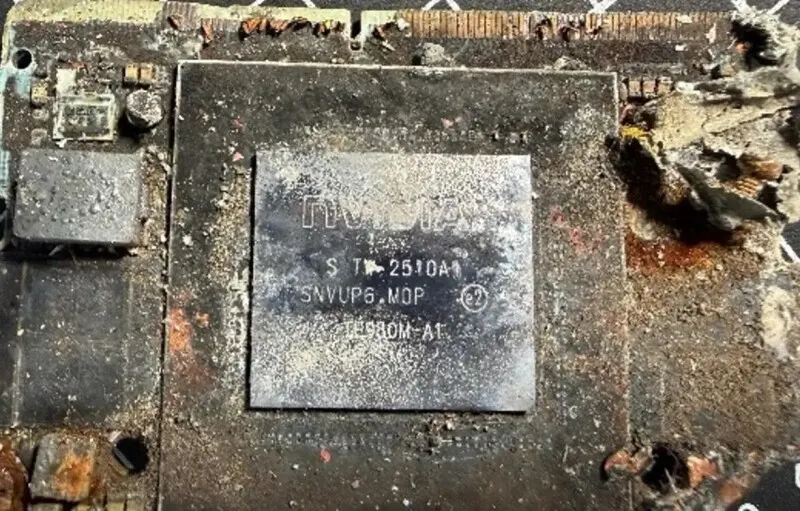
Ukrainian military intelligence says it found an Nvidia Jetson Orin AI computing module in the wreckage of a Russian S-71 Monochrome cruise missile. The discovery suggests the missile may use onboard artificial intelligence and optical sensors to identify or engage targets autonomously, raising fresh concerns that export controls are failing to prevent foreign technology being used in Russian weapons.
The recovered component was reportedly a Jetson Orin NX 16GB unit, released in early 2023, after Nvidia had ended direct business in Russia following its 2022 invasion of Ukraine. Nvidia said the consumer-grade modules are not intended for military use and may be obtainable through second-hand reseller channels, while Ukraine’s GUR said the evidence supports tighter, better-coordinated sanctions; it remains unclear how the chip reached Russia.
In short
- Ukraine found an Nvidia AI chip in a Russian cruise missile.
- The chip may support autonomous target-finding capabilities.
- Its presence highlights apparent gaps in export controls.
Steelman: both sides, in good faith
The strongest fair case each way — we don't pick a winner.
The case for
This incident demonstrates that current export controls are failing to protect critical security interests. Commercial-grade Nvidia chips are now being weaponised by Russia in advanced cruise missiles, proving that secondary market restrictions and vendor assurances alone cannot prevent military application of civilian technology. The evidence supports urgent calls for stricter, internationally coordinated sanctions regimes that treat dual-use commercial AI technology more seriously and hold companies accountable for supply chain vulnerabilities.
The case against
Consumer-grade components like the Jetson Orin NX are not military-spec hardware and were never intended for weapons systems; their presence in a single damaged missile proves neither systemic sanctions failure nor commercial vendor negligence. Overextending export controls to commercial technology would stifle legitimate innovation, impose unrealistic compliance burdens on companies, and prove ineffective anyway, since adversaries will acquire components through black markets regardless. The appropriate response is targeting specific military-grade technology and addressing secondary markets, not blanket restrictions that harm civilian AI development globally.
Explained simply
Russia launched its full-scale invasion of Ukraine in 2022, and the two countries continue to fight with missiles, drones and other weapons. The S-71 Monochrome is described as a Russian cruise missile; cruise missiles fly towards targets, and some use sensors to help guide them.
Nvidia is a US technology company that makes computing chips, including modules used in artificial intelligence systems. After the invasion, it stopped doing business directly in Russia, while export controls and sanctions sought to restrict Russia’s access to some foreign technology.
The reported discovery matters because it raises questions about whether a commercial AI module could help a weapon identify targets, and how it might have reached Russia. Ukraine’s military intelligence has called for tighter coordination of sanctions, while Nvidia says the modules are not designed for military use and may circulate through second-hand sellers.