Russian strike on buses kills 33, say officials, as deadly attacks on Ukraine surge
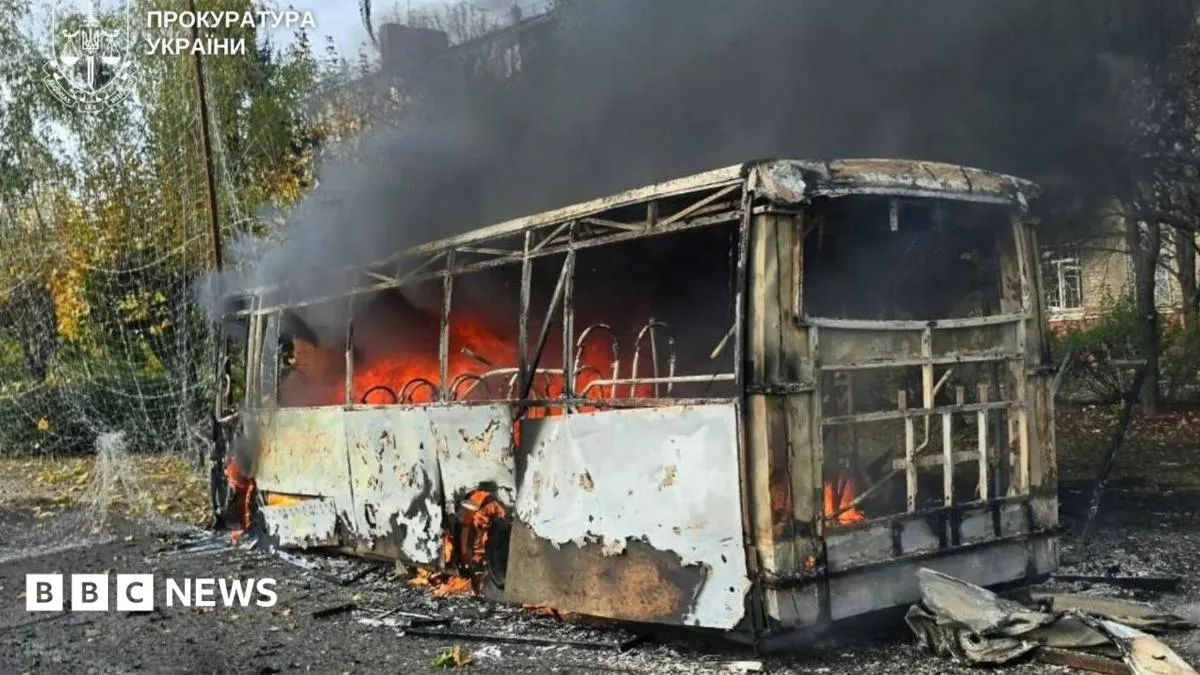
A Russian glide bomb attack on two civilian buses in the frontline city of Kramatorsk has killed 33 people and wounded 18 more, according to regional officials. The strike comes as Russia intensifies its military campaign to capture the Donbas region and represents part of a sharp escalation in attacks on Ukrainian civilians.
The attack follows a separate incident on Wednesday that killed 22 people, including five children, when a Russian missile destroyed a residential block in Pryluky. Ukraine has experienced a dramatic surge in civilian casualties this year, with the UN reporting that more civilians have been killed by August 2026 than throughout all of 2025, as Russian forces launch daily strikes on frontline cities.
- Russian glide bomb kills 33 on buses in Kramatorsk
- Civilian death toll surges sharply in 2026
- Ukraine faces daily Russian attacks on major cities
New here? Start with this
Russia and Ukraine have been engaged in armed conflict since 2022 following Russia's invasion. The war has intensified in Ukraine's eastern regions, particularly the Donbas area, where Russia is attempting to gain territorial control. These regions contain major cities and civilian populations.
Russian military operations in these areas have resulted in rising civilian casualties, with strikes hitting residential areas and civilian infrastructure. Deaths and injuries among civilians have increased significantly this year as military attacks continue in populated zones. These incidents are documented and monitored by international humanitarian organisations and the United Nations.
The concentration of fighting in eastern Ukraine means large civilian populations are exposed to ongoing military strikes. This context explains why attacks in frontline cities result in high civilian casualty tolls and generate significant international humanitarian concern.
Both sides, in good faith
The strongest fair case each way — we don't pick a winner.
The case for
Russia's sustained military strikes on civilian areas constitute violations of international humanitarian law. The documented pattern of attacks on buses, residential buildings, and other civilian infrastructure, combined with UN verification of escalating civilian casualties throughout 2026, suggests deliberate targeting or reckless indifference to civilian safety. These attacks likely constitute war crimes and demand international accountability.
The case against
In active military conflicts, particularly in contested frontline areas, civilian casualties are tragically common even when military operations target legitimate strategic and military objectives. Russia maintains its operations target military infrastructure in the Donbas, and civilian casualties represent unavoidable collateral damage rather than deliberate targeting. Casualty figures require independent verification, and responsibility for civilian safety is complex when military and civilian areas overlap. The conflict itself involves competing claims about military necessity and legitimacy.