Ryan Gosling’s Zero-G Stunts on ‘Project Hail Mary’ Broken Down by the Space Epic’s VFX Supervisors
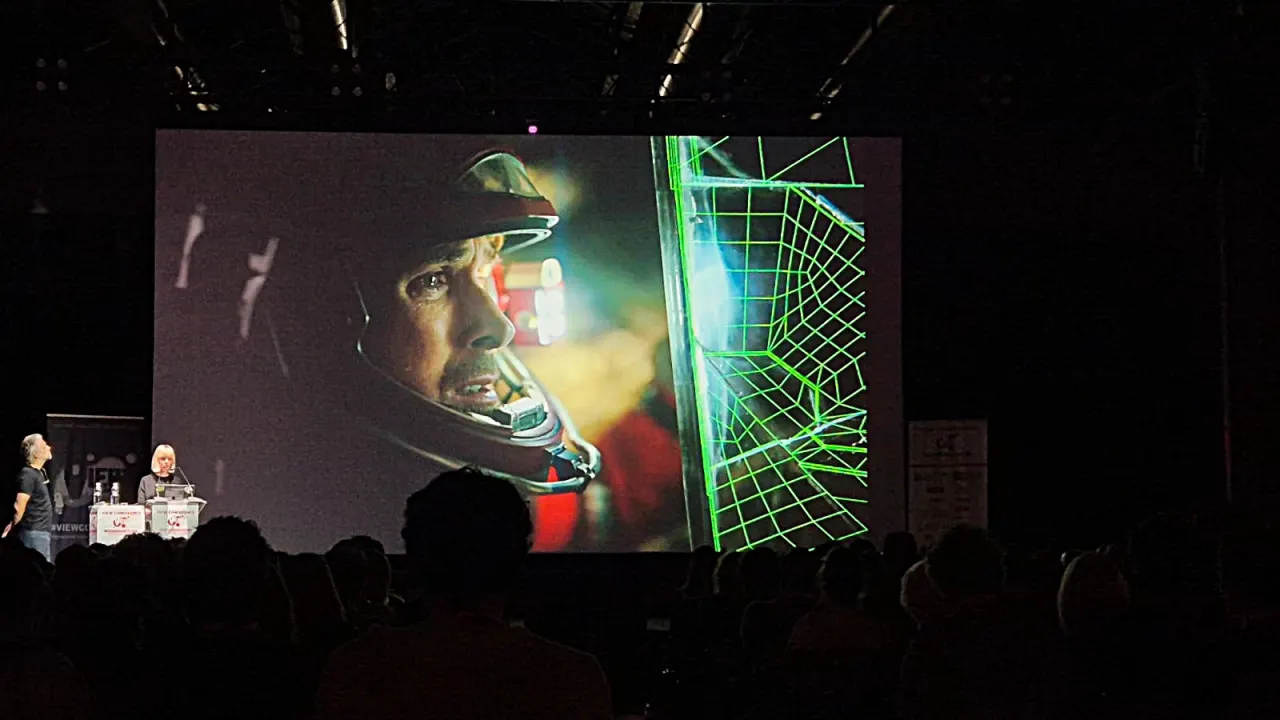
The visual effects team behind Ryan Gosling’s “Project Hail Mary” used stunt rigs, digital adjustments and practical experiments to make its space scenes feel physically convincing. At a conference in Turin, supervisors Paul Lambert and Mag Sarnowska described how they aimed to ground the film’s spectacular imagery in realistic movement, light and camera behaviour.
Gosling performed his own stunt work on wires, including a rotating harness, after the production decided its elaborate spacecraft sets could not be used on a weightlessness aircraft. Artists removed the wires, adjusted his body positions and added drifting objects to suggest floating. The team used European Space Agency Gaia star data to map the route to Tau Ceti, about 11.9 light-years away, and made stars visible according to lighting and exposure. Cinematographer Greig Fraser also used Kodak film treatments, infrared photography and ILM’s virtual-camera system to shape the film’s look and refine scenes in post-production.
- Gosling performed space scenes on wire rigs.
- VFX artists adjusted poses and added drifting objects to simulate weightlessness.
- Gaia data and camera exposure guided the film’s star fields.
Business Entertainment Europe Film Markets Space Technology World