Culture news and discussion on TalkFuse.
‘Safety, security and service’: behind the scenes with police at Arsenal v Chelsea
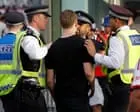
The Guardian was given behind-the-scenes access to the Metropolitan Police's operation at Arsenal's home Premier League match against Chelsea, illustrating the scale of planning involved in policing a high-profile London derby. Chief Inspector Pete Dearden, the matchday commander, oversaw an operation combining dedicated football officers, intelligence-led "spotters" and stadium stewards, reflecting a broader strategy of using targeted intelligence to reduce the number of officers needed while maintaining public safety. The fixture, graded "medium medium" risk, ultimately involved around a dozen incidents and two arrests.
The operation drew on the Met's 17 dedicated football officers, who each work full-time with one club year-round, alongside three police support units and 20 "spotters" who track fans' movements and mood beforehand, including in pubs and on public transport, to gauge the likelihood of trouble. Arsenal supplied around 1,000 stewards as first responders within the stadium, while police intervened only when necessary, including one dramatic moment when a spotter performed life-saving CPR on a supporter before kick-off. Dearden said policing football costs the Met about £23m a season, with only around 10% recovered from clubs via paid special police services, prompting efforts to shift costs such as road closures onto clubs.
In short
- Met Police detailed matchday operation for Arsenal v Chelsea derby
- Roughly a dozen incidents and two arrests recorded on the day
- Policing football costs the Met about £23m annually, mostly unrecovered
Explained simply
Policing major football fixtures in England involves detailed advance planning by forces such as the Metropolitan Police, who work with clubs to manage crowds, prevent disorder and keep supporters safe. High-profile matches like a London derby between Arsenal and Chelsea are treated as higher-risk fixtures because of past rivalry-related tension, so they typically involve a dedicated police operation alongside the club's own stewarding.
The Met has specialist football officers who work with individual clubs throughout the season, building knowledge of fan groups, along with "spotters" who assess the mood of supporters before kick-off and support units who can respond if trouble arises. Clubs also provide large numbers of stewards, who usually deal with incidents inside the stadium before police need to get involved.
This kind of operation matters because policing football carries a significant financial and staffing cost for forces, only part of which is repaid by clubs, raising ongoing questions about who should bear those costs. It also reflects a broader shift in policing strategy, using targeted intelligence to manage risk with fewer officers rather than large-scale visible deployments.