Samsung and Mousterian move ahead with floating datacenter for Texas
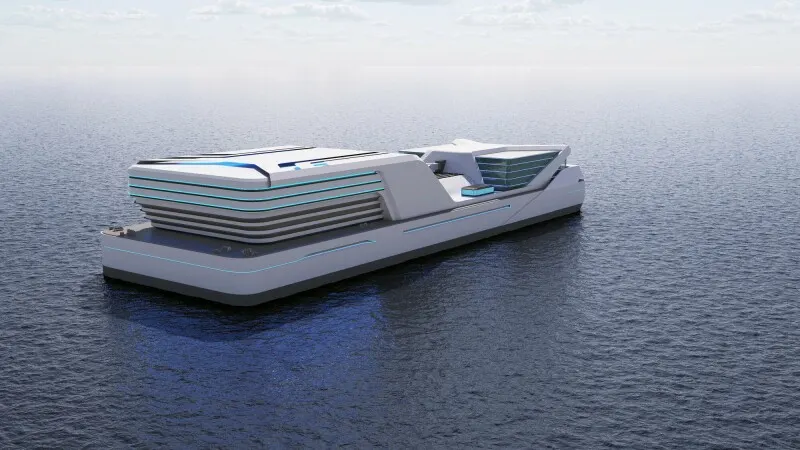
Samsung Heavy Industries and Dallas-based Mousterian Corporation have signed an engineering contract for their first floating datacentre project, to be moored beside a power plant in Houston, Texas. The deal moves the pair's partnership from concept to active design work, with the aim of showing that waterborne data halls can bring AI and hyperscale computing capacity online faster than conventional land-based sites, while avoiding competition for scarce development land.
The contract covers joint basic design, detailed engineering and production design, paving the way for a full construction agreement, with the American Bureau of Shipping expected to classify the facilities. Each floating unit is intended to deliver 50 MW of IT capacity, using non-evaporative cooling that Mousterian says draws no potable water and discharges nothing into surrounding waterways. The plan builds on Samsung's earlier tie-up with Supermicro, targeting a first operational site by 2028, but faces a potential obstacle after Texas governor Greg Abbott this week paused approvals for datacentres seeking grid connections while regulators audit a backlog of requests exceeding 474 GW.
In short
- Samsung and Mousterian sign engineering deal for a floating Texas datacentre
- Facility to moor beside a Houston power plant, delivering 50 MW capacity
- Texas grid connection freeze could delay the project's progress
Steelman: both sides, in good faith
The strongest fair case each way — we don't pick a winner.
The case for
Floating datacentres address genuine infrastructure urgency: AI demand is accelerating rapidly, yet conventional land-based facilities face years of planning delays. This innovation solves multiple constraints simultaneously—it avoids competing for scarce land, positions infrastructure near existing power sources, and Mousterian's cooling system is genuinely more sustainable than traditional options, using no potable water and causing no waterway discharge. Pragmatic deployment of superior technology allows faster delivery of critical infrastructure whilst improving environmental performance.
The case against
The governor's pause on datacentre approvals reflects reasonable caution about grid stability—Texas faces 474 GW of pending capacity requests, signalling demand is outpacing infrastructure. Floating datacentres, regardless of cooling innovation, still require substantial electrical capacity the grid may struggle to provide safely. These facilities represent unproven technology at commercial scale, with marine and operational risks that merit thorough review before expansion approvals.
Explained simply
Datacentres house the computer servers and equipment that run online services and process data for artificial intelligence. Large facilities need substantial electricity and cooling, and can require significant land, so companies are exploring ways to build them near power sources and in locations with fewer land constraints.
Samsung Heavy Industries builds ships, while Dallas-based Mousterian Corporation works on datacentre projects. Their plan is to adapt floating structures for computing equipment, with each proposed unit designed to provide 50 megawatts of IT capacity. The American Bureau of Shipping is expected to classify the facilities, a process used to check that they meet technical standards.
The project is part of a wider effort to expand computing capacity as demand for AI and cloud services grows. Its progress depends not only on design and construction, but also on securing reliable grid connections and managing electricity and cooling needs.