Sandustry is the first factory simulation game I’ve played that gets heaps right
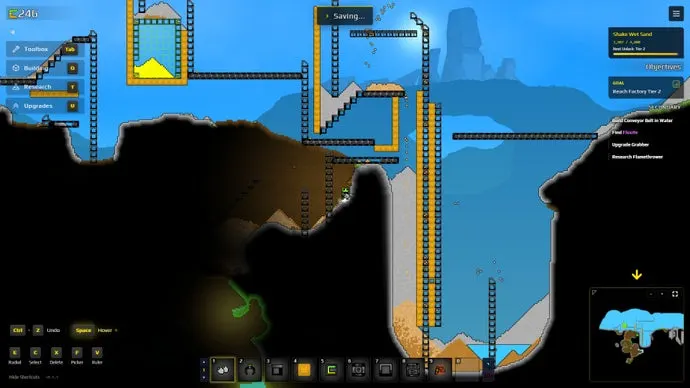
Sandustry, a new spelunking factory-builder from Lantto Games and Hooded Horse, has been praised by a Rock Paper Shotgun writer for being the first game in its genre to convincingly capture the physicality and unease of industrial waste. The reviewer draws a comparison with real-world spoil heaps, such as Welsh slate tips near Aberllefenni and the coal heap that caused the 1966 Aberfan disaster, arguing that most factory games sanitise byproduct into tidy interface icons rather than something with genuine weight and menace.
In Sandustry, players take on the role of an alien prospector tasked with converting all the sand on a planet into gold, building conveyor and elevator networks to wash and sift sand while digging through solid rock and caverns below. Unlike survival-style factory games such as Satisfactory, there are no small enemies to fight, only occasional boss monsters, and construction currently only requires gold rather than gathered resources. The key twist is that materials break down into individually simulated physics pixels, meaning sifting operations generate sandy residue that piles up into growing, unstable-looking heaps beside players' mining setups, giving the game an unusually visceral sense of accumulating industrial mess.
- Sandustry is a new factory-building game in early access
- Reviewer says it uniquely captures industrial waste's physical weight
- Materials use individual pixel physics, creating realistic growing debris heaps
New here? Start with this
Industrial factory-building games let players design production lines that turn raw materials into finished goods. Many represent leftover material as numbers or symbols in a menu; Sandustry instead simulates loose particles that can gather into physical piles as the player works.
The game is made by Lantto Games and published by Hooded Horse. Players control an alien prospector who digs through rock and caverns, then uses conveyors and elevators to process a planet’s sand into gold.
The heaps recall real spoil tips: piles of waste rock left by mining and quarrying. They can be a visible part of industrial landscapes, and some have been dangerous; in 1966, a coal-waste tip collapsed on the Welsh village of Aberfan, killing 144 people.