White dwarf observations suggest a planet formed from stellar debris
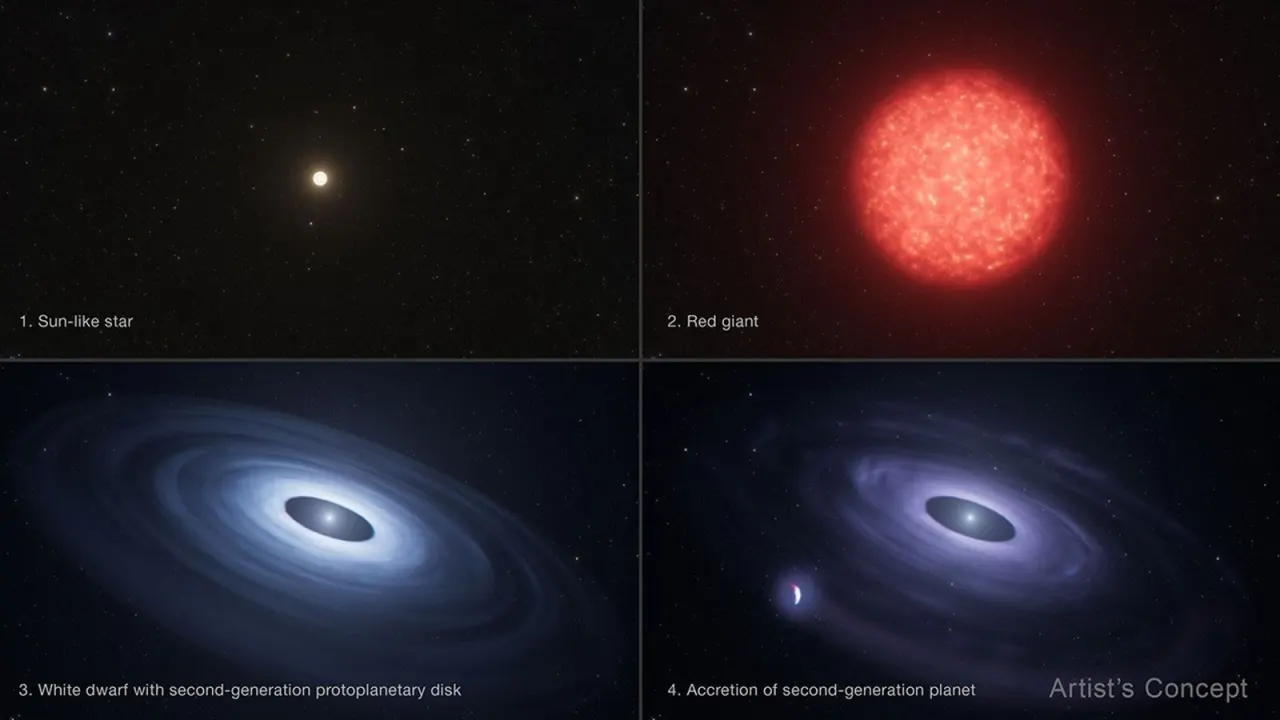
Astronomers at the University of Warwick say old Hubble observations point to a planet formed from material expelled by a dying star. If confirmed, the discovery would be the first second-generation planet found around a white dwarf, challenging expectations about where such planets can form.
The team reanalysed data collected in 1999 from white dwarf HS 0209+0832, matching previously unidentified chemical features to niobium. Its levels were 1,000 times higher than the Sun’s, which the researchers say indicates the planet formed from the star’s cast-off material. The planet is still being heated intensely, but may remain in the white dwarf’s habitable zone for millions of years.
- Old Hubble data may reveal a planet formed from a dying star’s debris.
- Niobium levels were 1,000 times higher than the Sun’s.
- Confirmation would make it the first such planet found around a white dwarf.
New here? Start with this
A white dwarf is what remains when a star like our Sun dies. It is an extremely dense core left behind after the star has exhausted its fuel and shed its outer layers into space.
Planets form around young, living stars from dust and gas orbiting them. Finding a planet around a dead star is unusual, but one that formed from the dying star's ejected material would be unprecedented.
If confirmed, the discovery would suggest that planets can form in circumstances previously thought impossible. Such planets could stay warm enough for liquid water to exist far longer than previously expected.
Celebrity Entertainment Research Science
Read the full article at the source →
Originally published by Engadget as “Scientists find evidence of a second-generation planet born from a dying star”.