Scotland’s AI Growth Zone gets a wee £300M power-up
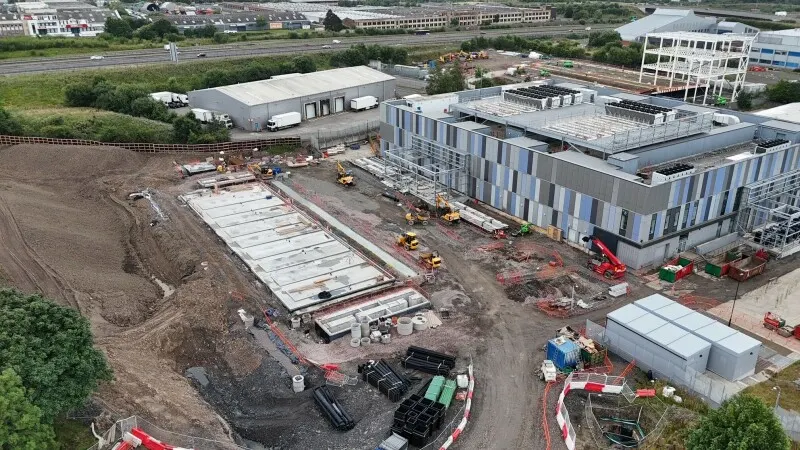
Datacenter operator DataVita has secured £300 million in financing to expand its facilities in Scotland's Lanarkshire AI Growth Zone, part of a UK government push to boost AI infrastructure through the AI Opportunities Action Plan. The investment underscores growing interest in Scotland as a datacentre hub, driven by its abundant renewable energy supply and strong position within the national electricity network, though the announcement is somewhat inflated by Dell Technologies simply relocating an existing regional office into the same area.
The £300 million debt facility comes from a lending syndicate including ING, ABN AMRO, Santander, the Scottish National Investment Bank and Siemens Financial Services, backed by a £202 million guarantee from the UK's National Wealth Fund. The funding will expand DataVita's existing DV1 site and build a new facility, DV3, each providing 40 MW of capacity once complete, with both already leased for 15 years by AI cloud provider CoreWeave. Work began in December on DV1's expansion and in April on DV3, expected to finish by the end of 2026 and summer 2027 respectively, supporting around 600 construction jobs and 100 permanent roles.
- DataVita secures £300m to expand AI datacentres in Lanarkshire, Scotland
- CoreWeave has already leased all new capacity for 15 years
- Dell is also setting up a regional office in the same growth zone
New here? Start with this
The Lanarkshire AI Growth Zone is a designated area in Scotland earmarked for large-scale data centre development, part of the UK government's wider AI Opportunities Action Plan to build up the country's computing infrastructure for artificial intelligence. Scotland has drawn interest for this kind of investment partly because of its plentiful renewable energy and its favourable position on the national electricity grid, both important for facilities that consume very large amounts of power.
DataVita is a datacentre operator that already runs a site in the zone and is now expanding it while building a second facility nearby. Its space has been leased for 15 years by CoreWeave, a company that provides cloud computing power specifically for AI applications, meaning the new capacity is effectively already spoken for. Financing such projects typically involves large loans from banks and investment funds, sometimes supported by government-backed guarantees to reduce the lenders' risk.
This kind of investment matters because data centres are the physical backbone of the AI industry, and where they are built affects local jobs, energy demand and a country's role in the global AI supply chain. The scale of financing and construction involved also serves as a marker of how seriously the UK is positioning itself, and Scotland specifically, in the competition to host AI infrastructure.
Both sides, in good faith
The strongest fair case each way — we don't pick a winner.
The case for
Scotland's renewable energy abundance represents a genuine competitive advantage for datacentre infrastructure, which is critical for AI development and will be needed by the global economy regardless. This attracts credible international investment with long-term commitments, creates meaningful construction and permanent jobs, and positions the UK as a serious player in essential digital infrastructure, justifying government backing of foundational sectors that generate positive externalities beyond private returns.
The case against
The announcement conflates authentic DataVita expansion with Dell's mere office relocation to inflate growth narratives, raising questions about substance. More fundamentally, locking Scotland's renewable energy into long-term contracts serving US-based private companies may divert power from other climate priorities like decarbonising transport and heating. Public money guaranteeing private sector lending also merits scrutiny when permanent job creation is modest relative to the infrastructure and public subsidy involved, and when the profits primarily benefit shareholders rather than Scottish communities.