Lumina models the first two billion years of cosmic evolution
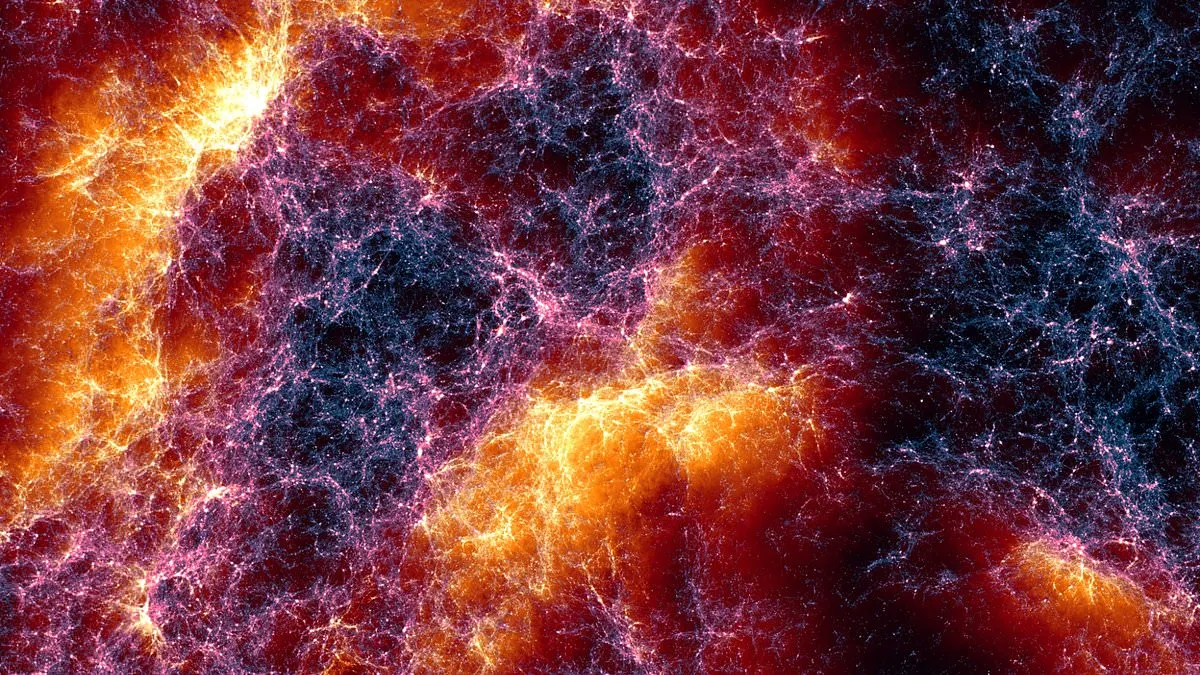
Researchers have created Lumina, a simulation of the first two billion years after the Big Bang. It models how matter, dark matter and radiation interacted as the first galaxies formed, giving scientists a way to examine how early structures shaped the evolving universe.
The model covers a cube of space 1.5 billion light-years across, about 100 times the volume of earlier simulations of its kind. It is the first to model helium reionisation, when ultraviolet light from early stars and galaxies stripped electrons from helium atoms. Lumina was run on more than 15,000 graphics processing units at the Frontier supercomputer in Tennessee.
In short
- Lumina models the universe’s first two billion years.
- It covers 100 times more volume than comparable earlier simulations.
- The model captures helium reionisation for the first time.
Read the full article at the source →
Originally published by Daily Mail as “See the early universe like NEVER before: Incredible simulation reveals exactly what happened in the first 2 billion years of our history”.