See the Sun like never before with most detailed images yet
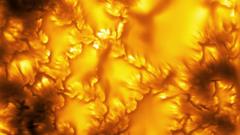
Scientists using the Inouye Solar Telescope in Hawaii, the world's most powerful solar telescope, have captured the most detailed images yet of the Sun's surface, revealing swirling "whirlpool" vortices in unprecedented resolution. The footage shows the Sun's magnetic field being twisted by the motion of hot gas, a process researchers say drives bursts of energy from the Sun that create "space weather" capable of disrupting power grids and satellites on Earth, and potentially harming astronauts. Understanding this activity in finer detail could help scientists eventually predict such events.
The phenomenon, known as Kelvin-Helmholtz instability, occurs when hot gases sliding past one another generate small disturbances that grow into spiralling vortices, similar to how ripples become large ocean waves. Researchers from the US National Solar Observatory say the discovery helps explain both the build-up of magnetic energy behind solar flares and coronal mass ejections, and why the Sun's outer layers are so hot. The findings, published in the journal Nature, were made possible by the Inouye telescope's location on a high, dust-free peak in Hawaii, and scientists say the work also offers a unique opportunity to test fundamental laws of physics.
- Inouye telescope captures sharpest-ever images of the Sun's surface
- Images reveal swirling vortices driving solar flares and space weather
- Findings, published in Nature, could aid future space weather prediction