World news and discussion on TalkFuse.
Senegal reinstated as Afcon 2025 winners – 10 months after tournament
Developed over time first seen 9 hours ago
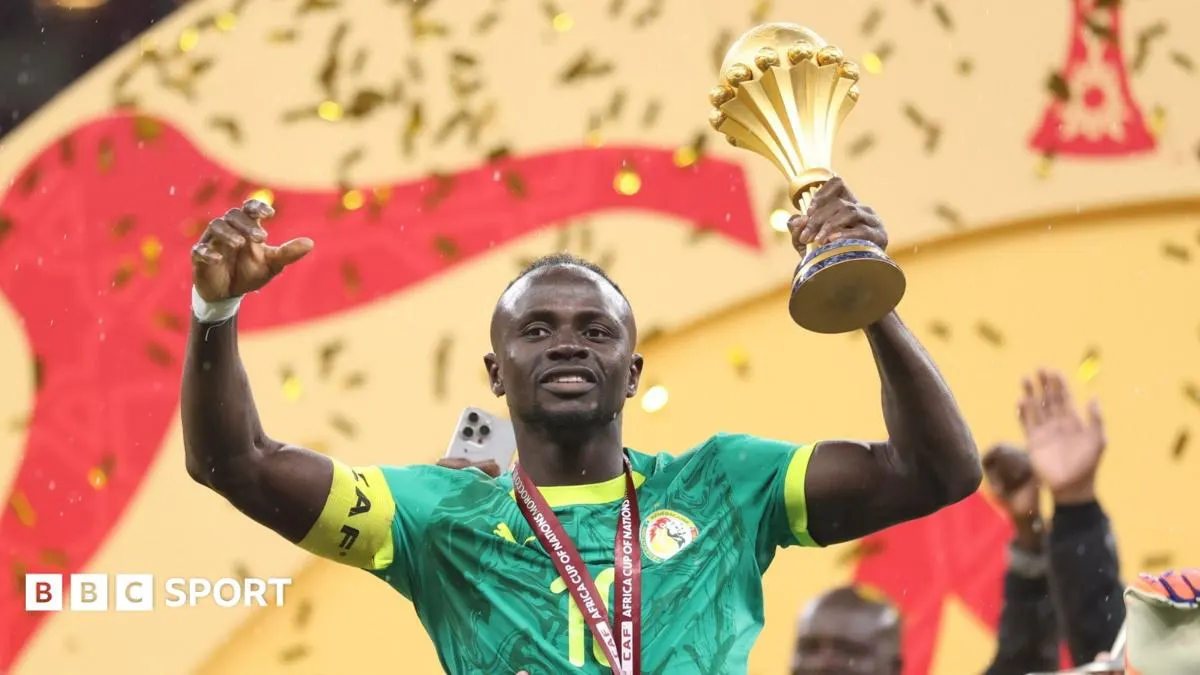
Senegal have been reinstated as winners of the 2025 Africa Cup of Nations after the Court of Arbitration for Sport overturned a ruling that had stripped them of the title. The decision confirms their victory over hosts Morocco in January and gives Senegal a second continental championship.
The final was delayed for more than 15 minutes after Senegal left the pitch in protest at a stoppage-time penalty. Morocco’s Brahim Diaz missed the spot-kick, and Pape Gueye scored Senegal’s 1-0 winner in extra time. Cas ruled unanimously that the referee had authority to restart play because both teams returned and agreed to continue; Morocco’s federation said it would pursue available legal challenges.
- Sources
- 4
- Outlets
- 4
- Left · Centre · Right
- 1 · 3 · 0
In short
- Cas reinstated Senegal as Afcon 2025 champions.
- The ruling confirms their 1-0 extra-time win over Morocco.
- Morocco’s federation says it will challenge the decision.
How this story developed
- 1 hour ago The Court of Arbitration for Sport has reinstated Senegal as winners of the 2025 Africa Cup of Nations, overturning the decision that stripped them of the title. The ruling confirms their 1-0 extra-time win over hosts Morocco in January and gives Senegal their second continental championship.
- 8 hours ago Senegal have been reinstated as winners of the 2025 Africa Cup of Nations after the Court of Arbitration for Sport overturned the decision to strip them of the title.
- 8 hours ago Senegal have been reinstated as winners of the 2025 Africa Cup of Nations after the Court of Arbitration for Sport overturned a ruling that had stripped them of the title.
Full account
Senegal have been restored as winners of the 2025 Africa Cup of Nations, ten months after beating Morocco in the final. The Court of Arbitration for Sport (CAS) upheld Senegal’s appeal against a decision by the Confederation of African Football (CAF) to overturn that result and award Morocco a 3–0 victory. The final score therefore stands as Senegal 1–0 Morocco after extra time, giving Senegal their second continental title.
The January final in Rabat was disrupted late in normal time. After a Senegal goal had been ruled out for a foul, Morocco were awarded a penalty following a review of a challenge on Brahim Diaz. Senegal’s players and coaching staff left the pitch in protest. They returned after a delay of about 14 minutes; Diaz’s penalty was saved, and Pape Gueye scored the decisive goal in extra time.
CAF later ruled that Senegal had forfeited the match by leaving the field and recorded a 3–0 win for Morocco. Senegal’s football federation appealed to CAS, which heard the case in Lausanne. The panel concluded that restarting or stopping the match was within the referee’s authority. It said referee Jean-Jacques Ndala had not made an error of law by resuming play once both teams were back on the pitch and willing to continue. The panel also found that the competition rules cited by Morocco applied to matches permanently abandoned by the referee, which had not happened here.
Senegal’s federation welcomed the ruling as a vindication of sporting fairness. Its president, Abdoulaye Fall, also called for relations with Morocco to move forward. Morocco’s federation said it was surprised by the decision and would pursue legal options to challenge it. It also raised a concern about alleged contact involving Senegal’s federation and CAS arbitrator Ulrich Haas before the ruling; CAS said Haas denied having direct contact with either party. CAF said it respected the award and would take steps to implement it. CAS is expected to publish its full reasons unless the parties request confidentiality.
Where outlets differ
From the full account, which is AI-written from the sources:
The reports differ in how they describe the legal basis and reasoning. One focuses on the referee’s authority to resume play; another reports CAS’s view that the cited competition rules concerned matches permanently called off; a further account summarises this under the ‘field of play’ doctrine.
The most detailed report includes Morocco’s allegation of contact involving arbitrator Ulrich Haas and CAS’s denial. The other reports do not mention that dispute.
The reports give differing emphasis to the federations’ reactions: some foreground Senegal’s celebration and sporting fairness, while another highlights its president’s conciliatory message towards Morocco. One report also recounts Senegal’s earlier criticism of CAF’s decision.
The supplied accounts vary in their description of the delay, placing it at about 14 minutes or more than 15 minutes. They agree that Senegal returned, Morocco missed the penalty and Senegal won in extra time.
Left-leaning outlets 1
Only here: morocco
Centre outlets 3
- Senegal reinstated as Afcon 2025 winners – 10 months after tournamentBBC Sport
- AFCON: Ten months on, court to rule on 2025 winnerFrance 24
- Senegal reinstated as 2025 Africa Cup of Nations winnersCNA
Only here: afcon, months, tournament, court, rule
Every side used: senegal, reinstated, africa, nations, winners
Headline columns compared word for word; nothing in them is AI-written.
Steelman: both sides, in good faith
The strongest fair case each way — we don't pick a winner.
The case for
Senegal’s strongest case is that the match was completed after the players returned, and CAS found that restarting it was within the referee’s authority. On that view, overturning the result after the fact punished Senegal despite the match having reached a valid conclusion, so reinstating the 1-0 win protects the integrity and finality of the competition.
The case against
Morocco’s strongest case is that leaving the pitch in protest over a refereeing decision was serious misconduct that should carry meaningful consequences, rather than allowing the match to resume and the result to stand. The federation may also argue that overturning CAF’s ruling weakens the governing body’s ability to enforce competition rules consistently, and that the later rule change reflects the need for a clearer deterrent.
Explained simply
The Africa Cup of Nations, often called Afcon, is the main international football tournament for African national teams. It is run by the Confederation of African Football, while the Court of Arbitration for Sport hears disputes in sport.
Senegal and Morocco are national teams whose football federations represent them in the tournament and in legal disputes. Senegal’s team is known as the Teranga Lions, and Morocco’s as the Atlas Lions.
A disputed match result can affect which country is recognised as champion and how football rules are applied. The case centres on what happened when Senegal’s players left the pitch during a match and then returned to play.
Coverage · 4 sources
Bias meters
From 4 rated sources.