Culture news and discussion on TalkFuse.
Should a tech tycoon be able to pay his way into conducting a world-class orchestra? And should they really sell tickets?
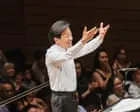
The Guardian's music critic Tom Service questions whether wealthy amateurs should be able to buy their way onto the podium of major orchestras, prompted by Canadian businessman Mandle Cheung's plan to conduct the Royal Philharmonic Orchestra in Mahler's Second Symphony. Cheung, a 78-year-old self-described amateur who founded his own Mandle Philharmonic in Canada, previously paid to conduct the Toronto Symphony and has since set his sights on European orchestras, raising concerns about meritocracy in classical music and the pressures facing orchestras' finances.
Cheung will conduct the RPO, soloists Elizabeth Watts and Jennifer Johnston, and the Brighton Festival Chorus at Alexandra Palace in London on 21 August, performing Mahler's epic Second Symphony. He reportedly paid around C$500,000 (£264,000) to conduct the Toronto Symphony last year, and while his representative confirmed he is paying the RPO for the same privilege, the fee has not been disclosed, with the RPO stating it does not reveal concert fees. Cheung himself has acknowledged the awkwardness of the arrangement, previously telling the New York Times that professional musicians "work really hard all their life" only for an unrecognised conductor to "write you a check and start conducting you."
In short
- Tech tycoon Mandle Cheung pays to conduct top orchestras despite being an amateur
- He'll lead the Royal Philharmonic Orchestra in Mahler's Second on 21 August
- Raises questions about meritocracy and orchestras' reliance on wealthy donors
Steelman: both sides, in good faith
The strongest fair case each way — we don't pick a winner.
The case for
Orchestras face genuine financial pressures that threaten their viability, and restricting revenue sources risks their long-term sustainability. Arts patronage has a distinguished historical tradition, and if both parties consent to an arrangement with professional musicians and world-class soloists performing, it represents a legitimate commercial transaction. The quality of performance depends primarily on the orchestra's professionalism and standards, not the conductor's background, making this a pragmatic solution to funding challenges.
The case against
This arrangement fundamentally compromises meritocratic principles central to professional music-making. Conducting requires years of dedicated training and expertise, and allowing wealthy individuals to bypass that preparation devalues the profession and suggests artistic excellence is purchasable rather than earned through rigorous study. Professional musicians deserve to work under properly qualified leaders, and orchestras risk their artistic credibility by treating the podium as a commodity rather than a position of earned responsibility.
Explained simply
Conductors lead orchestras, guiding musicians through a piece’s timing, pace and expression. Mahler’s Second Symphony is a large-scale work written for orchestra, singers and chorus; the Royal Philharmonic Orchestra (RPO) is a major British orchestra.
Mandle Cheung is a Canadian businessman who describes himself as an amateur conductor and has paid to conduct professional orchestras. His planned appearance with the RPO raises questions about how opportunities to lead major ensembles are awarded, and how orchestras balance artistic standards with the need to raise money.
Culture Entertainment Music Space Technology