Sierra Leone drops treason charge against ex-president over attempted coup
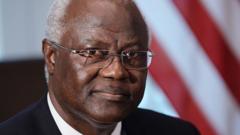
Sierra Leone has dropped treason and other charges against former President Ernest Bai Koroma, who had been accused of links to the failed coup attempt in November 2023. The government did not explain why the case was dismissed, but the move is politically significant because it removes a major legal threat hanging over a former head of state in a tense post-election climate. Koroma welcomed the decision as a victory for peace, justice and reconciliation, and thanked regional and national leaders who had supported efforts to resolve the matter.
Koroma, 72, had been under house arrest before a deal brokered by Ecowas allowed him to go to Nigeria in January 2024 for medical treatment, where he has remained in exile. The attempted coup involved armed men attacking a military armoury and prisons, releasing nearly 2,000 inmates, and about 20 people were killed. The unrest came five months after President Julius Maada Bio’s disputed re-election in June 2023, which Koroma’s All People’s Congress rejected and international observers criticised over a lack of transparency in the vote count.
In short
- Sierra Leone has dropped treason charges against ex-President Koroma
- No reason was given for dismissing the case
- The case stemmed from the deadly 2023 attempted coup
Steelman: both sides, in good faith
The strongest fair case each way — we don't pick a winner.
The case for
The decision to drop charges may represent prudent reconciliation in a deeply divided nation. Given that international observers themselves questioned the election's transparency, and that regional diplomatic efforts secured Koroma's safe departure to Nigeria, the government may have determined that pursuing politically sensitive charges could deepen tensions and obstruct the broader work of rebuilding democratic institutions. In fragile post-conflict societies, prioritising peace and healing over prosecutorial action against political opponents reflects a realistic understanding that insisting on individual accountability can sometimes prove counterproductive to stability.
The case against
Dropping charges against someone linked to a coup attempt that killed approximately 20 people and freed thousands of inmates represents a failure of accountability and rule of law. Without trial or public explanation, victims are denied justice and the decision's political motivation becomes apparent; if evidence was insufficient, he should have faced acquittal in court rather than dismissal. Permitting a former leader to escape prosecution for alleged involvement in armed insurrection sets a dangerous precedent that encourages future coups and undermines the very democratic institutions a functioning state requires to maintain public confidence in justice.
Explained simply
Ernest Bai Koroma was Sierra Leone's president until 2018. In November 2023, an attempted coup erupted when armed men attacked a military armoury and released nearly 2,000 inmates from prisons, leaving about 20 people dead.
President Julius Maada Bio had been re-elected in June 2023, but the result was disputed. Koroma's opposition party rejected the election, and international observers questioned the transparency of the vote count. The attempted coup occurred five months later, and authorities accused Koroma of involvement.
Following the coup attempt, Koroma was placed under house arrest. A regional agreement in January 2024 allowed him to travel to Nigeria for medical treatment, and he has remained there since. The question of his potential criminal liability has remained a significant legal and political issue for the country.