YouTube Music starts labelling songs made with generative AI
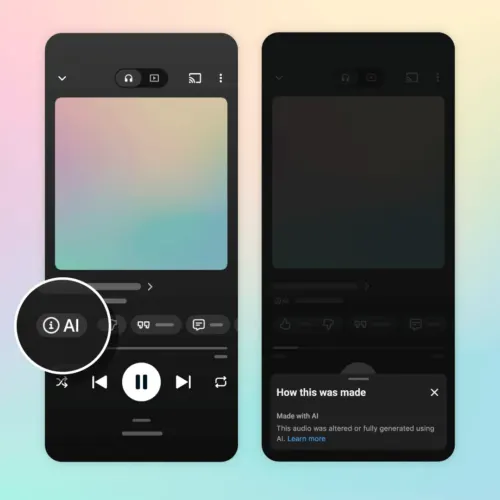
YouTube Music is beginning to label songs that were made entirely or substantially altered with generative AI, giving listeners a way to see how a track was created. The move adds disclosure rather than restricting AI music, and reflects growing interest in distinguishing AI-assisted work from human-made recordings.
Labels are rolling out on the app’s player page and website, with more information available when tapped. Google says it will use its own detection tools and work with music partners; uploaders can also declare whether AI use was full, partial or absent, though disclosure is optional. SynthID watermarks and C2PA metadata may help identify some tracks, but an absent label does not prove a song was made by people, and listeners cannot block labelled songs from playlists. Similar labels are planned for AI music uploaded as YouTube videos.
- YouTube Music is rolling out labels for AI-made or substantially AI-altered songs.
- Google will use detection tools, partner information and optional uploader disclosures.
- No label does not guarantee a track was made without AI.
New here? Start with this
Generative AI can create music, vocals or other parts of a recording from prompts and examples. Some artists use these tools to help make a track, while others produce most or all of it with AI.
YouTube Music is a streaming service owned by Google. Music reaches it through record labels, distributors and other partners, as well as direct uploads; Google and its partners can use technical tools and uploader declarations to identify AI use.
The labels give listeners information about how some tracks were made. They do not prevent AI-assisted music from appearing, and a missing label does not confirm that people made the track without AI.
Both sides, in good faith
The strongest fair case each way — we don't pick a winner.
The case for
Labelling substantially AI-generated music can help listeners understand how a track was made and make informed choices about what they hear. Clear disclosure may also support trust and fair recognition for human performers and creators, while allowing AI-assisted music to remain available.
The case against
Labels may imply a clear divide between human-made and AI-made music even though AI involvement can vary widely, and detection may miss tracks or classify them imperfectly. Because disclosure is optional and listeners cannot filter labelled songs out, the system could offer limited practical value while creating uncertainty or stigma for artists who use these tools.
AI Entertainment Music Technology Trending Weird & Viral
Read the full article at the source →
Originally published by Ars Technica as “Singer or clanker? YouTube Music will tell you with new gen AI labeling.”.