Russian strikes hit six Ukrainian energy facilities after ceasefire announcement
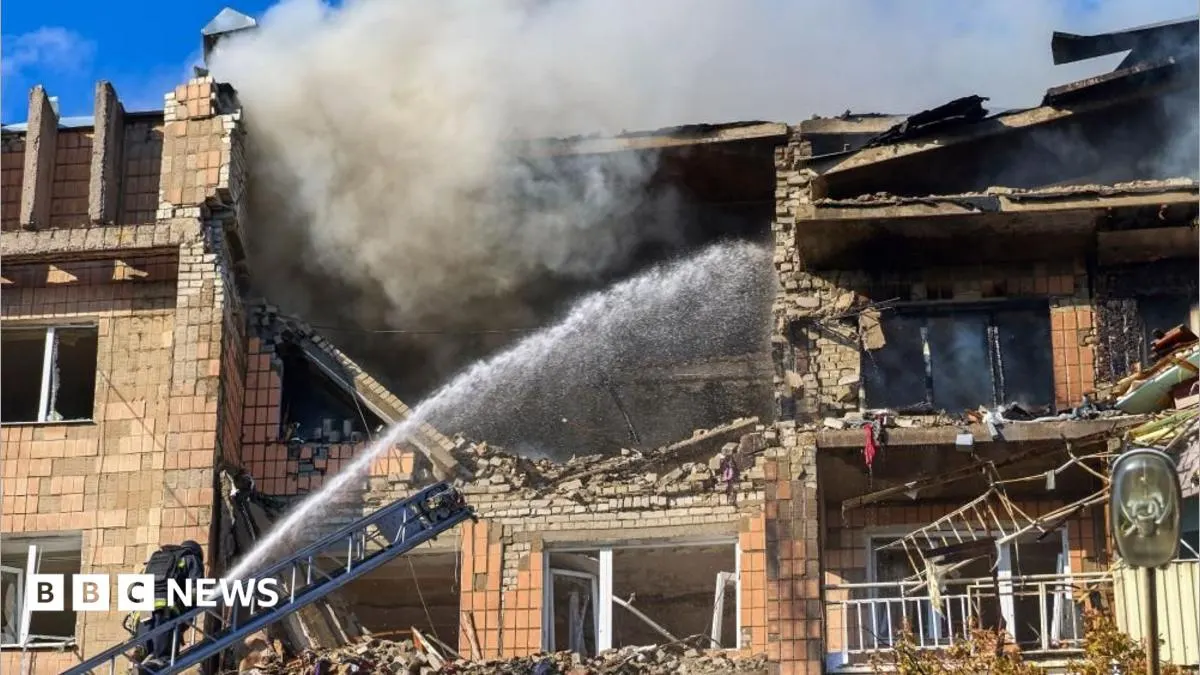
Russia launched strikes on six Ukrainian energy facilities within hours of US President Donald Trump announcing an agreement for an energy ceasefire between the two countries, Ukrainian President Volodymyr Zelensky said. Despite Trump's statement that the truce would be "effective immediately", Russian attacks continued, destroying power grids in the city of Izyum and targeting energy infrastructure across the country. Zelensky characterised the continued strikes as proof that Russia was "unwilling to accept an energy ceasefire", directly contradicting Trump's ceasefire announcement.
The attacks injured 33 people and forced electricity rationing in parts of Ukraine to prevent overloaded damaged equipment. The strikes continued a months-long pattern of both sides targeting energy infrastructure; BBC Verify recorded 273 Russian attacks on oil and gas facilities in 2026 compared with 124 in 2025 over the same period. Trump has been pressing Ukraine to halt strikes on Russian energy installations to enable Russian diesel exports to the US market, which Zelensky described as a "gift" to Vladimir Putin.
- Russian strikes on six Ukrainian energy sites came hours after Trump announced ceasefire.
- Zelensky cited 33 injuries and said Russia is unwilling to accept an energy ceasefire.
- The attacks continue months of both sides targeting energy infrastructure.
New here? Start with this
Russia and Ukraine have been at war since 2022. Over recent months, both sides have increasingly targeted each other's energy infrastructure, striking power plants, oil and gas facilities. These attacks aim to damage the opponent's military capacity and economy.
These strikes have severe consequences for civilians, causing widespread power outages in homes and businesses. Energy infrastructure has become a central target because it affects both military supply lines and civilian life. Damage to power systems forces rationing and creates hardship for ordinary people across the country.
International actors including the United States have been involved in attempts to negotiate a resolution to the conflict. Proposals for ending the war have included discussions about restricting or ceasing attacks on certain types of infrastructure, including energy systems.
Both sides, in good faith
The strongest fair case each way — we don't pick a winner.
The case for
Russia's continuation of strikes within hours of Trump's ceasefire announcement demonstrates Moscow's unwillingness to accept genuine de-escalation of energy infrastructure attacks. The pattern confirms Russia's established practice of disregarding agreements and commitments, suggesting deliberate rejection of the stated terms rather than any legitimate operational explanation.
The case against
Trump's announcement may not reflect a genuine mutual agreement actually made with Russia, or Russia may reasonably dispute what constitutes an 'energy ceasefire' under the terms understood. Without confirmed Russian acceptance and clarity on what military operations fall under any arrangement, these strikes do not necessarily demonstrate bad faith but could reflect different interpretations or the inability to halt operations already in motion.
Americas Europe Government Politics World
Read the full article at the source →
Originally published by BBC World as “Six Ukrainian energy sites hit by Russia since Trump announced ceasefire, Zelensky says”.