Small AI models let drones autonomously identify and attack battlefield targets
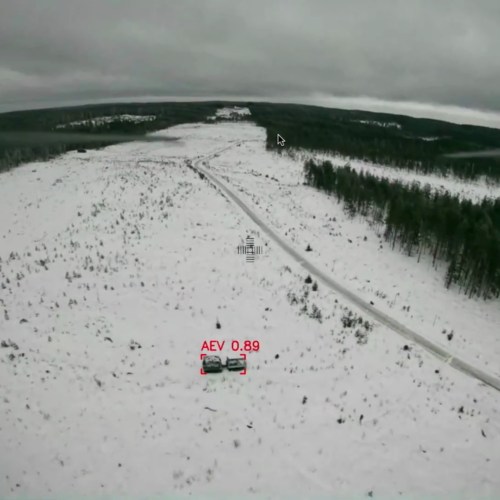
Scaleout Systems, a NATO-backed Swedish startup founded in 2018, is deploying compact AI models on military drones to enable autonomous target detection and attack missions. The company, which pivoted to defence applications following Russia's invasion of Ukraine in 2022, was selected for NATO's Defence Innovator Accelerator Challenge Program (DIANA) in 2025. By using efficient machine learning models that operate independently on drone hardware rather than relying on large frontier AI models and centralised data centres, the technology provides critical advantages in modern warfare where data centres face attack threats and electronic warfare frequently disrupts communications.
Through the Federated Aerial Intelligence for Recon project, Scaleout has developed systems where drones collect battlefield data and share selective updates with local command posts, which retrain the AI models on aggregated information before deploying improved versions back to edge devices. This approach allows models to adapt during operations—crucially, models can learn from new environments like urban settings after training in deserts. The technology is already being incorporated into Ukrainian military drones, and Scaleout is participating in the ALMA project (Affordable Loitering Modular Ammunition) led by BAE Systems Bofors, which demonstrated autonomous drone capabilities for target detection and geolocation during a demonstration in Sweden in January 2026.
- NATO-backed startup deploys small AI models on drones for autonomous target detection
- Decentralised AI allows drones to learn and adapt without central server reliance
- Technology already in use by Ukrainian military in autonomous kamikaze drone systems