Culture news and discussion on TalkFuse.
Solar eclipse: Where and when you can see it across North West England
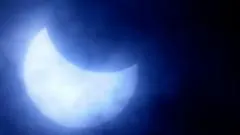
A partial solar eclipse will traverse the North West of England on Wednesday evening, with the moon obscuring 90 to 96 percent of the sun—representing the highest coverage visible from British territory since 1999. Though Greenland, Iceland, and parts of Spain will experience a total eclipse, the North West's partial view remains a significant astronomical event that astronomers note will not be matched from UK shores for more than five decades.
The eclipse will unfold gradually across the evening, starting around 18:13 in Manchester and Liverpool and reaching maximum eclipse intensity near 19:10 before concluding by 20:04. Organised viewing opportunities have been arranged across the region at venues including Heaton Park, Jodrell Bank Observatory, and Crosby Beach. Health officials have issued stern guidance that only certified eclipse glasses or pinhole projectors should be used for observation, warning that even brief unprotected viewing can cause irreversible retinal damage that may not be immediately apparent to the observer.
In short
- Partial eclipse on 12 August will cover 90–96% of the sun across North West England, the most significant visibility from the UK since 1999
- Eclipse begins ~18:13, peaks ~19:10; viewing events hosted at Heaton Park, Jodrell Bank, and Crosby Beach throughout the evening
- Certified eclipse glasses or pinhole projectors required; unprotected viewing risks permanent blindness
Explained simply
A solar eclipse happens when the moon passes between Earth and the sun, blocking some or all of the sun from view. In a partial eclipse, the moon covers only part of the sun; how much it appears to cover depends on where the viewer is.
The moon’s shadow falls on different parts of Earth as it moves, so some places may see a total eclipse while others see only a partial one. In the UK, the last solar eclipse with a larger visible coverage was in 1999, and a comparable view from British shores is not expected for more than 50 years.
Looking directly at the sun can damage the eyes, even when most of it is covered. Safe viewing requires certified eclipse glasses or an indirect method such as a pinhole projector.