Kenyan refugees build AI tools as promised wages give way to uncertain rewards
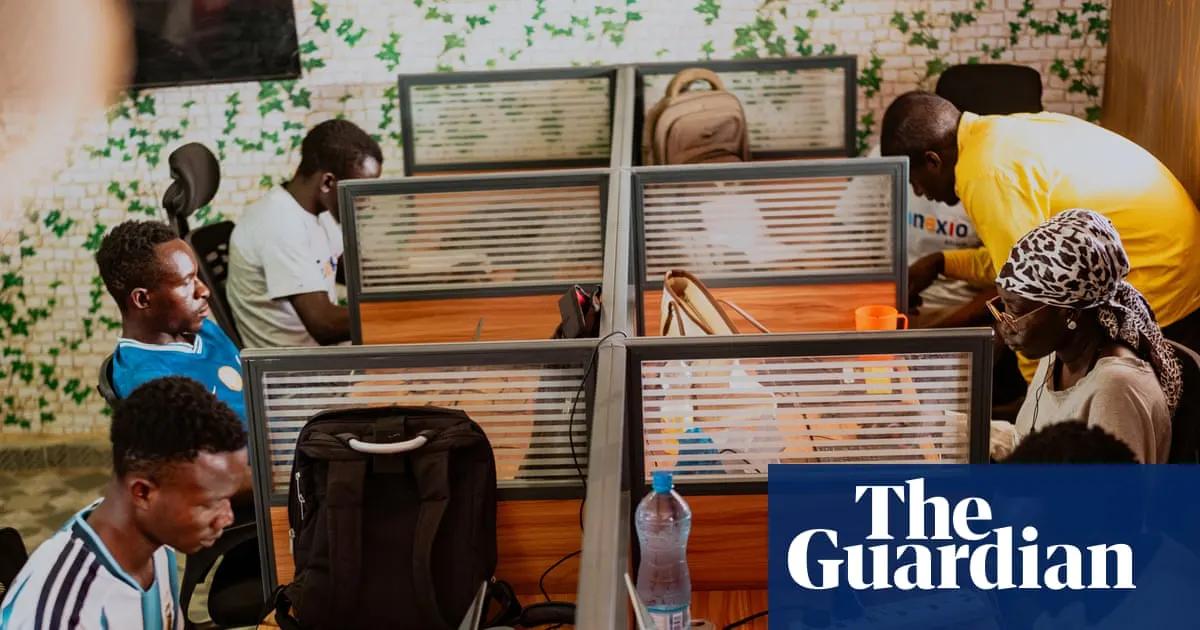
Refugee workers in Kenya are performing data research and content moderation tasks for major tech companies through platforms such as AOP Connect, but are increasingly being offered uncertain "discretionary rewards" rather than guaranteed wages. This represents a significant degradation of working conditions; whilst remote work opportunities were promoted by UN agencies and tech companies as mutually beneficial for both refugees and businesses seeking labour, only the tech companies have clearly benefited. The situation matters because these workers have contributed to building some of the world's most powerful artificial intelligence tools whilst facing precarious employment and shrinking opportunities.
Grace, a refugee in Kakuma camp near Kenya's border with South Sudan, exemplifies the situation: she conducted research translating Christian hymns for AOP Connect, with potential rewards up to $500, yet received no guaranteed payment and no transparent explanation of assessment criteria. Interviews with more than two dozen refugees in Kakuma reveal that as entry-level tech work disappears and AI automation replaces human labour, workers increasingly accept gigs with uncertain payment. The company claims its reward structure is communicated transparently, but workers and mentors report they cannot obtain transparent answers about how assessments are made or why most earn significantly less than the maximum possible reward.
- Refugees doing tech research face shrinking pay and uncertain rewards
- Companies promised transparency but offer opaque payment assessments
- AI automation is eliminating entry-level outsourcing work opportunities
New here? Start with this
Kakuma refugee camp in northwestern Kenya is home to over 200,000 displaced people who have fled conflict, particularly from South Sudan. In recent years, UN agencies and technology companies promoted remote work opportunities for refugees, saying it would benefit both workers seeking income and companies needing labour for artificial intelligence development, including tasks like content moderation and data research.
Refugee workers hired by technology companies including AOP Connect were initially offered guaranteed wages for this work. However, workers increasingly report being switched to uncertain "discretionary rewards" where payment is not guaranteed and assessment criteria are not transparent. As automation reduces demand for human-performed labour, these workers now face precarious employment after having contributed to some of the world's most powerful AI systems.
Both sides, in good faith
The strongest fair case each way — we don't pick a winner.
The case for
The platforms presented remote work as a mutually beneficial partnership promising stable income, but have degraded into discretionary rewards lacking transparency or guaranteed minimums. Workers are building sophisticated AI systems whilst confined in camps with virtually no alternative income sources, creating an asymmetric relationship where refugee workers provide valuable labour without security or clarity about compensation criteria. This represents exploitation precisely because of the power imbalance—major tech companies with enormous resources extracting value from vulnerable people with no alternatives and no recourse.
The case against
These platforms provide genuine economic access to people whose circumstances are extraordinarily constrained; refugee camps have virtually no employment. Variable compensation is standard in global gig work and doesn't inherently constitute exploitation. Workers retain agency in choosing to participate, and even uncertain income represents tangible progress against the alternative of no opportunity. Whilst communication could improve, removing these options to pursue perfect working conditions would harm the very vulnerable populations the critique aims to protect.
Africa AI Business Economy Technology World
Read the full article at the source →
Originally published by The Guardian as “‘Someone else will do it for less’: Refugees in Kenya are powering tech for dwindling pay”.