Sonos unveils new Beam Ultra soundbar with ‘true 7.1.2 Dolby Atmos’
Developed over time first seen 2 months ago
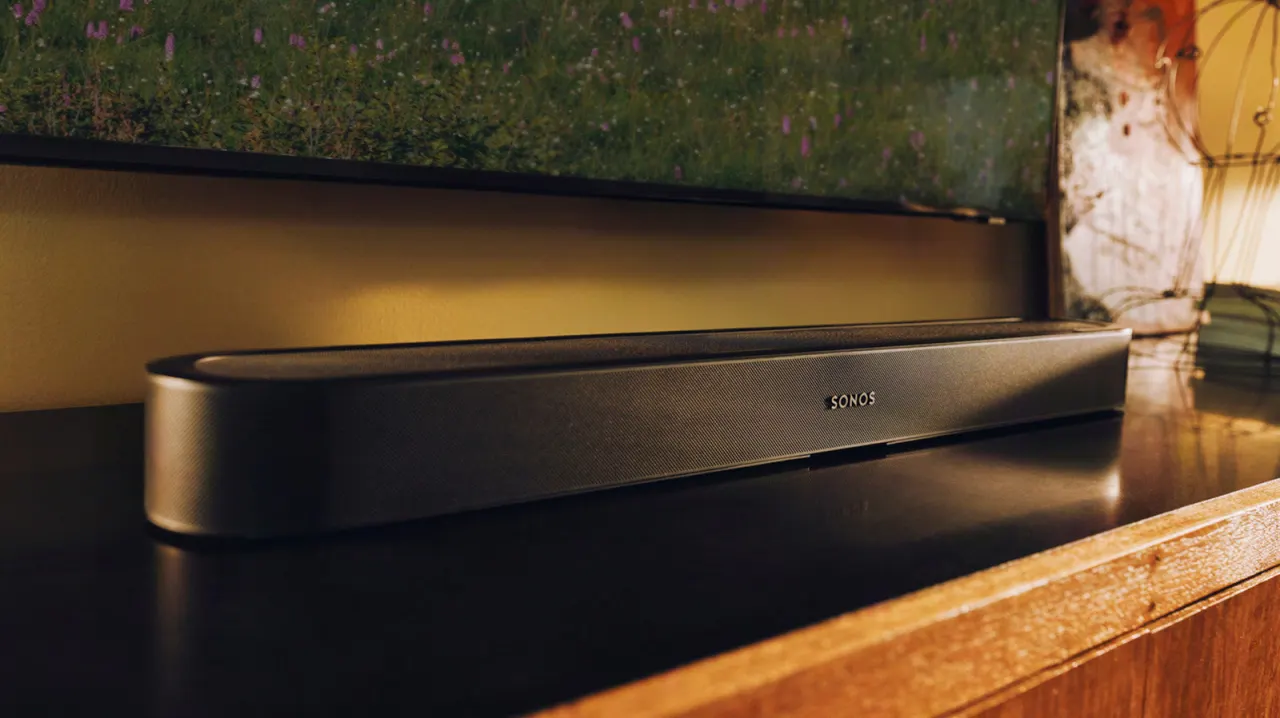
Sonos has unveiled the Beam Ultra, a new premium version of its mid-size soundbar, delivering genuine Dolby Atmos surround sound through dedicated upward-firing drivers rather than the software-simulated spatial audio used in the outgoing Beam. The launch marks a notable step forward for the company after a difficult period marked by strategy shake-ups, giving buyers a way to achieve fuller home cinema sound without installing ceiling-mounted speakers, though Sonos itself concedes that bouncing audio off the ceiling still cannot match dedicated ceiling speakers for precision. It was announced alongside a new version of Sonos's over-ear headphones, the Ace Ultra, and a forthcoming software update promising greater control over audio setups.
The soundbar increases its driver count from five to nine — five tweeters (one centre, two side-firing, two upward-firing) and four low-profile woofers — and supports Wi-Fi, Bluetooth and HDMI eARC, with the option to add Sonos portable speakers as rear surrounds for a fuller home theatre setup. It also introduces AI Speech Enhancement, which detects human voices to keep dialogue clear, offering four adjustable levels via the Sonos app. Pre-orders opened on the day of the announcement, with the Beam Ultra going on general sale on 29 September priced at $699.
- Sonos launches Beam Ultra soundbar with true Dolby Atmos surround sound
- Nine drivers, AI speech enhancement, priced at $699
- On sale from 29 September; pre-orders already open
New here? Start with this
Sonos is best known for its wireless, app-controlled speakers and soundbars, which let people build a multi-room home audio system without running cables between rooms. The Beam is one of its most popular products: a compact soundbar designed to sit under a television and improve on the sound built into most TVs. The company has gone through a turbulent few years, including a botched app redesign that damaged customer trust, making new product launches something of a test of whether it can win back confidence.
Dolby Atmos is a surround-sound format that adds a sense of height to audio, so effects seem to come from above as well as around the listener. Achieving this properly usually requires extra speakers mounted in or near the ceiling, which many people are unwilling or unable to install. Soundbars have increasingly tried to fake this effect using clever internal speaker angling and software processing, with mixed results compared to a true multi-speaker setup.
This matters because it reflects a broader trend in home entertainment, where companies compete to deliver cinema-quality sound from a single, easy-to-install device rather than complex speaker arrays. Sonos operates in a crowded market alongside rivals such as Bose, Samsung and Sony, all vying for customers upgrading their home entertainment systems.
Full account
Sonos has unveiled the Beam Ultra, a premium successor to its popular mid-sized soundbar, as part of a wider push to rebuild its reputation following a turbulent period for the smart-speaker maker. Pre-orders for the device opened immediately, with general availability set for 29 September at a suggested retail price of $699. The launch marks the first refresh of the Beam range since the second-generation model arrived several years ago, and comes as Sonos tries to draw a line under the fallout from a widely criticised app overhaul.
The Beam Ultra nearly doubles its predecessor's driver count, rising from five to nine, made up of five tweeters — one central, two side-firing and two upward-firing — alongside four low-profile woofers. The addition of upward-firing drivers is the headline change: rather than merely simulating Dolby Atmos surround sound through software processing, as the standard Beam does, the Ultra can bounce audio off the ceiling to produce what Sonos describes as genuine 7.1.2 Atmos spatial sound. This is not expected to rival dedicated ceiling-mounted speakers for precision, but it represents a meaningful step up from the outgoing model, which lacks any upward-firing drivers. The soundbar also supports Wi-Fi, Bluetooth and HDMI eARC connectivity, and can be paired with other Sonos products, including its portable speakers pressed into service as rear surround channels, to build out a fuller home cinema system.
Artificial intelligence features on the Beam Ultra in a supporting rather than headline role, through an AI Speech Enhancement tool that identifies human voices and keeps dialogue intelligible during playback, with four adjustable enhancement levels available via the Sonos app. AI plays a far larger part elsewhere in Sonos's announcements, however. The company also introduced the Ace Ultra, a new model of its over-ear headphones, and unveiled a significant software update billed as Sonos 27 — which it is positioning not as an app update but as the foundation of what it calls an 'audio operating system'. Central to this is Sonos 27voice, a generative AI voice assistant launching in early access that lets users make mood-based music requests, alongside a Model Context Protocol enabling third-party AI services such as ChatGPT to control playback, and customisable 'Custom Agents' that can trigger actions and even adopt different voice personas in different rooms.
The broader software update also brings interface improvements, including reworked tab navigation, better room sorting and revised in-app volume controls, along with system health diagnostics due in autumn. Sonos has said this update will work with its S2 app but not the older S1 platform, meaning owners of legacy hardware will be excluded from the new features. Coverage of the announcements differs in focus: one report concentrates chiefly on the Beam Ultra's hardware and audio credentials, treating the AI additions as a minor feature and noting the soundbar builds on a well-regarded predecessor, while another situates the launch within Sonos's attempt to repair customer trust after the botched 2024 app redesign that stripped out accessibility tools and basic controls and ultimately contributed to the departure of its chief executive, framing the AI-driven Sonos 27 platform and its ambition to be seen as more than 'a speaker company' as the more significant story.
Where outlets differ
One report treats the Beam Ultra's hardware and Atmos upgrade as the main story, with AI framed as a minor add-on; the other situates the soundbar within a broader corporate narrative about Sonos rebuilding trust after 2024's app crisis and repositioning itself as an 'audio operating system'.
Only one source details the leadership fallout (CEO ousted, public apologies) and quotes Sonos executives (Brandon Holley, Sid Patel) discussing the Sonos 27 platform, generative AI voice assistant, Custom Agents and Model Context Protocol integration with services like ChatGPT — none of which appears in the other account.
Only one source notes the update is limited to Sonos's S2 app and excludes older S1 hardware.
The hardware-focused report references the outlet's own prior review of the previous Beam model as context; the other does not discuss the Beam Ultra's driver configuration in detail at all.