South Korea proposes talks to officially end war with North
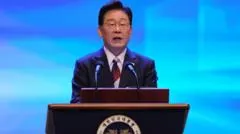
South Korean President Lee Jae Myung has proposed talks with North Korea aimed at formally ending the Korean War, which stopped in fighting under a 1953 armistice but was never concluded by a peace treaty. He said dialogue could support peaceful coexistence, reduce risks around the Demilitarised Zone and create space to address Pyongyang’s nuclear programme, though North Korea has not responded.
Lee’s proposal follows years of strained relations and continued North Korean weapons testing, including an alleged 11th ballistic-missile test this year on Tuesday. North Korea declared itself a nuclear power in 2022 and is estimated to possess dozens of warheads; Lee has suggested freezing further production as a realistic interim goal while Seoul continues to seek full denuclearisation.
In short
- Seoul proposes talks to formally end the Korean War.
- Lee links dialogue to border security and nuclear restraint.
- North Korea has not responded and continues missile testing.
Steelman: both sides, in good faith
The strongest fair case each way — we don't pick a winner.
The case for
Formal peace talks represent an opportunity to transition from a decades-long armistice into a sustainable peace arrangement that could reduce military tensions and accidental risks, whilst creating diplomatic space to address the nuclear issue constructively. Dialogue and confidence-building measures need not concede to North Korean demands; rather, they establish a framework where both sides gradually build trust and mutually beneficial incentives for denuclearisation, which Lee's pragmatic interim freeze proposal acknowledges as a realistic multi-stage process.
The case against
North Korea's documented pattern of breaking agreements, combined with its continued weapons testing and demonstrated advancement of nuclear capabilities, suggests that formal peace talks without robust verification mechanisms and demonstrated good faith would merely legitimise the regime's nuclear arsenal whilst yielding political concessions. South Korea risks negotiating from a weakened position, offering international recognition and sanctions relief that Pyongyang could exploit for legitimacy without ever genuinely intending denuclearisation or reducing its military threat.
Explained simply
The Korean War began in 1950, when North Korean forces crossed into the South. The fighting drew in other countries, including the United States and China, and ended in 1953 with an armistice, which halted combat but did not create a formal peace treaty.
North and South Korea remain technically at war, separated by the Demilitarised Zone, a heavily guarded buffer. South Korea is led by President Lee Jae Myung; North Korea is led by Kim Jong Un and has developed nuclear weapons, which are a longstanding concern for South Korea and other countries.
A formal peace agreement could change the legal status of the conflict, while talks could also address security risks and North Korea’s nuclear programme. The two governments have different positions on that programme, including whether to seek its complete dismantling or pursue interim limits.