South Park mocks patriotic fervour as wealthy diners drive beef shortage
Developing story first seen 5 hours ago
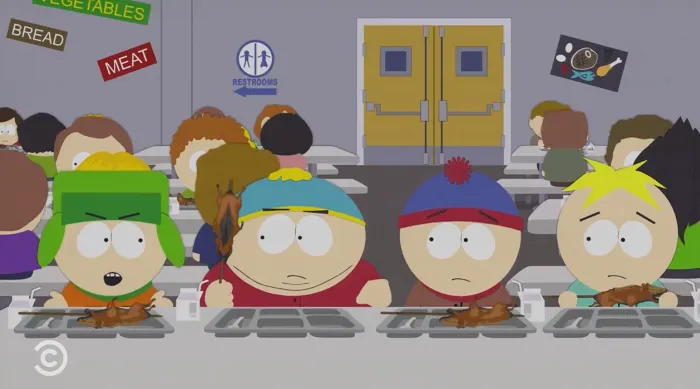
The new coverage confirms that “Guinea Pig on a Stick”, the fourth episode of “South Park” Season 29, was not a Halloween special, despite airing during Halloween week. It satirises how political patriotism and wealthy customers can turn ordinary local beef into a prized status symbol.
Cartman, Stan, Kyle and a shrunken Randy seek to save the town’s beef supply after the government takes it amid a national crisis. A rancher says rich customers from other states have driven demand; Ruth’s Chris and then Sizzler take the cows, even though diners become ill from eating the meat. Stan suggests serving guinea pig cooked with lard and butter as a patriotic meal, and the plan works. The season premiere drew 4.2 million viewers in three days.
- Sources
- 2
- Outlets
- 2
- Left · Centre · Right
- 0 · 0 · 0
In short
- The episode aired during Halloween week but was not a Halloween special.
- It pokes fun at patriotic branding and demand for local beef.
- Stan’s solution is to serve guinea pig as a patriotic meal.
How this story developed
- 1 hour ago The episode adds that politicians also used the meat to signal support for local produce, and ends with Stan’s guinea-pig dish served on a stick as a patriotic meal.
- 1 hour ago “Guinea Pig on a Stick”, the fourth episode of South Park’s 29th season, aired during Halloween week but was not a Halloween special, and satirised patriotic politics and wealthy diners’ appetite for local beef as a status symbol.
Full account
In the latest episode of *South Park*, a shortage of beef in the town prompts Cartman, Stan, Kyle and Randy to try to reclaim the meat that has become a prized item beyond their community. The story opens with Cartman expecting a Sloppy Joe at school, only to learn that beef is being redirected amid a national supply crisis. The school’s replacement menu features guinea pig, and the group sets out to find out why the local cattle are suddenly in such demand.
At a ranch, the boys learn that the cows have not changed; what has changed is who wants to buy them. Wealthy diners from elsewhere are seeking a premium food experience, and restaurant chains are competing for the supply. The episode makes the beef’s appeal deliberately absurd: people who eat it suffer spectacular bouts of diarrhoea, yet its consumption becomes a public display of patriotism, with politicians and diners keen to signal their allegiance to local beef.
That patriotic branding proves more powerful than the food itself. After one chain’s interest helps raise the cattle’s profile, another, Sizzler, takes the remaining animals. Stan then reasons that if diners are responding to the richness of the meat rather than the cows, the rancher could add lard and butter to other food and still attract customers. The closing scene adopts that idea, showing diners at Ruth’s Chris being served guinea pig presented as a patriotic meal.
The episode also includes a separate sequence about *Grand Theft Auto VI*, in which a character presents new footage and describes the game as a preview of what is coming in November. One report reads the game’s release as a metaphor for the approaching US midterm elections, with a scene involving dog mess standing in for partisan politics. The episode’s broader run of subjects includes inflation, food fashions and beef tariffs, although the accounts differ in how much emphasis they give to the game sequence and to the episode’s other storylines.
Where outlets differ
From the full account, which is AI-written from the sources:
The first report centres the beef shortage, the school menu, the ranch and the episode’s ending. It also notes that the episode was not a Halloween special and places it within the season’s recurring topics.
The second report foregrounds inflation, elite food trends and a recent pause in US beef tariffs, and gives substantial attention to the *Grand Theft Auto VI* footage and its possible election symbolism. It also comments critically on how well the episode’s several ideas fit together and mentions a storyline about Randy’s small size affecting Stan socially.
The first account describes Randy as remaining shrunken after an earlier episode and frames the group’s actions around Kenny’s example. The second likewise presents Randy as a Kenny substitute, but supplies additional context about how he became small. The reports also differ in how they describe the ranch’s buyers and the order in which restaurant chains feature.
Explained simply
South Park is an animated comedy set in a small Colorado town, following schoolmates Cartman, Stan and Kyle. Its stories often use absurd situations to satirise public debates and everyday behaviour.
Beef production involves ranchers raising cattle and selling meat to restaurants and other customers. When demand rises, a limited supply can become more expensive or desirable, and political messages about buying local produce can add to its appeal.
The episode uses a fictional town in South America to explore how status and patriotism can shape what people choose to eat. Its premise also draws attention to the tension between promoting a prized local product and concerns about its effects on diners.
Coverage · 2 sources
Read the full article at the source →
Originally published by Variety as “‘South Park’: Cartman, Stan and Kyle Must Solve South America’s Beef Crisis in Halloween Week Episode”.