Politics news and discussion on TalkFuse.
Space Force-backed mission does its best impression of Top Gun in orbit
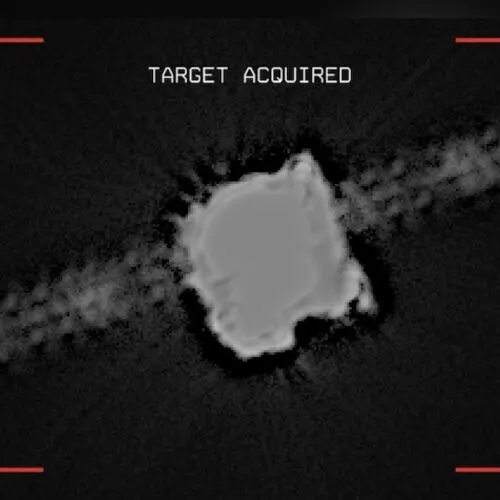
A US Space Force-backed exercise has publicly demonstrated satellites pursuing, inspecting and evading each other in orbit, a capability with potential military uses in monitoring suspicious spacecraft near critical satellites. The Victus Haze mission involved True Anomaly’s Jackal satellite and Rocket Lab’s Puma satellite carrying out close approaches and mutual imaging before beginning repeated pursuit-and-evasion manoeuvres.
Rocket Lab launched Puma from New Zealand on 19 June, less than 17 hours after the Space Force call-up, and activated it for manoeuvres within 38 hours, exceeding the 72-hour target. Puma completed its rendezvous and photographed Jackal in under 59 hours, against an 84-hour requirement; the small satellites are roughly dishwasher-to-refrigerator sized.
In short
- Space Force exercise tested rapid satellite pursuit, inspection and evasion.
- Rocket Lab launched its satellite within 17 hours of call-up.
- The mission highlights potential responses to hostile spacecraft.
Steelman: both sides, in good faith
The strongest fair case each way — we don't pick a winner.
The case for
Supporters argue that satellites able to inspect and track one another could help identify hostile or malfunctioning spacecraft near vital systems, improving protection and deterrence. Demonstrating that small satellites can be launched and manoeuvred quickly may also give the Space Force more flexible ways to respond to emerging threats.
The case against
Critics may argue that public demonstrations of pursuit and evasion risk normalising military competition in orbit and encouraging other states to develop similar capabilities. Close approaches can also be difficult to distinguish from hostile action, potentially increasing mistrust or the chance of miscalculation around satellites that many countries depend on.
Explained simply
The US Space Force has overseen a demonstration of a significant space capability: the ability for small satellites to approach, photograph and manoeuvre around each other in orbit. The exercise, known as Victus Haze, tested whether such operations could be carried out reliably and quickly.
Two satellites were involved in the demonstration. True Anomaly's Jackal and Rocket Lab's Puma tested close approaches, photographed each other, and practised chasing and evading in orbit. Both spacecraft are roughly the size of household appliances.
This capability has military applications. The demonstrated ability to send satellites to closely monitor and photograph other spacecraft could be used to observe and inspect satellites that come near critical American space infrastructure.
Geopolitics Politics Space Technology