SpaceX urges satellite operators to share data to reduce collision risks
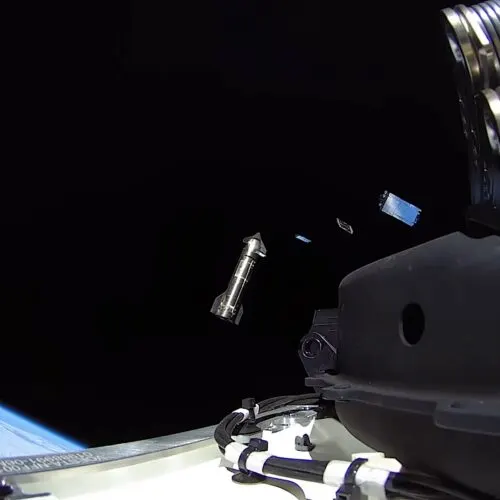
SpaceX has called for improved coordination amongst satellite operators following multiple near-misses between Starlink satellites and spacecraft from other operators in low-Earth orbit. Michael Nicolls, SpaceX's vice president for Starlink, raised these concerns at the International Astronautical Congress, emphasising that without mandatory data-sharing protocols, collision risks will increase as more megaconstellations launch.
The near-misses involved conjunctions of tens to hundreds of metres between satellites travelling at 5 miles per second. Starlink operates over 11,000 satellites—roughly two-thirds of all active spacecraft in low-Earth orbit—with Amazon and Chinese operators now deploying additional megaconstellations. The core issue is that some operators do not publish their ephemeris data (satellite location and trajectory information) or account for other satellites' positions when manoeuvring, creating unpredictable collision risks; no global treaties currently require such information-sharing.
- SpaceX warns of dangerous near-misses between Starlink and other orbiting spacecraft.
- Starlink constellation has 11,000+ satellites; more megaconstellations launching soon.
- No global rules require operators to share satellite location and movement information.
New here? Start with this
Low-Earth orbit, where most active satellites operate, has become increasingly crowded in recent years. The number of satellites launched by multiple operators has grown substantially, and they travel at extremely high speeds—around five miles per second. This combination of increasing traffic and high velocity has raised concerns about potential collisions.
SpaceX operates Starlink, a network of over 11,000 satellites that represents roughly two-thirds of all active spacecraft in low-Earth orbit. Amazon and Chinese operators are now launching their own megaconstellations into this same region. The proliferation of different satellite operators sharing the same orbital space presents coordination challenges.
One issue is that not all satellite operators share their location and trajectory data with one another. Some operators do not consider the positions of other satellites when carrying out manoeuvres. Without international treaties requiring information-sharing, coordination to prevent collisions remains voluntary and incomplete.
Both sides, in good faith
The strongest fair case each way — we don't pick a winner.
The case for
The safety of orbital space requires coordinated action from all operators. With over 11,000 Starlink satellites already in orbit and additional megaconstellations being deployed, the density of objects in low-Earth orbit has reached critical levels where near-misses of tens to hundreds of metres at 5 miles per second pose genuine collision risks. Without mandatory transparency requirements for ephemeris data and manoeuvre coordination, individual operators' decisions create externalities that endanger everyone's satellites and generate cascading debris. A binding international protocol is the only mechanism that can prevent the Kessler syndrome scenario that would render low-Earth orbit unusable.
The case against
Mandatory data-sharing protocols raise legitimate concerns about proprietary business information, national security, and operational sovereignty. Satellite operators—particularly those in non-Western nations—have valid reasons to keep trajectory data confidential for strategic reasons, whilst commercial operators have proprietary interests in their methods. Imposing blanket mandates may entrench SpaceX's dominant market position by favouring large, established players with compliance infrastructure whilst burdening smaller operators and developing nations. Additionally, enforcement across sovereign nations would prove extremely difficult, and technical solutions such as improved tracking, autonomous collision-avoidance systems, and space-traffic management may prove more effective than forced transparency.
Celebrity Entertainment Space Technology
Read the full article at the source →
Originally published by Ars Technica as “SpaceX calls for better coordination in orbit after near-misses with Starlink”.