Technology news and discussion on TalkFuse.
SpaceX revenue rockets while AI spending burns billions
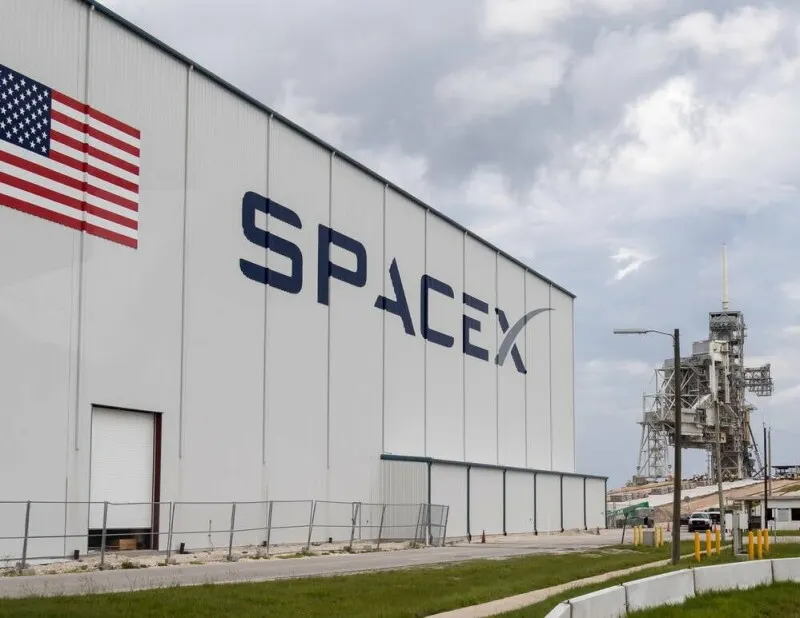
SpaceX posted stronger-than-expected revenue in its first results as a public company, but heavy AI-related spending and another quarterly loss left investors unimpressed, sending shares down roughly 10% in pre-market trading. The results highlight the strain many tech firms face as they pour vast sums into AI infrastructure, with Starlink connectivity remaining SpaceX's only profitable segment even as its AI business grows rapidly.
Total revenue for the quarter ended 30 June reached $7.8 billion, up from $4.7 billion the previous quarter, with connectivity revenue rising to $4.3 billion and AI revenue climbing to $2.6 billion. Capital expenditure jumped to $18.4 billion, of which $15.8 billion went on AI infrastructure, though AI operating losses narrowed to $1.3 billion from $2.5 billion. Elon Musk struck an ambitious tone on the investor call, predicting Starlink could eventually deliver "a majority of the world's internet" and targeting a 2028 Moon landing, while also outlining plans for upcoming Starship flights, including satellite deployment and booster-catching attempts. Shares fell to $110.95, well below the $135 IPO price and less than half their $225.64 peak.
In short
- SpaceX revenue jumped to $7.8bn but AI costs pushed shares down 10%
- Capex hit $18.4bn, with $15.8bn spent on AI infrastructure
- Musk touts Starlink's global reach and 2028 Moon landing ambitions
Steelman: both sides, in good faith
The strongest fair case each way — we don't pick a winner.
The case for
SpaceX is implementing a disciplined growth strategy, combining a demonstrably profitable Starlink business with calculated investment in high-potential AI capabilities. The financial picture shows genuine progress: quarterly AI operating losses have narrowed sharply to $1.3 billion from $2.5 billion, Starlink revenue continues climbing to $4.3 billion whilst remaining solidly profitable, and total quarterly revenue has reached $7.8 billion. The rapidly improving loss trajectory, coupled with announced milestones for Starship development and Moon landing, reflects justifiable confidence in the path to profitability. This approach mirrors successful infrastructure plays in technology, where sustained initial capitalisation precedes network-scale returns.
The case against
The financial position raises legitimate concerns about SpaceX's current trajectory and the sustainability of its growth assumptions. Quarterly capital expenditure of $18.4 billion vastly exceeds quarterly revenue of $7.8 billion, presenting a cash-burn rate that cannot persist without near-term profitability materialising. Whilst AI losses are narrowing, the segment still operates at a substantial loss, and Musk's claim that Starlink could capture a majority of the world's internet appears optimistic given satellite capacity constraints and entrenched terrestrial competition. The stock's sharp decline from its $225 peak to $110.95 reflects serious investor concern that these expensive bets may ultimately fail to generate adequate returns.
Explained simply
SpaceX is a US company founded by Elon Musk that builds rockets and provides internet access through Starlink, a network of satellites. Its business now also includes artificial intelligence, which requires large amounts of computing equipment and other infrastructure.
Starlink sells connectivity to households, businesses and other customers, while SpaceX’s AI operation is a newer source of revenue. The company is spending heavily to expand its AI capacity; its results show why investors watch whether that investment can eventually produce profits. Its rockets and plans for the Moon are another part of the business, but satellite internet remains central to its finances.
AI Art Culture Space Technology