SpaceX to use NVIDIA GPUs for its Starmind project — Here’s what they’ll face in space
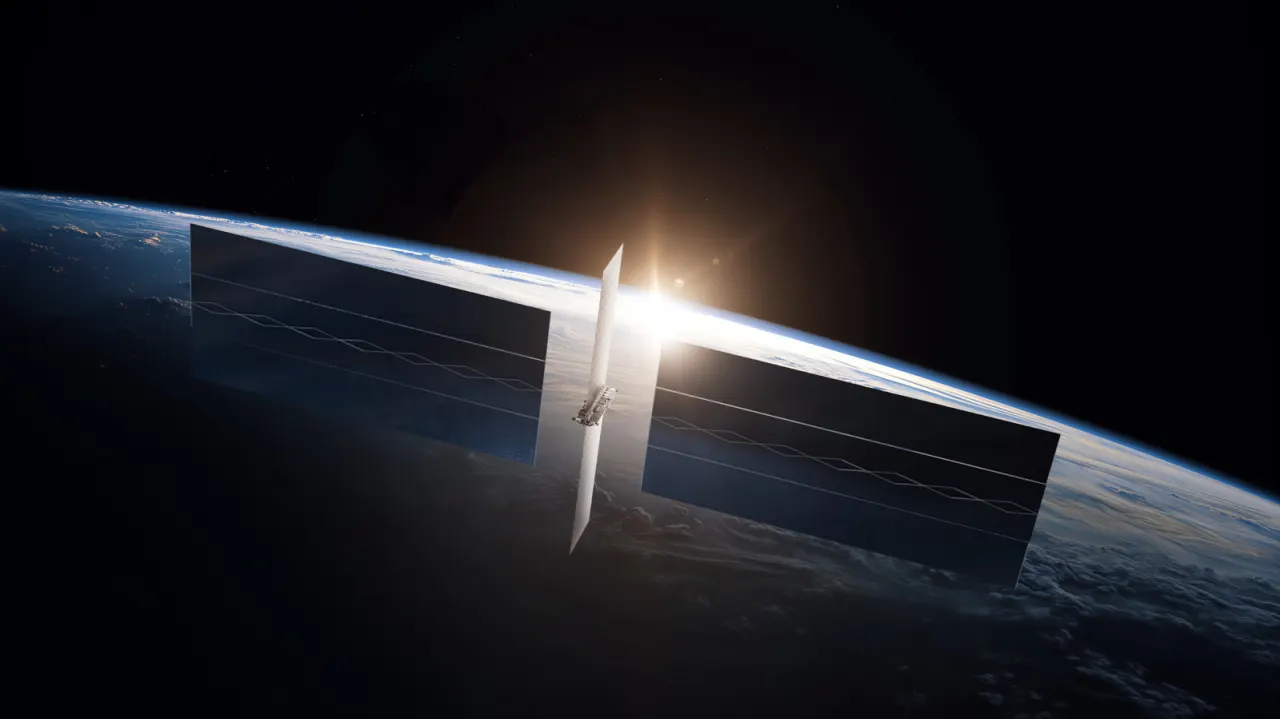
SpaceX has revealed that its ambitious Starmind orbital data centre project will initially rely on NVIDIA's most advanced chips, as it races to meet an aggressive 2027 launch target for its first satellite, AI1. The project, championed by Elon Musk, aims to move AI computing into space to sidestep the land, power and cooling constraints facing terrestrial data centres, and could eventually see up to a million satellites deployed in low Earth orbit. While Musk is confident, experts remain sceptical that deploying cutting-edge chip architecture in the harsh conditions of space is technically or economically feasible on this timeline.
Each AI1 satellite is expected to carry around 72 NVIDIA chips, using the firm's Vera Rubin GPU and CPU platform, which NVIDIA claims offers up to 25 times the compute power of its older H100 model. The satellites will generate roughly 175kW of computing power on average, drawing on solar arrays producing 210kW while orbiting in near-constant sunlight, and will shed heat via large 1,700-square-foot liquid radiators venting into space. Longer term, SpaceX intends to shift production to its own Terafab chip plant, a $119 billion venture with Tesla, though for now it is leaning on NVIDIA to hit its schedule.
- SpaceX plans Starmind orbital AI data centre using NVIDIA's Vera Rubin chips
- First AI1 satellite launch targeted for 2027, despite expert scepticism
- Aims to bypass Earth's power, land and cooling limits for AI computing
New here? Start with this
Data centres house the computers used to train and run artificial intelligence systems. They need large amounts of electricity and equipment to remove heat, which can make it difficult to build them on land. SpaceX, the rocket and satellite company led by Elon Musk, wants to put some of this computing equipment in orbit.
The plan, called Starmind, depends on satellites carrying powerful computer chips and solar panels for electricity. In space, there is no air to carry heat away, so the satellites would need large radiators to release it. They would also have to withstand radiation and the demands of launch and orbit.
NVIDIA makes the chips SpaceX currently plans to use, while Tesla is involved in a longer-term plan to make chips in a facility called Terafab. The project matters because it could offer another way to provide computing capacity for AI, but building and maintaining powerful computers in orbit raises technical and cost questions.
Both sides, in good faith
The strongest fair case each way — we don't pick a winner.
The case for
The project addresses genuine constraints facing terrestrial data centres: land scarcity, power demands, and cooling challenges that become increasingly acute with advancing AI workloads. Space offers inherent advantages—continuous solar energy in low Earth orbit, vacuum for passive cooling, and the ability to dissipate waste heat directly to space via radiators. SpaceX has demonstrated an ability to achieve ambitious technical milestones on demanding timelines, and if the satellite architecture can successfully manage thermal loads and component reliability, the computational density available in space could fundamentally transform the economics of AI infrastructure at scale.
The case against
Deploying cutting-edge semiconductors in the space environment presents formidable unproven challenges: radiation damage to components, thermal cycling stresses, vacuum-induced outgassing, and the difficulty of maintaining reliability when hardware cannot be serviced or replaced. A 2027 launch timeline is extraordinarily compressed given the need for radiation hardening, qualification testing, and integration of novel systems—space-qualified hardware typically requires years of validation. The economic case remains uncertain whether operational costs of launching, maintaining, and replacing a million satellites, plus the engineering complexity of distributed computing across orbital distances, would actually prove more cost-effective than continued improvements to terrestrial data centre efficiency and power sourcing.