Spain attacks ‘selfish’ response of some EU countries to Ceuta migrant crossings
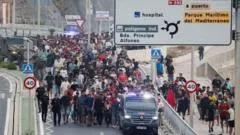
Spain has criticised several EU governments for what it called a “selfish, polarising and unlawful” response after about 60,000 migrants crossed from Morocco into Ceuta, Spain’s North African enclave. The dispute matters because it has intensified tensions over migration policy, border security and the Schengen free-movement area.
Spain says it regained control of the border within 48 hours and that almost all arrivals have returned, while the reported death toll has risen to 67. Italy suspended Schengen arrangements with Spain for a month, with Finland and Denmark backing tougher measures; France, Portugal and others have also considered or increased border checks, despite Spain stressing that Ceuta is outside Schengen.
In short
- Spain says EU reactions to Ceuta crossings were divisive and unlawful.
- About 60,000 migrants entered Ceuta; 67 deaths were reported.
- Several countries tightened or considered tightening border controls.
Steelman: both sides, in good faith
The strongest fair case each way — we don't pick a winner.
The case for
Spain’s position is that irregular crossings at Ceuta are a shared European responsibility, not a problem to be pushed back onto the country at the external border. Supporters argue that suspending Schengen or adopting unilateral restrictions may offer domestic reassurance but weakens EU solidarity, disrupts legitimate travel and leaves frontline states to manage humanitarian, security and administrative pressures alone. They favour coordinated border support, fair burden-sharing and orderly procedures that protect both public safety and migrants’ basic rights.
The case against
Countries such as Italy can reasonably argue that exceptional migration pressures require them to act quickly to preserve effective border control and public confidence in the Schengen system. Supporters of temporary restrictions say free movement depends on member states being able to prevent irregular entry from becoming unmanaged onward movement, especially when existing EU mechanisms have not delivered sufficient control or redistribution. They may see a time-limited suspension as a precautionary measure while pressing for stronger common external-border enforcement and clearer returns arrangements.
Explained simply
Ceuta is a Spanish city on the North African coast, surrounded by Morocco. Its land border is also an external border of the European Union, and people who cross it may seek protection or try to travel onwards into Europe.
EU countries share rules on asylum and border control, while the Schengen area allows travel between many member states without routine checks at internal borders. Spain says Ceuta is outside Schengen, but the crossings have raised questions about how neighbouring countries should respond and how far they can restrict movement.
Spain and Morocco are central to managing the border, while other EU governments have differing views on checks and migration policy. The issue matters because national border measures can affect travel across Europe and test cooperation between EU members.
Europe Government Politics World