Spanish opposition leader calls prime minister a ‘traitor’ over Ceuta migrant crisis
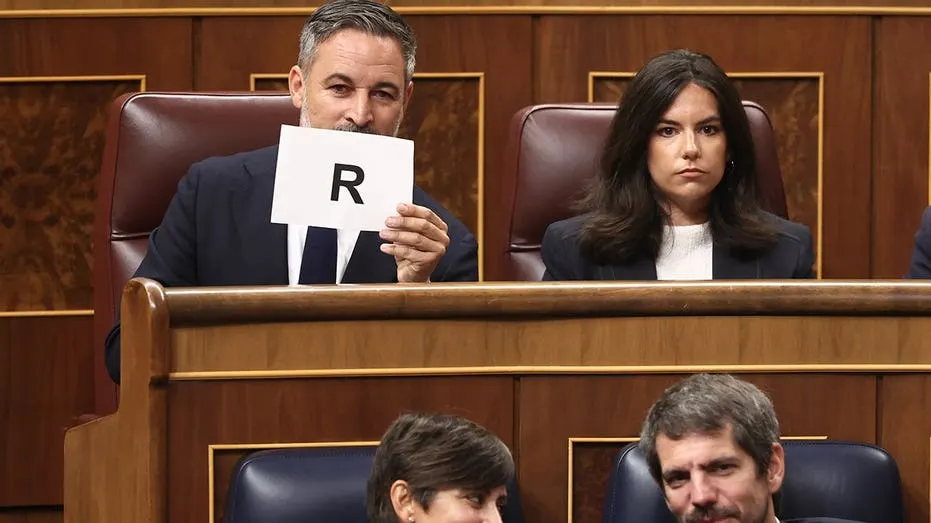
Spanish opposition leader Santiago Abascal accused Prime Minister Pedro Sánchez of being a "traitor" and a "dog" during a heated parliamentary exchange over the government's handling of the migrant crisis in Ceuta, the Spanish enclave in North Africa. Abascal suggested Sánchez was being blackmailed by Morocco, prompting Sánchez to retort, "I will be a dog, but I have no master," before Abascal held up placards spelling out "Traidor" (Spanish for traitor). The clash reflects deepening political tension in Spain over the crisis, which has triggered mass protests and accusations that Sánchez's government has capitulated to Moroccan pressure.
More than 70,000 migrants crossed into Ceuta in July, with most subsequently returned to Morocco, though some remain in the enclave living in beachside tent encampments. Separately, declassified documents released by the Spanish government revealed that the national intelligence agency (CNI) had warned officials the day before the crossing began, flagging social media calls for an "assault on the fence and by sea" involving two groups with a combined 180,000 followers.
In short
- Vox leader Abascal called PM Sánchez a "traitor" and "dog" in parliament
- Clash stems from Ceuta migrant crisis; over 70,000 crossed in July
- Declassified files show intelligence agency warned of crossing in advance
Steelman: both sides, in good faith
The strongest fair case each way — we don't pick a winner.
The case for
Critics can argue that the scale of the crossings and the intelligence warning raise serious questions about whether the government prepared adequately and defended Spain’s border effectively. They may also see firm scrutiny of Sánchez’s dealings with Morocco as necessary to ensure national policy is not shaped by pressure from another state.
The case against
Defenders of Sánchez can argue that a sudden, large-scale humanitarian and border emergency required rapid decisions, and that returning most arrivals to Morocco helped restore control while managing immediate pressures in Ceuta. They may regard accusations of capitulation or disloyalty as unsupported by the reported facts, and argue that intelligence warnings do not by themselves show that officials could have prevented the crossings.
Explained simply
Ceuta is a Spanish territory on the North African coast, next to Morocco. Its land border is marked by a fence, and its position makes it a crossing point for people seeking to reach Europe.
Spain and Morocco have a close but sometimes strained relationship, including cooperation on migration. The Spanish government, led by Prime Minister Pedro Sánchez, has faced scrutiny over its response to the arrivals; Santiago Abascal leads the opposition party Vox, which takes a hard line on immigration.
The crisis matters because it has raised questions in Spain about border management, relations with Morocco and the treatment of people who cross. It has also become a focus of political disagreement over whether the government was prepared for the arrivals.
Africa Europe Government Politics World