Spencer Pratt posts disturbing Lindsay Clancy reenactment cartoon as post partum murder trial divides America
Developed over time first seen 2 months ago
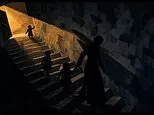
Reality TV personality Spencer Pratt drew widespread condemnation after posting a graphic, Tim Burton-style cartoon reenactment of Lindsay Clancy killing her three children, accompanied by an extended tirade describing the deaths in explicit detail and branding Clancy's online sympathisers "hollowed-out, depraved crazies". His intervention placed him at the centre of a bitter public row over how the case is discussed on social media, exposing a deep divide between those who view Clancy as a cold-blooded killer and those who sympathise with her mental state.
Clancy, 36, stood trial in Massachusetts for the January 2023 strangulation deaths of her three children, Cora, five, Dawson, three, and Callan, eight months, at the family's home while her husband, Patrick, was out; her defence argued she was suffering severe post-partum psychosis, while prosecutors contended the killings were premeditated. Pratt, 43, a former reality star who ran unsuccessfully for Los Angeles mayor earlier this year, used the video and an accompanying X post to attack "mommy-sleuth TikTok" users defending Clancy or blaming her husband, calling the internet "a mistake" and declaring "we have officially broken bad".
- Spencer Pratt posted a graphic cartoon reenacting the Lindsay Clancy killings.
- Clancy is on trial for strangling her three children in January 2023.
- Post reignited fierce public divide over the case on social media.
New here? Start with this
Lindsay Clancy is a former labour and delivery nurse from Massachusetts who is on trial over the deaths of her three young children, who were found strangled at the family home in January 2023. She survived a suicide attempt shortly afterwards and has been left paralysed. Her defence argues she was suffering from severe post-partum psychosis at the time, while prosecutors contend the killings were planned, making her mental state at the time of the deaths the central question for the court.
The case has attracted intense public attention, partly because it touches on difficult questions about maternal mental illness, accountability and how the justice system should treat parents who kill while unwell. Opinion has split between those who see Clancy as a victim of an unrecognised medical crisis and those who view her as culpable for her children's deaths, with much of this debate playing out on social media platforms such as TikTok and X.
Spencer Pratt is an American reality television personality, best known from the show The Hills, who has built a large online following and also made an unsuccessful bid to become mayor of Los Angeles earlier this year. He has become a prominent, outspoken voice on the Clancy case on social media, which is why his latest post has drawn wider attention to the ongoing row over how the trial is being discussed and depicted online.
Both sides, in good faith
The strongest fair case each way — we don't pick a winner.
The case for
Supporters of Pratt's intervention argue that public figures are entitled to challenge what they see as a troubling wave of online sympathy for someone accused of killing her own children, and that vividly reminding audiences of the children's fate counters a narrative they feel has become too focused on the accused's suffering. They see this as pushing back against a culture of excusing serious harm through therapeutic language, and as giving voice to outrage on behalf of victims who cannot speak for themselves, within his right to comment on a case already being fiercely debated in public.
The case against
Critics argue that dramatising alleged child killings in cartoon form, before a trial has concluded, is gratuitous and risks causing further distress to a grieving family while trivialising a case that involves serious, contested questions about severe post-partum psychosis. They contend that a private citizen amplifying graphic content for social media attention can prejudice public perception ahead of a jury verdict, oversimplifies genuine debates about maternal mental illness, and that responsible public discussion of such tragedies calls for restraint rather than sensationalised imagery.
Full account
Reality television personality Spencer Pratt has caused controversy after posting a cartoon depicting the alleged actions of Lindsay Clancy, the Massachusetts mother currently on trial over the deaths of her three young children. The animated clip, shared by the former Hills star on X, dramatises the events prosecutors say took place in January 2023, when Cora, five, Dawson, three, and Callan, eight months old, were strangled at the family's home. Clancy, 36, denies criminal responsibility, with her defence arguing she was in the grip of severe post-partum psychosis at the time, while prosecutors maintain the killings were a deliberate act.
Pratt, 43, who unsuccessfully ran for mayor of Los Angeles earlier this year, accompanied the animation with lengthy remarks criticising what he described as an online culture that has rallied behind Clancy. He said the internet had produced a warped environment in which sympathisers, including commentators on TikTok, had lost perspective on the severity of the crime, going so far as to direct blame towards her husband, Patrick Clancy. Pratt described the manner of the children's deaths in graphic terms and accused parts of social media of behaving in a way he called irrational and dystopian.
The case has become a focal point for wider debate in the United States, with the trial attracting crowds of supporters outside the courthouse as well as vocal critics online. A separate perspective was offered by Jonathan Hatami, a prosecutor known for his work on high-profile child abuse cases, who cautioned that public sympathy for Clancy risked overshadowing the children who died. He argued that whatever failings by professionals or systems around her deserved examination, responsibility for the killings ultimately rested with her, and expressed concern that the victims were being pushed out of the narrative.
The trial itself has featured detailed and distressing testimony about the circumstances of the deaths, including evidence relating to Clancy's own attempt to take her life shortly afterwards, which left her paralysed. Her defence has pressed the argument that untreated psychosis, rather than depression, explains her actions, while prosecutors continue to contest that framing. As proceedings continue, the case has exposed a broader rift in public opinion over how mental illness, culpability and sympathy should be weighed in such circumstances.
Where outlets differ
The tabloid-style report centres on Spencer Pratt's cartoon and his personal commentary, quoting him at length describing the killings and criticising online sympathisers, with detail on his own background as a reality star and failed mayoral candidate.
The other report focuses less on Pratt and instead foregrounds the views of prosecutor Jonathan Hatami, emphasising concern that public and social-media support for Clancy is diverting attention from the child victims, and provides procedural detail from the Plymouth County District Attorney's Office.
Only the second source includes a suicide-prevention helpline notice and references related coverage of the case's social-media following and courtroom crowds.
The first source gives more graphic detail on the alleged method of the killings as recounted by Pratt, while the second is more restrained and focuses on accountability and the treatment of Clancy as a public figure of sympathy.