Spending deal comes with a bonus: Blocking political control of grants
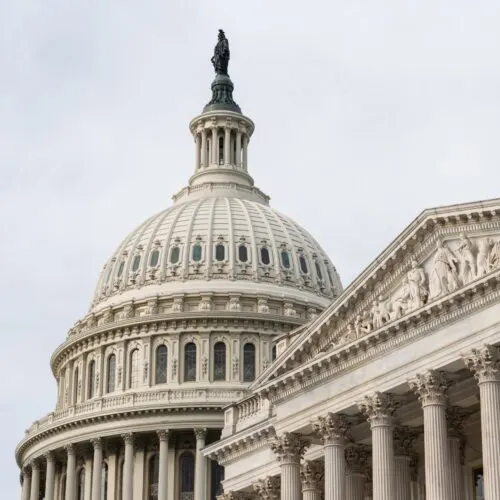
The US House of Representatives passed a stopgap funding measure on Tuesday that keeps the federal government running through early December, and buried within it is a provision blocking the Office of Management and Budget (OMB) from imposing controversial new rules over research funding. The rules would have handed political appointees sweeping power to dictate which science gets funded and to cancel grants at will, a prospect that had alarmed scientific and health organisations. Although the measure still needs President Trump's signature, he is widely expected to sign it to avoid a shutdown ahead of the midterm elections.
The protection made it into law somewhat by accident: House Republicans failed to agree on their own funding bill, so the chamber instead adopted a version the Senate had already passed in early August. Senators Patty Murray (Democrat, Washington) and Susan Collins (Republican, Maine) had inserted language into that Senate bill preventing OMB from enacting the grant-control rules before the stopgap expires on 11 December. The measure passed the Senate 90-6 and the House 370-48, with House opposition focused on unrelated issues, suggesting similar safeguards could be included in future budget deals without much resistance.
In short
- Stopgap bill funds US government to 11 December 2026
- It also blocks OMB's plan for political control over grants
- Wide bipartisan margins hint the block could be extended later
Steelman: both sides, in good faith
The strongest fair case each way — we don't pick a winner.
The case for
Supporters of the restriction argue that research grants should be awarded on scientific merit and established criteria, rather than exposed to shifting political priorities or cancellation at an appointee’s discretion. Limiting OMB’s authority can protect researchers’ independence, give health and science organisations greater certainty, and help preserve public trust in federally funded research.
The case against
Those wary of the restriction argue that elected officials and their appointees should retain meaningful oversight of public spending, including the ability to redirect grants that no longer serve legitimate public priorities. They may also see a temporary funding bill as a poor vehicle for limiting executive authority, and favour clear accountability safeguards rather than broadly blocking new rules.
Explained simply
The Office of Management and Budget (OMB) helps the US president prepare the federal budget and oversee how government money is spent. Federal research grants support work by universities, hospitals and other organisations in areas such as science and health.
Rules giving political appointees more say over which research receives grants, or the power to cancel grants, could affect how that work is funded. The dispute is about how much control the White House should have over research money approved by Congress.
Congress must regularly agree funding to keep federal agencies operating. Stopgap measures provide temporary funding while lawmakers work on longer-term budgets, and can also carry rules about how government money is managed.