Business news and discussion on TalkFuse.
Star Wars Zero Company Is the Andor Replacement No One Expected
Developed over time first seen 3 months ago
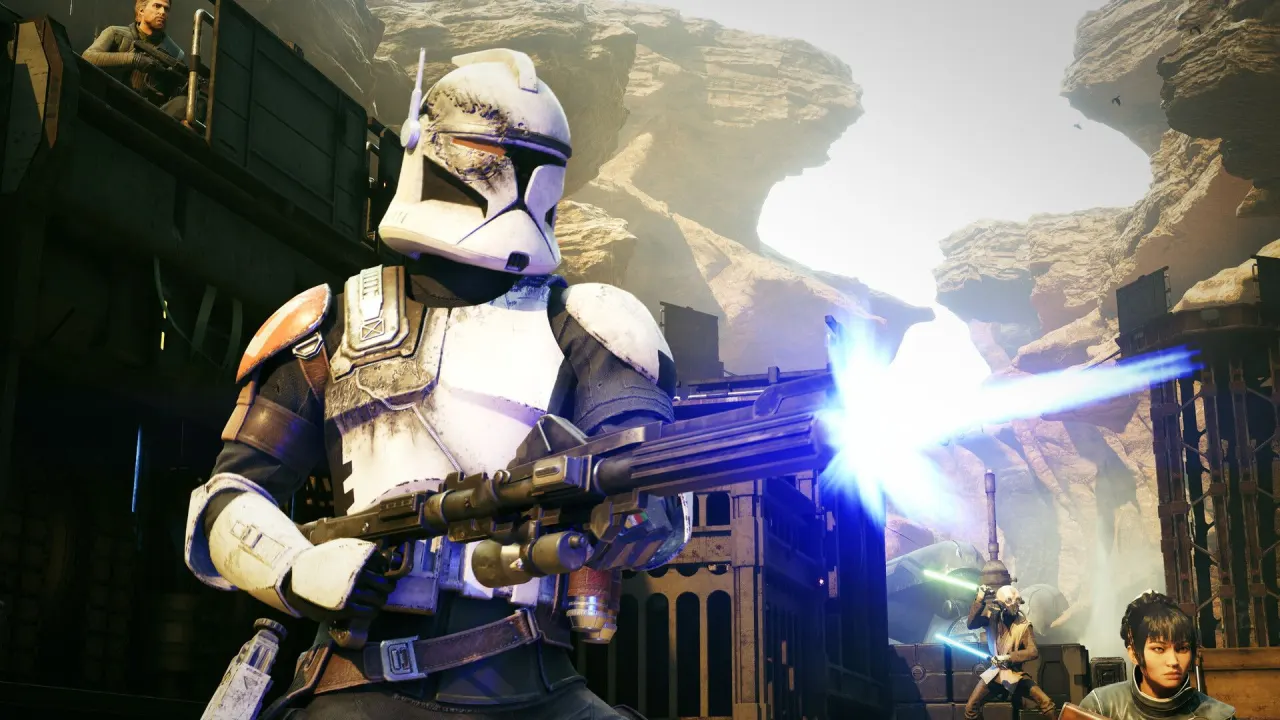
A Polygon opinion piece describes Star Wars: Zero Company, the debut tactics game from developer Bit Reactor, as an unexpected favourite of 2026 because of its focus on ordinary, cash-strapped characters rather than its XCOM-inspired combat systems. The writer, a self-described casual Star Wars fan, argues the game fills the gap left by Andor's grounded political storytelling, calling it an "economic space opera" rather than a typical Jedi-versus-Sith saga, and likens its tone to the crew dynamics of Cowboy Bebop.
Set during the Clone Wars, Zero Company follows a mercenary squad led by the sarcastic, money-driven Hawks, hired to stop a Separatist cult spreading a mysterious plague. The writer finds this central plot conventional, saying the real appeal lies in the crew's financial hardship and debts to the Hutts, alongside small character moments such as crewmate Runa's gambling stories and Hawks' morally fraught choice of jobs, which together give a human, working-class perspective on the wider Star Wars conflict.
- Sources
- 4
- Outlets
- 3
- Left · Centre · Right
- 1 · 0 · 0
In short
- Polygon praises Star Wars: Zero Company's focus on ordinary, indebted mercenaries
- Writer compares its tone to Andor and Cowboy Bebop's crew dynamics
- Game's Clone Wars plot is secondary to its "gig economy" character drama
How this story developed
- 3 months ago A Polygon opinion piece argues that Star Wars: Zero Company, the new XCOM-style tactics game from debut developer Bit Reactor, has become an unexpected favourite of 2026 not because of its combat systems but because of its focus on ordinary, cash-strapped characters navigating a galaxy-spanning conflict.
- 3 months ago A Polygon writer's essay on Star Wars: Zero Company, the new XCOM-style tactics game from developer Bit Reactor, argues the game succeeds not through its strategy gameplay but through its focus on ordinary, downtrodden characters getting by amid a galaxy-spanning conflict.
- 3 months ago A Polygon opinion piece describes Star Wars: Zero Company, the debut tactics game from developer Bit Reactor, as an unexpected favourite of 2026 because of its focus on ordinary, cash-strapped characters rather than its XCOM-inspired combat systems.
- 3 months ago A Polygon writer's essay on Star Wars: Zero Company, the new XCOM-style tactics game from developer Bit Reactor, argues the game succeeds not through its strategy gameplay but through its focus on ordinary, downtrodden characters getting by amid a galaxy-spanning conflict.
- 3 months ago A Polygon writer explains why Star Wars: Zero Company, a new tactics game from developer Bit Reactor, has become one of their favourite games of 2026 despite only casual interest in the Star Wars franchise.
- IGN Star Wars Zero Company Was Originally Pitched as a Titanfall Universe Game
- The Guardian Star Wars Zero Company review – joyfully absurd heroics with a tight-knit team of misfits
- Polygon Star Wars Zero Company Is the Andor Replacement No One Expected
- Polygon Star Wars Zero Company Handles Difficulty Like No Other Game Ever Has
Full account
Star Wars: Zero Company, the debut release from developer Bit Reactor, has emerged as an unexpected favourite among critics this year, with several reviewers describing it as filling the void left by the acclaimed television series Andor. The turn-based tactics game, available on PlayStation 5, Xbox Series S/X and PC, borrows heavily from the mechanical framework of Firaxis's XCOM series — squad-based combat, permadeath threats and dice-roll tension — while transplanting those systems into the Star Wars galaxy during the Clone Wars era. Several of Bit Reactor's staff previously worked on XCOM titles, and that lineage is evident throughout the design.
The game follows a mercenary outfit led by a brusque, sardonic commander named Hawks, who takes on a contract to investigate a Separatist cult spreading a mysterious plague. Reviewers agree that this central plot is fairly conventional by Star Wars standards, offering little that feels fresh. What has won critics over instead is the game's focus on the mundane, financial struggles of its ragtag crew. Far from an elite or well-funded unit, Zero Company is depicted as perpetually broke, taking dirty jobs for the Hutts to service its debts, with crew members shown grumbling about money troubles rather than galactic threats. This grounded, working-class framing of the Star Wars universe — likened by one critic to the freelance-economy anxieties explored in the anime Cowboy Bebop — is credited with giving the game an emotional throughline that echoes the intimate, politically grounded storytelling of Andor, in contrast to the franchise's usual grand mythic stakes.
Beyond narrative, reviewers praise the game's handling of character relationships and battlefield dynamics as a particular strength. Combat encounters are described as lively and reactive, with squadmates — including a Mandalorian medic, a Jedi, a clone trooper and an eccentric alien scoundrel known for his verbal quirks — building camaraderie through small in-battle moments, such as timely rescues or well-placed compliments after a good shot. These interactions feed into a bonding system that rewards cooperation with tangible stat improvements, reinforcing the sense of the squad as a dysfunctional but loyal family. One reviewer noted that the game's creative director has framed the project around the idea that "Star Wars is about loss," positioning permadeath and sacrifice as thematically central to the experience.
Not every assessment is uniformly glowing, however. While one account frames Zero Company as an outright triumph and one of the standout games of the year, another is more measured, praising its combat and character writing while flagging a tension between scripted narrative beats and the emergent, systems-driven storytelling XCOM fans might expect. That reviewer observed that despite an early tutorial warning players of permanent character death, the game rarely lets squad members die even on higher difficulty settings, which somewhat blunts the dramatic stakes and shifts the game's strongest storytelling towards scripted camaraderie rather than unpredictable, player-driven loss. Taken together, the coverage suggests Zero Company has succeeded less through its plot than through its texture — the everyday, financially precarious lives of its mercenary cast — earning comparisons to Andor for delivering a smaller, more human-scale Star Wars story rather than another galaxy-spanning epic.
Where outlets differ
From the full account, which is AI-written from the sources:
Source 1 is unreservedly enthusiastic, calling Zero Company one of its favourite games of 2026 and emphasising the 'gig economy' framing and comparisons to Cowboy Bebop and Andor's grounded storytelling.
Source 2 is more critical/balanced, praising the combat and character bonding systems but specifically noting a flaw: permadeath is threatened but rarely delivered, which undercuts the game's emergent storytelling potential.
Source 1 focuses on narrative themes and personal resonance (freelancing, economic precarity); Source 2 focuses more on game design mechanics, XCOM lineage, and specific gameplay/combat examples (e.g. the character Kabb).
Source 2 includes a direct quote from creative director Greg Foertsch ('Star Wars is about loss'), which Source 1 does not mention.
Explained simply
Star Wars: Zero Company is a newly released video game set during the Clone Wars era of the Star Wars franchise, made by developer Bit Reactor in the style of the turn-based strategy series XCOM. It follows a mercenary squad led by a character named Hawks, hired to investigate a plague spread by a cult loyal to the Separatists, one of the two main factions fighting in the Clone Wars.
The game has drawn attention less for its combat mechanics and more for its tone: rather than focusing on Jedi, Sith or grand galactic battles, it centres on the everyday financial struggles of its mercenary crew, including debts and unstable income. This has led commentators to compare it to the acclaimed TV series Andor, which was similarly praised for depicting ordinary people and political grit rather than traditional heroics.
The wider context is a recurring conversation about how Star Wars stories can expand beyond its familiar hero-versus-villain formula. With Andor having ended, some fans and critics have been looking for other Star Wars projects that offer a similarly grounded, character-driven approach, and this game is being discussed as one unexpected example.
Coverage · 4 sources
- PolygonStar Wars Zero Company Is the Andor Replacement No One Expected
- IGNStar Wars Zero Company Was Originally Pitched as a Titanfall Universe Game
- The GuardianLeftStar Wars Zero Company review – joyfully absurd heroics with a tight-knit team of misfits
- PolygonStar Wars Zero Company Handles Difficulty Like No Other Game Ever Has
Business Celebrity Companies Entertainment Offbeat Weird & Viral