Culture news and discussion on TalkFuse.
Starbucks Korea raided by police after ‘Tank Day’ campaign sparks public outrage
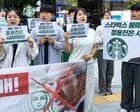
South Korean police have raided the headquarters of Starbucks Korea as part of an investigation into a marketing campaign that critics say trivialised the country's 1980 Gwangju pro-democracy uprising. Investigators searched the Seoul offices on Tuesday and reportedly also searched the homes of company executives, following complaints from relatives of victims of the crackdown, in which around 200 people were officially recorded as killed.
The controversy centred on a range of reusable tumblers branded "SS Tank", with 18 May designated "Tank Day" – the anniversary of the Gwangju massacre – alongside a slogan widely seen as echoing a notorious 1987 police cover-up of a student activist's death under torture. The backlash led Shinsegae Group, which owns a 67.5% stake in Starbucks Korea, to scrap the promotion, sack the chief executive, and issue a televised apology from its chair, Chung Yong-jin. Starbucks Korea also closed all its stores nationwide on 22 June for mandatory training on history and social awareness.
In short
- Police raid Starbucks Korea HQ over "Tank Day" marketing row
- Campaign linked to 1980 Gwangju massacre anniversary sparked outrage
- Shinsegae scrapped promotion, fired CEO, apologised publicly
Steelman: both sides, in good faith
The strongest fair case each way — we don't pick a winner.
The case for
The campaign appears to be an unfortunate coincidence rather than deliberate mockery. Tank imagery on reusable tumblers is generic product design; the marketing team likely did not intentionally connect the May 18 date to the massacre or recognise the historical slogan reference. Whilst the combination is undeniably insensitive, a police raid and mandatory re-education seem disproportionate responses that chill free expression and business decisions, setting a precedent where even unintentional cultural missteps become criminal matters rather than opportunities for dialogue and correction.
The case against
Companies operating in South Korea have a responsibility to respect the country's significant historical trauma, particularly given the scale of loss in the Gwangju uprising. The convergence of tank imagery, the specific May 18 date, and a slogan echoing a government cover-up suggests either deliberate provocation or negligent disregard for basic sensitivity. The families of approximately 200 victims have legitimate moral standing to demand accountability, and the company's response—executive dismissal, historical training, and formal apology—represents appropriate corporate responsibility rather than censorship or suppression.
Explained simply
In May 1980, people in the south-western city of Gwangju protested against military rule in South Korea. The army violently suppressed the uprising; about 200 deaths were officially recorded, though the events remain a painful part of the country’s recent history.
The protests were part of a wider movement for democracy, which grew after years of authoritarian government. Memories of state violence and efforts to conceal it have made references to Gwangju and its victims especially sensitive in South Korea.
Art Asia Business Culture Elections Politics World