Steam Deck vs. Switch 2 — which gaming handheld is more powerful?
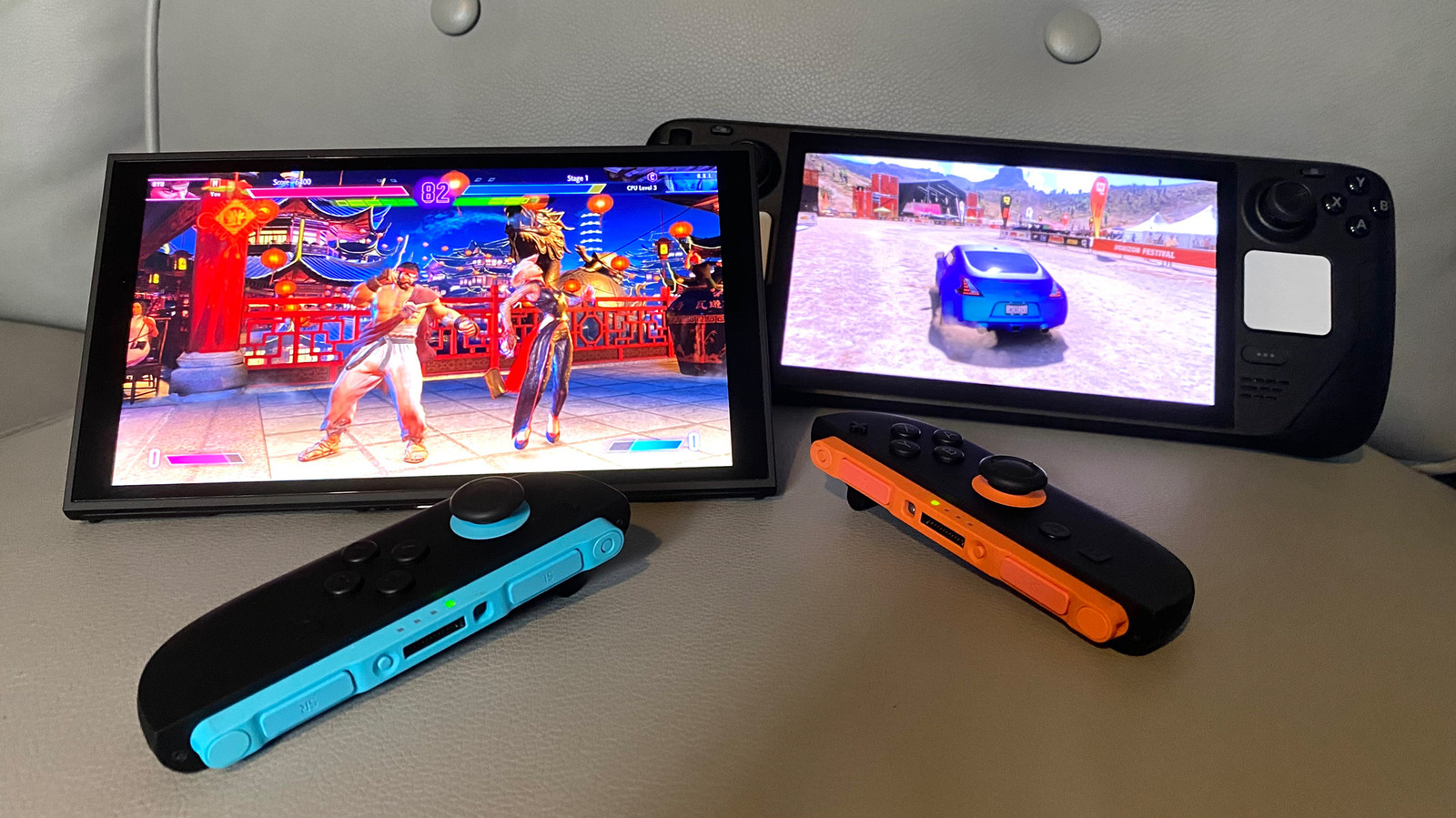
The Steam Deck and Nintendo Switch 2 take very different approaches to portable gaming, one bringing PC gaming to a handheld and the other offering a hybrid handheld-console experience, prompting frequent comparisons of their raw performance. In handheld mode, the two devices are remarkably closely matched, but the Switch 2 pulls significantly ahead once docked, thanks to a substantial boost in GPU power that enables 4K gameplay on a television.
In portable mode, the Switch 2's GPU manages around 1.71 TFLOPS versus the Steam Deck's 1.6 TFLOPS, but docking boosts the Switch 2 to as much as 3.7 TFLOPS, while the Steam Deck gains nothing from docking. The Steam Deck counters with a stronger CPU, capable of reaching 3.5GHz compared with the Switch 2's 1.1GHz, plus more unified memory (16GB versus 12GB). However, the Switch 2 benefits from Nvidia DLSS upscaling and over 1,500 CUDA cores for ray-tracing, and as a fixed platform it tends to be better optimised by developers, whereas Steam Deck owners often need to adjust settings for stable performance on less-optimised PC titles.
- Switch 2 and Steam Deck are near-equal in handheld performance
- Docking gives the Switch 2 a big graphics power advantage
- Steam Deck has faster CPU and more RAM, but less optimisation