Weird & Viral news and discussion on TalkFuse.
Steam Frame shows strong VR performance despite industry slowdown and steep pricing
Developed over time first seen 3 months ago
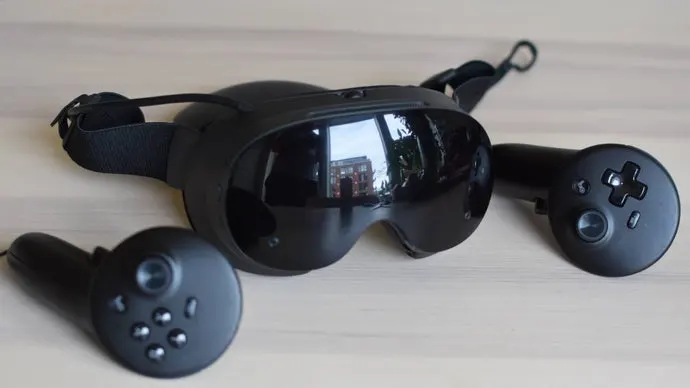
Valve has launched the Steam Frame VR headset at £889/$1,059, arriving amid a slowdown in original VR game releases and ongoing component shortages that have driven up the price. Despite the steep cost, RPS's review finds the hardware itself genuinely likeable, combining solid core VR performance with new engineering ideas that could influence PC gaming more broadly, not just VR titles.
The wireless, battery-powered Frame is lighter and easier to set up than Valve's earlier Index headset, with sharper 2,160×2,160 LCD lenses that slightly edge out rival Meta Quest 3 in resolution, and Zenni Optical prescription inserts available for glasses wearers. Its controllers trade the Index's precise finger tracking for a more gamepad-style layout with drift-resistant TMR thumbsticks borrowed from the new Steam Controller, while passthrough camera quality remains basic and monochrome, lagging behind the Quest 3's colour cameras. The headset also introduces a modular design allowing parts like the strap, speakers, battery and facepad to be swapped out, though only Valve's own Ergonomic Accessories Kit is confirmed at launch, and it balances PC streaming with standalone use, aided by foveated streaming that leverages the device's eye-tracking.
- Sources
- 2
- Outlets
- 2
- Left · Centre · Right
- 0 · 0 · 0
In short
- Valve's Steam Frame VR headset launches at £889/$1,059 amid chip shortages
- Lighter, sharper and easier to set up than the Valve Index
- Modular design and hybrid streaming/standalone use impress, despite basic passthrough cameras
How this story developed
- 2 months ago A second write-up of the same review reaffirmed those conclusions, restating the Frame's edge over the cabled Index and Meta Quest 3 in sharpness and portability, its gamepad-style controllers, its basic monochrome passthrough, and its foveated streaming feature, without introducing any new details beyond the initial report.
- 2 months ago Valve released the Steam Frame, its £889/$1,059 standalone and PC-streaming VR headset, and Rock Paper Shotgun's review declared it a genuinely accomplished device despite launching into a component shortage and a lull in new VR titles.
Full account
Valve has begun shipping its long-awaited Steam Frame headset, the last of the three devices – alongside the Steam Machine and a redesigned Steam Controller – that the company unveiled back in November 2025. Early hands-on impressions suggest the standalone, wireless VR headset is a genuinely likeable and well-engineered piece of hardware, arriving at a moment when the broader VR market is in something of a lull, with fewer new original VR titles being released and component shortages continuing to squeeze the hardware industry. Both reviewers found plenty to admire in the Frame's design and capability, even as they flagged its price as the most likely sticking point for prospective buyers.
On the hardware side, reviewers praised the Frame as a clear step up from Valve's tethered, base-station-reliant Index headset, noting that it is lighter, more compact and considerably easier to set up despite being fully wireless and battery-powered. Its twin 2,160×2,160 LCD lenses were said to offer a modest sharpness advantage over Meta's rival Quest 3, and prescription lens inserts, produced in partnership with Zenni Optical, mean most glasses-wearers should be able to find a comfortable fit without them. The redesigned controllers drop the Index's finely detailed finger-tracking in favour of a more conventional gamepad-style layout with face buttons and a D-pad, which one reviewer felt made the controllers feel immediate and familiar rather than diminished, helped by drift-resistant magnetoresistance thumbsticks carried over from the new Steam Controller. Passthrough camera quality was flagged as a relative weak point, with the Frame's monochrome cameras judged less capable than the full-colour passthrough offered by the Quest 3, though this was not seen as a major drawback given that mixed-reality applications remain a fairly niche use case.
A recurring theme across the coverage was the Frame's strength as a wireless PC VR streaming device. Its built-in Qualcomm Snapdragon 8 Gen 3 chip was described as capable enough to run a range of standalone and lighter indie titles directly on the headset, but the more striking experience came from pairing the Frame with a powerful desktop PC over its bundled 6GHz wireless dongle, which one reviewer said delivered some of the most impressive gaming experiences they'd had in years when streaming graphically demanding titles at high settings. Combined with inside-out tracking from onboard cameras and internal eye tracking, this positions the Frame as a rival not just to consumer headsets such as the Quest 3 and Sony's PS VR2, but also to more expensive dedicated PC VR devices like the Samsung Galaxy XR and Play For Dream MR, both of which carry sharper optics but considerably higher price tags.
Pricing emerged as the clearest point of concern in both accounts. Valve had reportedly hoped to keep the Frame's cost below that of the original £799/$999 Index, but supply issues, particularly a prolonged shortage affecting memory chip prices, pushed the eventual starting price to £889/$1,059 for the base 256GB model, rising to $1,299 for a 1TB version. That leaves the Frame considerably pricier than mainstream competitors such as the $599 Quest 3 and $399 PS VR2, the latter of which also requires a separate PC adapter and remains tethered when used with a computer. Reviewers agreed this price gap will likely deter buyers simply seeking an affordable standalone headset, even as they credited the Frame with genuine engineering merit and strong performance for those already invested in a capable gaming PC.
Where outlets differ
From the full account, which is AI-written from the sources:
The Rock Paper Shotgun-style review frames the Frame primarily around its hardware design and engineering ambition – portability, lens sharpness, controller ergonomics and passthrough quality compared with the Quest 3 – and cites UK pricing (£889) alongside the US figure.
IGN's review centres more on the Frame's performance as a wireless PC VR streaming device paired with a high-end gaming rig, and goes into more detail on pricing tiers (256GB vs 1TB models) and comparisons with a wider range of rival headsets, including the PS VR2, Samsung Galaxy XR and Play For Dream MR – comparisons not mentioned in the other account.
Only the first source mentions the Zenni Optical prescription lens inserts and a rumoured third-party colour camera accessory; only IGN specifies the exact PC hardware used for streaming tests (RTX 5090, Ryzen 7 9850X3D) and named streamed titles.
Steelman: both sides, in good faith
The strongest fair case each way — we don't pick a winner.
The case for
The Steam Frame represents genuine innovation—modular design, superior resolution, and foveated streaming capabilities that could influence PC gaming beyond VR alone. In a maturing market, Valve's investment in premium hardware reflects confidence in VR's future and rightfully serves the enthusiasts and developers who drive technological progress, justifying its premium price positioning and demonstrating the company's commitment even during an industry slowdown.
The case against
A £889 price point during VR's acknowledged slowdown creates an accessibility problem precisely when the market needs mass adoption to reverse declining game releases and rebuild developer interest. With Meta Quest 3 offering comparable performance at lower cost and a more developed ecosystem, the Steam Frame risks reinforcing VR as an expensive niche concern rather than the mainstream technology the industry requires for growth and viability.
Explained simply
Valve is a video games company best known for creating the Steam platform, the largest online store and library system for PC games. It has now released the Steam Frame, a new virtual reality (VR) headset that can be used either as a standalone device or connected wirelessly to a gaming PC for extra power. VR headsets let wearers see and interact with a fully three-dimensional digital environment rather than looking at a flat screen.
The Frame arrives at a difficult time for VR generally, with fewer new games being made for the technology and a global shortage of the electronic components used to build such devices, which has pushed up manufacturing costs. Its main rival in the VR headset market is Meta's Quest 3, made by the company behind Facebook and Instagram, while Valve's own earlier headset, the Index, required a cable connection to a PC.
This matters because VR remains a niche but closely watched corner of gaming, and how well a major company like Valve can balance cost, comfort and performance says something about the technology's wider prospects. Some of the design ideas in the Frame, such as its wireless streaming methods, could also end up shaping PC gaming hardware beyond VR specifically.
Coverage · 2 sources
Read the full article at the source →
Originally published by Rock Paper Shotgun as “Steam Frame review: Another best-in-class VR headset by Valve, though virtual realities clash with economic ones”.