Video games news, releases, esports and culture — all the biggest gaming stories in one place.
Steam Week in Review: A torrent of janky retail sims continues to flood Steam, and there’s no end in sight
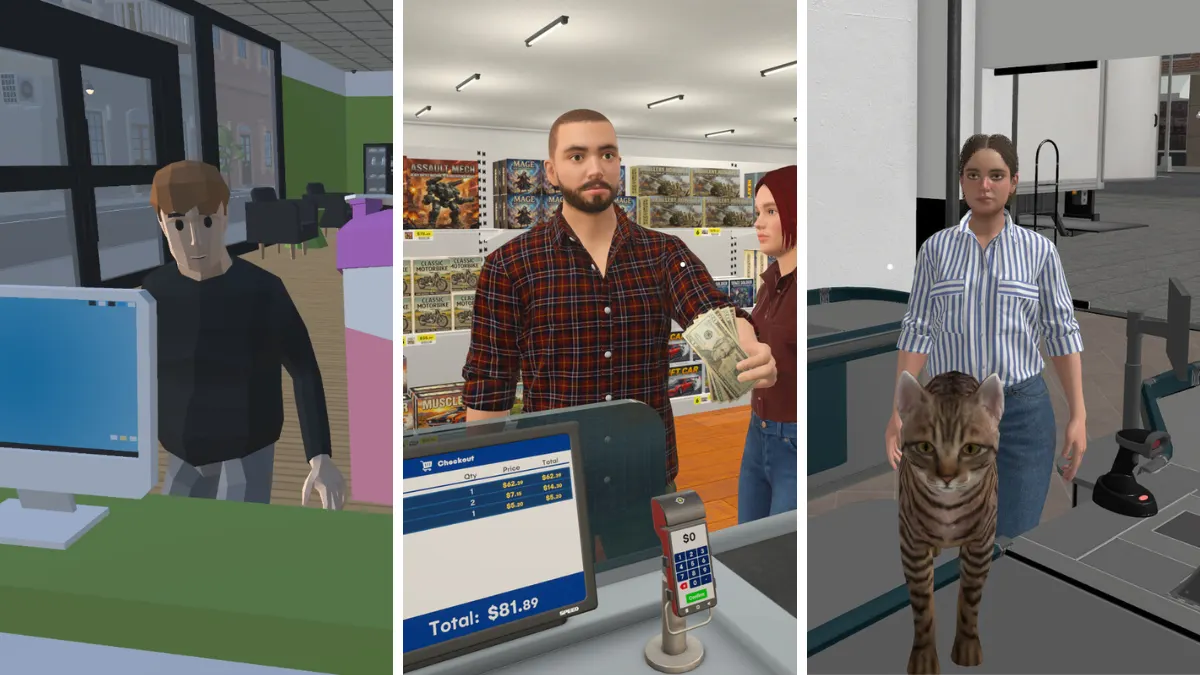
Steam continues to receive large numbers of basic first-person retail simulation games, with 14 released in a single week. The article argues that the trend matters because a few find substantial audiences, encouraging publishers to produce many low-cost imitators that make Steam harder to browse.
Boba Cafe Simulator was the clear outlier, reaching 7,523 peak concurrent players and receiving more than 754 overwhelmingly positive reviews; Bookshop Simulator and Mall Together also exceeded 1,000 concurrent players. PlayWay, which has 474 Steam products listed and more than 100 unreleased, exemplifies the approach of testing many niche concepts, potentially using wishlists to decide which projects to develop; its forthcoming Low-Budget Repairs has reportedly passed one million wishlists.
In short
- Fourteen retail sims launched on Steam in one week.
- A few successful games sustain a flood of imitators.
- PlayWay’s high-volume strategy reflects the trend.
Steelman: both sides, in good faith
The strongest fair case each way — we don't pick a winner.
The case for
The proliferation of low-cost retail simulation games undermines Steam's utility as a discovery platform. Whilst a handful like Boba Cafe Simulator find genuine audiences, the vast majority appear designed to exploit algorithmic visibility rather than offer substantive experiences. This race to the bottom encourages developers to prioritise quantity over quality, making it increasingly difficult for serious creators and discerning players to navigate the platform's growing noise.
The case against
These simulation games satisfy genuine niche demand from players willing to pay modest sums for specific experiences, as evidenced by Boba Cafe Simulator's substantial playerbase and overwhelmingly positive reviews. Publishers' strategy of testing multiple concepts through wishlists represents efficient, consumer-responsive development that validates ideas before major investment. The proliferation enriches Steam's ecosystem by offering affordable experimentation, allowing players to discover unexpected interests and small studios to prove concepts with minimal risk.
Explained simply
Steam is a digital storefront where independent developers and large studios publish video games. In recent weeks, the platform has seen a surge in simple retail simulation games—applications where players perform tasks like serving customers in a café or managing a bookshop. These games are inexpensive to produce and typically feature first-person perspectives with basic mechanics.
A handful of these retail simulators have attracted large player bases. Boba Cafe Simulator, for instance, drew over 7,500 concurrent players and earned thousands of positive reviews, whilst Bookshop Simulator and Mall Together each exceeded 1,000 players. This success has encouraged publishers to produce many low-cost variations, flooding Steam with similar games each week.
Publisher PlayWay exemplifies this strategy, maintaining hundreds of products on Steam and testing numerous niche concepts with a formulaic approach. The deluge of retail simulators matters because it makes Steam increasingly difficult for players to navigate and discover the games they actually want to play.