STEVE FORBES, STEPHEN MOORE: America must free its airwaves before China pulls ahead
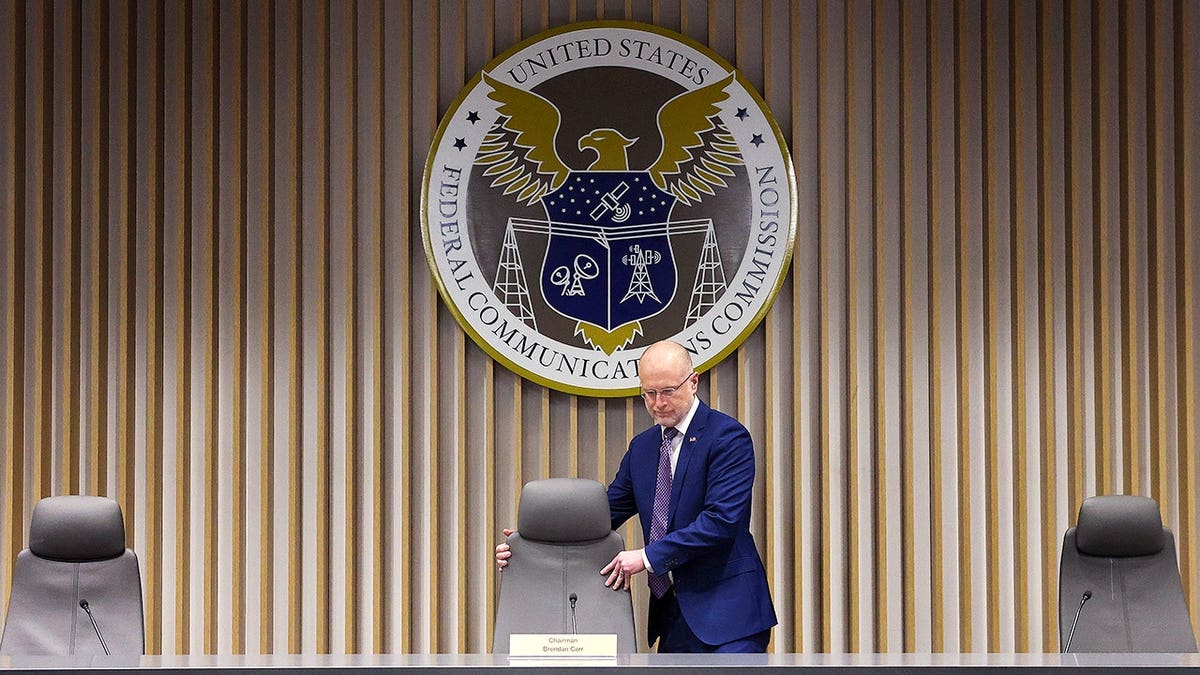
This opinion piece by Steve Forbes and Stephen Moore argues that the United States must accelerate the release of wireless spectrum to private industry, warning that delays risk ceding ground to China in the race for telecommunications and AI infrastructure dominance. The authors welcome a newly announced "super band" spectrum auction from Federal Communications Commission Chairman Brendan Carr, presenting it as a rare policy that simultaneously boosts investment, strengthens national security, benefits consumers and generates federal revenue without new taxation.
The piece frames spectrum as an invaluable but underused national resource, arguing that freeing it up for commercial use would support next-generation wireless networks and data-intensive technologies such as AI. It ties the debate to broader concerns about US-China competition, referencing China's rapid progress in areas like artificial intelligence as evidence that Washington cannot afford to leave valuable airwaves idle or tied up in regulatory delay.
In short
- Authors urge faster release of US wireless spectrum for private use
- FCC's new "super band" spectrum auction praised as rare win-win policy
- Piece warns delay risks letting China gain a tech advantage
Steelman: both sides, in good faith
The strongest fair case each way — we don't pick a winner.
The case for
Accelerating spectrum release to private industry represents sound economic and security policy. Spectrum is a finite public resource currently underutilised, and faster deployment by private carriers—which operate more efficiently than government—would strengthen America's competitive position against China in telecommunications and AI infrastructure. Auctions generate federal revenue whilst simultaneously incentivising competitive investment and improving consumer services, making this a rare policy that serves multiple national interests without new taxation or government expenditure.
The case against
Legitimate concerns exist about displacing critical non-commercial spectrum uses that serve genuine public needs. Government operations, emergency services, weather forecasting, scientific research, and military communications require adequate spectrum allocation, and rushing privatisation without ensuring these functions remain protected risks undermining national security and scientific capability. The debate is not opposition to private efficiency, but rather ensuring that in commercialising a finite public resource, essential public goods and government functions are adequately safeguarded.
Explained simply
Wireless spectrum is the range of radio frequencies used to carry signals for mobile phones, Wi-Fi, broadcasting and other wireless services. Governments manage access to these frequencies because different users’ signals can interfere with one another, and some parts of the spectrum are reserved for public services such as defence and emergency communications.
In the United States, the Federal Communications Commission oversees many commercial uses and can auction licences allowing companies to use particular frequencies. The debate is about how much spectrum should be made available for commercial networks, and when, as demand grows for faster wireless connections and computing services that use large amounts of data.
China’s technology development has added a national security and economic dimension to the debate. The question matters to mobile users, businesses and public agencies because decisions about access to spectrum can affect network investment and the services those networks support.
Asia Business Economy Entertainment Music World