Struggling pig farmers say £2m support package ‘not enough’
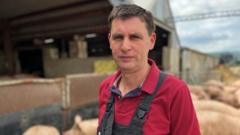
Scotland's agricultural department has announced a £2 million emergency support scheme to assist independent pig farmers facing severe financial losses. The crisis stems from an outbreak of African Swine Fever in Spain which disrupted export markets to Asia, leading to surplus pork inventory across Europe and collapsing wholesale prices. While farming representatives welcome the intervention, they argue the package falls short of addressing the scale of the problem affecting the sector.
A typical small-scale producer losing approximately £40 per animal would see their losses reduced to roughly £25 per pig under the scheme, according to one Aberdeenshire farmer interviewed. The initiative compensates farmers for the shortfall between market rates and 85% of a standardised benchmark price, though independent operators report receiving less than a third of the official rate. Industry figures suggest around 15% of the breeding herd has been lost since the year began, with forecasts of further exodus if prices remain below production costs, potentially increasing reliance on imported pork.
In short
- £2m support scheme partially offsets losses from African Swine Fever-triggered European oversupply
- Assistance reduces individual farm losses but stops short of restoring profitability
- Sector losing 15% of breeding stock since year start as farmers face worst crisis in 50 years
Steelman: both sides, in good faith
The strongest fair case each way — we don't pick a winner.
The case for
This crisis stems from an external shock—African Swine Fever in Spain—that disrupted established export markets beyond farmers' control and caused severe, sudden price collapse. The support scheme still leaves many operators at significant loss (approximately £25 per pig), which cannot be sustained indefinitely. If the breeding herd continues to shrink by 15% or more, Scotland will lose productive capacity and agricultural expertise, becoming increasingly dependent on imported pork with wider economic and environmental implications. A more substantial intervention is warranted to preserve the industry through a temporary external crisis.
The case against
Government has rapidly mobilised substantial emergency funding, and farming is inherently market-exposed with some price volatility unavoidable in commodity sectors. The 85% benchmark compensation reflects a reasonable compromise between preserving farm viability and maintaining market discipline; full compensation would be fiscally unsustainable and create perverse incentives to overproduce or maintain inefficient operations. Other interventions—import restrictions or indefinite subsidies—carry significant economic and trade risks. This targeted scheme provides meaningful support whilst avoiding policies that distort markets or create indefinite dependency on public funds.
Explained simply
Pig farmers in Scotland are facing severe financial losses following an outbreak of African Swine Fever in Spain which disrupted export markets to Asia. The disease led to a build-up of pork across Europe and caused wholesale prices to collapse far below the cost of production. Independent pig farmers are now unable to sell their animals at prices that cover their farming costs.
Since the beginning of the year, approximately 15% of Scotland's breeding herd has been taken out of production as farmers struggled to sustain their operations. A small-scale producer might lose around £40 per animal sold, a significant burden for businesses already operating on tight margins. Industry experts warn that if prices do not recover above production costs, more farms will close and the country will become increasingly reliant on imported pork.
The underlying issue is the gap between what pigs cost to raise and what farmers can sell them for in the current market. Pig farmers typically operate independently and depend entirely on achieving sales prices that cover their production costs. The combination of a European surplus and disrupted export markets has created conditions where many farmers cannot sustain their operations.