World news and discussion on TalkFuse.
Success Academy again shows what public schools can do — and the DOE doesn’t
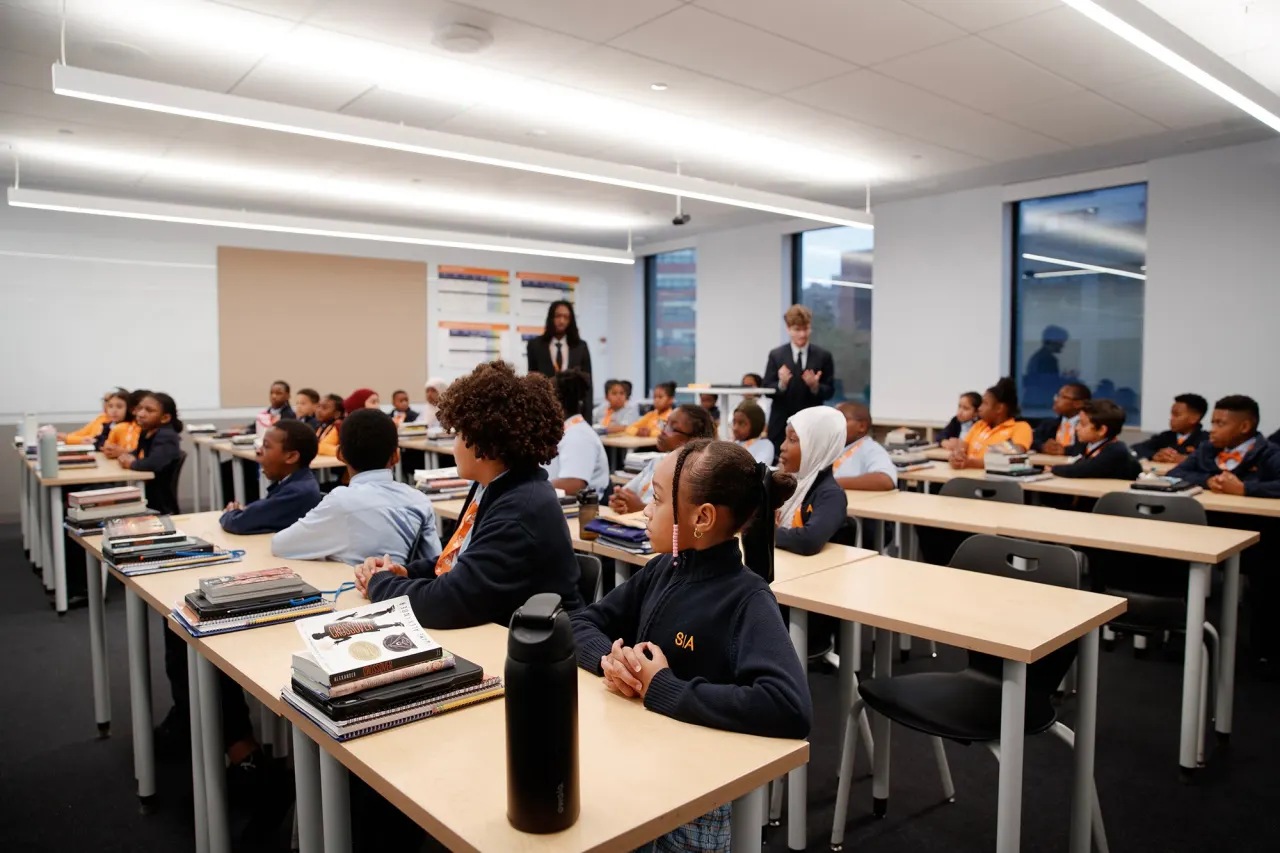
This New York Post opinion column argues that Success Academy, a network of charter schools, has again posted the strongest results on New York State reading and maths exams. Some 97% of its pupils were rated proficient or above in maths and 92% in English, ahead of the affluent suburb of Scarsdale. The writers use these results to argue that the city's Department of Education is failing many children, and that its approach, rather than poverty or systemic racism, explains the gap.
The column cites Department of Education figures showing that only about 50% of pupils reached proficiency in reading and 57% in maths, while the department spends roughly $45 billion a year, or over $40,000 per pupil. It notes that about 85% of Success pupils are economically disadvantaged and almost 90% are Black and/or Latino. The piece also criticises teachers' unions and the state Board of Regents, including plans to reduce the role of Regents Exams, and says Department of Education enrolment has fallen 20% since the Bloomberg years. These are the authors' claims and arguments rather than independently verified findings.
In short
- Success Academy charter pupils top New York State reading and maths pass rates.
- The column argues city public schools are failing many children.
- The opinion piece cites $45 billion in annual Department of Education spending.
Steelman: both sides, in good faith
The strongest fair case each way — we don't pick a winner.
The case for
Supporters of Success Academy and the broader charter school model argue that its results show what is achievable for disadvantaged children when schools are given autonomy, a longer school day, strict standards and accountability for outcomes. They point out that the network serves a student body that is mostly low-income and Black and Latino, so high proficiency rates challenge the assumption that poverty determines educational destiny. From this view, the priority should be to learn from models that work and to give families, especially those in poorly performing neighbourhoods, access to them, rather than to protect a system whose overall results they see as inadequate. Their concern is that children's life chances should not depend on where they happen to live.
The case against
Critics, including many teachers, unions and some education researchers, argue that comparing a selective charter network with a district that educates every child, including new arrivals, pupils with disabilities and those who change schools mid-year, is not like-for-like. They note that charter schools can counsel out or fail to backfill students who struggle, which can flatter test results, and that high-performing networks are not always replicable at scale. From this perspective, the district's broader responsibilities, the importance of public accountability and democratic oversight, and the role of teachers and communities in shaping schools matter as much as headline scores, and the persistent gap is better explained by out-of-school conditions and resource inequality than by a single institutional failing.
Explained simply
Success Academy is a network of charter schools in New York City. Charter schools receive public funding but are run independently of the local school district, and the network is known for its results on the state's annual reading and maths exams.
The city's Department of Education runs most of the traditional public schools and is one of the largest school systems in the United States. The state's Board of Regents sets education policy for New York State, while teachers' unions represent school staff in discussions about how schools are run. Proficiency, a term used throughout the column, means meeting the state's expected standard for a given grade.
The column argues that differences in pupils' results are better explained by how schools are run than by poverty or structural racism. Supporters and critics of charter schools often disagree on this point, and the figures and claims in the column are the authors' own rather than independently verified findings. The debate matters because it shapes decisions about school funding, parental choice and how the city and state respond to gaps in achievement between pupils.