Summer 2026 was Europe’s deadliest on record: Over 50,000 people died in urban areas – with climate change responsible for two thirds of deaths, study estimates
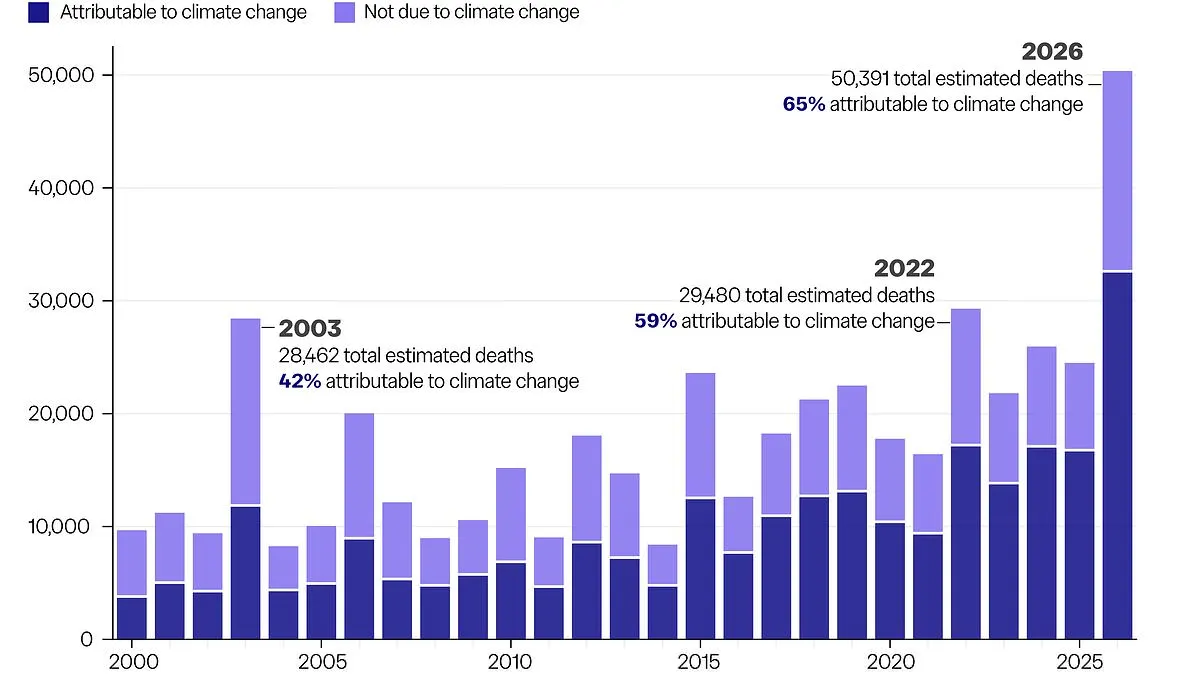
Researchers estimate that extreme heat caused 50,391 excess deaths across 854 urban areas in 30 European countries during summer 2026, making it the deadliest summer for heat-related deaths in their analysis. They estimate climate change contributed to about two-thirds of those deaths, highlighting the growing public-health impact of hotter summers.
Southern and western Europe had the highest death rates, while about 4,500 deaths were estimated in typically cooler countries such as the UK. Around 44,000 of the people who died were elderly, and nearly a third of the estimated deaths occurred between 17 June and 1 July, when daily average temperatures were about 5°C above average. Western Europe recorded its hottest summer, averaging 2.9°C above the 1991–2020 norm; the previous worst years in the analysis were 2003 and 2022, with 28,000 and 29,000 excess deaths respectively.
In short
- Heat was linked to 50,391 excess deaths in European cities.
- Researchers attribute about two-thirds of deaths to climate change.
- Nearly a third of deaths occurred in late June.
Explained simply
Heat can place severe strain on the body, especially during prolonged hot spells, and can worsen existing health problems. Researchers estimate heat-related deaths by comparing deaths during hot weather with what would normally be expected; these are estimates, rather than a count of deaths recorded as caused by heat.
The study covers 854 urban areas in 30 European countries. Its estimate that climate change contributed to many of the deaths comes from comparing observed temperatures with a modelled scenario without human-caused warming. Older people are particularly vulnerable to heat, and cities can remain hot because buildings and roads retain warmth.
These estimates matter for public health planning as summers become hotter. They can help governments and local authorities assess risks and prepare measures such as heat warnings, access to cool spaces and support for people at greater risk.
Climate Europe Research Science World