News, events and chat from Sheffield and South Yorkshire.
Summer drought exposes 15th-century Sheffield hunting lodge foundations
Developed over time first seen 3 months ago
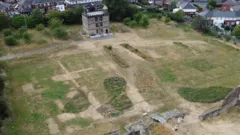
The foundations of a 15th-century hunting lodge have re-emerged at Manor Park in Sheffield, exposed by the summer's prolonged hot, dry weather. The lodge, first recorded in 1479 when George Talbot, 4th Earl of Shrewsbury, paid for repairs, predates the Tudor manor later built on the site, where Mary Queen of Scots was held prisoner during the 1570s and 1580s. Green Estate, which manages the historic deer park, said the drought offered an unusually clear view of buried archaeology that has remained hidden for centuries, underlining the importance of protecting the city's heritage.
Dr Hannah Wallace of Green Estate said she had never in five years seen the lodge's remains show so clearly in the parched grass, while Dr Camilla Allen of the University of Sheffield noted that such persistent drought reveals how the city was inhabited in earlier centuries. The lodge, thought to have served the Earl of Shrewsbury and his guests as a retreat from Sheffield Castle for hunting and socialising, was dismantled at the end of the 16th century, with its materials reused elsewhere. Excavations by Sheffield City Museums in the 1960s and 1970s uncovered glass, pottery and deer bones, pointing to a luxurious medieval residence; today only the Turret House survives above ground from the later Tudor complex.
- Sources
- 2
- Outlets
- 2
- Left · Centre · Right
- 0 · 1 · 0
In short
- Drought reveals foundations of a 1479 Sheffield hunting lodge
- Site later held Mary Queen of Scots as prisoner
- Past digs found glass, pottery, deer bones, showing luxury
How this story developed
- 3 months ago New details have emerged about the Sheffield hunting lodge whose foundations were revealed by summer drought, including archaeological finds and comments from researchers involved with the site.
- 3 months ago Prolonged dry weather across Sheffield this summer has revealed buried archaeological traces of a medieval hunting lodge, showing parch marks that outline the foundations, walls, and towers of the site's earliest known structure.
- 3 months ago The foundations of a 15th-century hunting lodge have re-emerged at Manor Park in Sheffield, exposed by the summer's prolonged hot, dry weather.
Full account
The foundations of a 15th-century hunting lodge have re-emerged in Manor Park, Sheffield, after months of hot, dry weather stripped away the usual cover of grass. The outlines of walls and towers belonging to the earliest known building on the site have become visible as parchmarks, offering a rare glimpse of a structure dismantled more than 300 years ago.
Manor Park was once a medieval deer park attached to Sheffield Castle, and records show the lodge standing there by 1479, when George Talbot, 4th Earl of Shrewsbury, paid for repairs to be carried out. The lodge is thought to have served as a retreat where the earl and his guests hunted and socialised away from the castle in what is now the city centre. It predates a later Tudor manor house on the same site, remembered chiefly as one of the places where Mary, Queen of Scots was held captive during the 1570s and 1580s. Most of the Tudor buildings were pulled down in the 18th century, leaving only the Turret House standing today.
The lodge's foundations became visible because buried stonework and other remains beneath the soil alter how vegetation grows above them, a phenomenon that shows up most clearly during prolonged dry spells. Staff at Green Estate, the charity that cares for the park, used drone photography to capture the pattern in detail. Dr Hannah Wallace, the organisation's learning and interpretation coordinator, said she had worked at the site for five years without seeing the remains appear so distinctly, describing the heatwave as a reminder of how much heritage lies hidden underground and of the pressures a changing climate is placing on it.
The lodge's history was previously pieced together through excavations carried out in the 1960s and 1970s by Sheffield City Museums staff, volunteers and schoolchildren, which turned up glass, pottery and deer bones pointing to a well-appointed medieval residence. Those digs also established that the building was carefully taken apart at the end of the 16th century, its materials reused elsewhere. Dr Camilla Allen, of the University of Sheffield's department of landscape architecture, said the episode illustrated how the city's medieval past, usually hidden from view, becomes visible during a drought as severe as this one, offering a window onto centuries of change in how the land has been used.
Where outlets differ
From the full account, which is AI-written from the sources:
Only one of the two supplied sources contained usable reporting: the BBC account of the Manor Park discovery. The other source did not return any article text — it consisted solely of a Google sign-in/cookie-consent page with no content about the story — so no genuine cross-outlet comparison of emphasis or detail was possible for this account.
Within the BBC piece itself, quotes came from two different specialists with distinct emphases: Dr Hannah Wallace (Green Estate) framed the find in terms of heritage protection and climate change, while Dr Camilla Allen (University of Sheffield) emphasised what the drought reveals about the city's layered, often-invisible history.
The BBC report also listed links to related stories about heatwave-exposed sites elsewhere (lost gardens, Welsh archaeological sites), but these were adjacent stories rather than alternative coverage of the Sheffield lodge itself, so they have not been treated as comparative sources.
Explained simply
Manor Park in Sheffield contains the remains of a hunting lodge built in the 15th century for George Talbot, the 4th Earl of Shrewsbury, first recorded in 1479. It was a retreat where the Earl and his guests hunted and entertained away from Sheffield Castle, and it predates the later Tudor manor built on the same site, where Mary Queen of Scots was famously held prisoner during the 1570s and 1580s.
The lodge itself was taken down at the end of the 16th century, its materials reused elsewhere, and most of the later Tudor buildings were demolished in the 18th century, leaving only the Turret House still standing. Archaeologists from Sheffield City Museums excavated the site in the 1960s and 70s, finding glass, pottery and deer bones that pointed to a life of comfort and leisure there.
The site is now cared for by the Green Estate, and researchers from the University of Sheffield have also studied it. Its buried foundations occasionally become visible as parch marks in dry grass, offering rare insight into how the area looked centuries ago, which is why prolonged drought conditions can bring long-hidden features back into view.