News, events and chat from Sheffield and South Yorkshire.
‘Summer of chaos’ for train passengers, says mayor
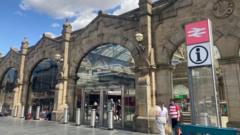
East Midlands Railway (EMR) has cut services on its intercity route between Sheffield, Nottingham and London at short notice, prompting sharp criticism from South Yorkshire mayor Oliver Coppard, who described passengers as facing a "summer of chaos". Coppard said he was only told of the reduced timetable on Friday afternoon, with no clear end date, and criticised EMR for poor communication as the cuts coincided with large numbers of people travelling to Sheffield for the Tramlines music festival.
EMR blamed reliability and maintenance problems affecting its new Hitachi-built Class 810 trains, which entered service in December 2025 after a three-year delay, alongside issues maintaining its existing Class 222 fleet. The operator said it had tried to spread reduced services evenly across its Sheffield, Nottingham and London routes and would keep the temporary timetable under review. Henri Murison of the Northern Powerhouse Partnership said the situation had "spiralled entirely out of control" and has, along with Coppard, raised the matter with the Department for Transport and rail minister Lord Henry, while Hitachi Rail said it was working with EMR as more new trains enter service.
In short
- EMR slashes Sheffield-London services at short notice, angering passengers
- New Hitachi Class 810 trains blamed for reliability and maintenance issues
- Mayor and business leaders demand DfT intervention over "chaos"
Steelman: both sides, in good faith
The strongest fair case each way — we don't pick a winner.
The case for
East Midlands Railway faced genuine operational constraints: its newly introduced Class 810 trains, delayed three years before entering service in December 2025, have experienced reliability problems, whilst the existing Class 222 fleet also requires maintenance attention. When such technical difficulties emerge, service reductions may be unavoidable for safety and operational reasons. The operator sought to distribute cuts evenly across its routes and is working actively with suppliers to resolve the issues, suggesting a pragmatic response to inherited difficulties rather than negligence.
The case against
Whatever technical problems existed, a railway operator's fundamental responsibility is to manage through difficulties with proper planning and communication. EMR provided minimal notice—Friday afternoon for immediate changes with no defined end date—leaving passengers and local authorities unable to plan, particularly damaging during the Tramlines festival when demand peaks. The three-year delay in introducing these trains suggests inadequate project oversight from the outset. Earlier consultation with stakeholders and more thoughtful scheduling of maintenance could have substantially mitigated passenger disruption; the sharp criticism reflects a failure of operational management and stakeholder communication rather than inevitable circumstances.
Explained simply
East Midlands Railway is the train operator responsible for intercity rail services between Sheffield, Nottingham and London. These are busy routes carrying thousands of passengers daily between the East Midlands and London.
The operator has recently introduced new Class 810 trains supplied by Hitachi Rail. These trains entered service in December 2025, following a three-year delay in their development and testing.
The company operates both the newer Class 810 trains and existing Class 222 units on these routes. Problems with either fleet's maintenance or reliability can require the operator to reduce services.