Swedish hard-Right set to miss out on breakthrough role in government as centre-Left takes narrow lead in knife-edge election
Developed over time first seen 2 months ago
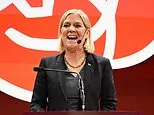
Sweden's centre-Left opposition, led by Magdalena Andersson, secured a narrow election victory, ending the four-year rule of Prime Minister Ulf Kristersson's Right-wing coalition and blocking the hard-Right Sweden Democrats from a hoped-for first-ever place in government. The result marks a potential reversal of Sweden's shift towards restrictive immigration policy pursued over the past term, and returns Andersson, a former prime minister, to power at the head of a Left-leaning bloc that pledged more welfare spending and greater social cohesion.
Preliminary results gave Andersson's bloc 176 of the 349 parliamentary seats against 173 for Kristersson's four-party coalition, a margin of just 0.45 per cent of the vote, with the Sweden Democrats losing an estimated 11 seats. Both sides were initially cautious about declaring the outcome, mindful that a similar early centre-Left lead in 2022 had proved premature, but the lead held once outstanding districts and overseas ballots were counted. Forming a government is expected to be complicated, as the Centre Party has ruled out sharing power with the Left Party, which insists it must be included in any coalition; the outcome is not expected to alter Sweden's pro-Western, pro-Ukraine foreign policy stance.
- Sources
- 2
- Outlets
- 2
- Left · Centre · Right
- 1 · 0 · 1
In short
- Sweden's centre-Left bloc wins election, ousting Kristersson's Right-wing coalition
- Hard-Right Sweden Democrats miss out on first government role, lose seats
- Coalition talks likely complicated by Centre-Left party disagreements
How this story developed
- 1 month ago Sweden's centre-Left opposition has edged closer to power, with preliminary results now showing Magdalena Andersson's bloc holding a three-seat lead in parliament, up from the earlier razor-thin margin.
- 2 months ago Sweden's centre-Left opposition, led by former prime minister Magdalena Andersson of the Social Democrats, looked set to return to power after a knife-edge general election, dealing a setback to the hard-Right Sweden Democrats who had hoped to secure their first-ever cabinet posts.
- 2 months ago Sweden's centre-Left opposition, led by Magdalena Andersson, secured a narrow election victory, ending the four-year rule of Prime Minister Ulf Kristersson's Right-wing coalition and blocking the hard-Right Sweden Democrats from a hoped-for first-ever place in government.
Where outlets differ
Left-leaning outlets 1
- Sweden's Next Government Uncertain With Thin Lead For Left-Wing Opposition After Tight ElectionHuffPost
Only here: sweden, next, uncertain, thin, wing
Right-leaning outlets 1
Only here: swedish, hard, right, miss, breakthrough
Every side used: government, lead, left, election
Headline columns compared word for word; nothing in them is AI-written.
Steelman: both sides, in good faith
The strongest fair case each way — we don't pick a winner.
The case for
Supporters of the Kristersson coalition and its reliance on Sweden Democrat backing argue that four years of tougher immigration and integration rules have been a necessary correction after decades of high inflows strained housing, welfare services and social cohesion, and that continuity is needed to see these reforms bed in. They contend that voters who backed the Right did so knowingly, valuing stronger border controls, tougher crime measures and a more assertive stance on integration, and that a change of government mid-term risks reversing hard-won gains before their effects can be properly assessed. For many on this side, the Sweden Democrats' growing role reflects a legitimate and overdue widening of the mainstream political conversation rather than a threat to it.
The case against
Supporters of Magdalena Andersson's bloc argue that a narrow centre-Left majority represents a democratic correction against policies they see as having eroded Sweden's traditions of openness, generous welfare and social solidarity. They hold that the Sweden Democrats' hard-Right platform pushed the governing coalition into positions on immigration and rhetoric that many voters found excessive or divisive, and that a change in direction is needed to restore a more inclusive, consensus-based approach to social policy. For them, the tight result signals that voters are wary of embedding a populist-Right party more deeply into government, even if forming a workable coalition of their own, given tensions with the Centre and Left parties, will be far from straightforward.
Explained simply
Sweden holds parliamentary elections every four years, and this one has come down to a tight contest between two blocs: a centre-Left group led by Magdalena Andersson, and a centre-Right coalition led by current Prime Minister Ulf Kristersson. Kristersson's government has relied heavily on support from the Sweden Democrats, a hard-Right party with roots in the far-Right that has never formally held ministerial posts but has shaped policy from outside government, particularly on immigration.
The Sweden Democrats had been hoping this election would finally bring them into government itself, marking a significant shift in how mainstream Swedish politics treats the party. Their performance matters beyond Sweden's borders too, as it is often read as a barometer for the strength of hard-Right movements across Europe.
Because the result is so close, with the outcome hinging on a fraction of a percentage point and thousands of remaining votes still to be counted, the final make-up of parliament may not be settled for some time. Even once the count is finished, Sweden's multi-party system means forming a government often requires tricky negotiations between parties that do not always agree with one another.
Coverage · 2 sources
Bias meters
From 2 rated sources.
Elections Government Politics World