World news and discussion on TalkFuse.
Swinney backs Holyrood’s authority to decide Scotland’s referendum timing
Developed over time first seen 2 months ago
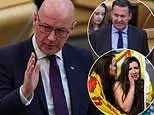
Scottish First Minister John Swinney led a Holyrood debate asserting Scotland’s status as a nation and arguing that the Scottish Parliament, rather than Westminster, should decide when another independence referendum is held. The motion exposed divisions over constitutional authority and priorities, with critics arguing that the SNP was revisiting independence instead of addressing domestic problems.
Reform’s Malcolm Offord sought to stop the debate by citing the Supreme Court’s view that referendum arrangements are reserved to Westminster, but withdrew his amendment after it was rejected. Scottish Labour leader Michael Marra said Swinney was using the issue to manage his party rather than lead the country, while opposition speakers highlighted Scotland’s drug-death rate, weaker education results than England and ferry-building difficulties; SNP and Green MSPs defended Holyrood’s right to debate the matter.
- Sources
- 3
- Outlets
- 1
- Left · Centre · Right
- 0 · 0 · 3
In short
- Swinney backed Holyrood’s right to determine a future independence referendum.
- Reform challenged the debate, citing Westminster’s constitutional authority.
- Critics said independence was distracting from Scotland’s domestic problems.
How this story developed
- 2 months ago The debate centred on Scotland's 1989 Claim of Right, cited by nationalists as underpinning the nation's right to self-determination, whilst Labour leader Michael Marra characterised the motion as an exercise in internal party management rather than genuine independence pursuit, with nationalist and Green MSPs cheering as Reform UK withdrew its amendment.
- 2 months ago The motion came 12 years after Scotland's 2014 referendum, in which 55 per cent voted to remain in the Union, and the Presiding Officer permitted the debate to proceed despite Westminster's insistence that such constitutional matters remained reserved to the UK Parliament.
- 2 months ago Scottish First Minister John Swinney tabled a motion in the Scottish Parliament asserting Scotland's right to determine when an independence referendum should be held, a position that exposed divisions over constitutional authority between nationalists defending Holyrood's powers and opponents contending that Westminster retained control.
- Daily Mail STEPHEN DAISLEY: Ross Greer had the wide eyed excitement of a schoolboy reciting his ‘What I did on my holiday’ essay…
- Daily Mail EUAN McCOLM: This debate wasn’t about independence, it was about managing John Swinney’s own party…
- Daily Mail Swinney defends fresh independence referendum debate amid domestic crises
Full account
On a Tuesday afternoon in September, the Scottish Parliament assembled to examine whether Scotland possessed the democratic right to determine when a future independence referendum might be held. First Minister John Swinney had introduced a motion asserting that, as a nation, Scotland retained authority over such constitutional matters rather than deferring to Westminster. This represented the second parliamentary debate on the independence question since May's Holyrood elections. The proceedings proved contentious, with Reform UK orchestrating a walkout in protest, with party leader Malcolm Offord contending that debating a constitutionally reserved matter breached parliamentary boundaries.
Swinney maintained that the prerogative to decide Scotland's future belonged to the electorate rather than to individual politicians or parties. He characterised resistance to another referendum as divisive and dismissive of independence supporters' legitimate views. The debate invoked historical grounding, with Scottish Greens representatives citing the 1989 Claim of Right to anchor their position. Supporters argued that determining referendum timing represented a fundamental democratic principle. Notably, even critics of the motion conceded Scotland's theoretical entitlement to democratic choice—the substantive disagreement concerned whether that choice had already been exercised definitively in 2014, when 55 per cent of voters backed remaining in the United Kingdom.
Opposition voices pivoted focus toward what they characterised as neglected governance priorities. Statistical evidence released on the day of debate indicated that Scottish child mortality exceeded rates in other UK nations, whilst homelessness had reached unprecedented levels and public finances faced significant strain. Reform's Offord dismissed the debate as divorced from constituent concerns, arguing that parliamentarians should address healthcare provision, drug-related deaths, and fiscal management instead. Conservative representatives similarly cast the proceedings as dismissive of the earlier referendum outcome and the expressed will of over two million voters. Offord denounced what he termed a tactical exercise designed to maintain internal party cohesion ahead of the SNP conference.
Beneath the immediate dispute lay competing assessments of the debate's actual purpose. Michael Marra, Scottish Labour's freshly elected leader, proposed that Swinney deployed the motion not to advance independence realistically but rather to manage factional pressures within his own organisation, thereby misleading supporters about genuine prospects. Financial complications within SNP accounts, partly traceable to expenditure decisions by former chief executive Peter Murrell, further complicated claims of organisational readiness for constitutional change. Some observers noted that Holyrood, operating for three decades, had yet to demonstrate decisive improvements across public services—a gap that constitutional debates might obscure rather than illuminate.
Where outlets differ
From the full account, which is AI-written from the sources:
Source 1 foregrounds specific statistical crises (elevated child mortality, record homelessness) released concurrently with the debate as context for opposition; Sources 2 and 3 reference these crises more obliquely as evidence of governmental underperformance, with Source 3 adding poor PISA rankings and ferry-building failures
Source 1 emphasises this being the second debate since May elections with SNP falling short of majority status; Sources 2 and 3 indicate the debate is recurring or annual rather than episodic
Source 2 uniquely specifies SNP financial irregularities and Peter Murrell's spending patterns as relevant context; Sources 1 and 3 omit this detail
Source 3 employs heavy satirical commentary throughout; Sources 1 and 2 maintain more straightforward tones, though Source 2 is opinion-oriented
Source 3 specifically highlights the 1989 Claim of Right invocation; Sources 1 and 2 do not mention this historical reference
Sources 2 and 3 both feature Michael Marra's argument that the debate functions to manage party rather than govern country; Source 1 does not include this analysis
Source 1 includes substantial quotation from Conservative leader Russell Findlay; Sources 2 and 3 do not focus on Conservative positioning
Source 3 characterises the Presiding Officer as 'Nationalist' to suggest bias in proceedings; Sources 1 and 2 report his ruling without this framing
Steelman: both sides, in good faith
The strongest fair case each way — we don't pick a winner.
The case for
Advocates for Scottish Parliament's authority argue that Scotland is a distinct nation with an inherent right to self-determination, rooted in the historical Claim of Right which asserts the Scottish people as the ultimate sovereign authority over Scotland's constitutional future. They contend that when a significant portion of Scotland's population seeks constitutional change, the democratically elected Scottish Parliament should be empowered to put that question to voters rather than remain subordinate to Westminster on matters fundamentally concerning Scotland's future. In this view, genuine democracy requires that a nation's people retain the right to determine their own constitutional arrangements.
The case against
Opponents maintain that the Supreme Court has definitively ruled such referendums to be reserved UK powers, and that constitutional stability requires established legal procedures rather than unilateral action by one constituent nation. They argue that whilst self-determination holds value, it must operate within a constitutional framework that protects the union's integrity and requires collective agreement on fundamental changes. Critics also contend that Holyrood should prioritise Scotland's substantial domestic crises—record drug deaths, educational performance gaps, and economic difficulties—rather than pursue constitutional debates that may distract from urgent governance.
Explained simply
Scotland has its own parliament at Holyrood in Edinburgh, but the UK Parliament at Westminster in London retains ultimate legal authority over certain matters, including deciding whether to hold an independence referendum. There is an ongoing dispute about whether Scotland's parliament should have the power to call a referendum on leaving the United Kingdom. The Supreme Court ruled in 2023 that such decisions remain under Westminster's control, a judgment that nationalist politicians oppose.
The Scottish National Party, which leads the government, has long campaigned for Scottish independence and argues that the Scottish people should have the right to determine their country's constitutional future. They draw on a 1989 legal document known as the Claim of Right to support this position. Opposition parties, however, argue that the SNP repeatedly uses these constitutional debates without making concrete progress towards independence, and they question whether this focus reflects Scotland's true priorities.
Critics across the opposition benches contend that Scotland faces urgent domestic problems that require government attention, including rising drug deaths, educational standards lagging behind England, and difficulties in major shipbuilding projects. They suggest the government prioritises constitutional debate over practical governance. This tension between focusing on independence versus addressing immediate public concerns reflects a broader political divide in Scottish politics about what the government should concentrate on.
Coverage · 3 sources
Bias meters
From 3 rated sources.
- Daily MailRightSwinney defends fresh independence referendum debate amid domestic crises
- Daily MailRightEUAN McCOLM: This debate wasn’t about independence, it was about managing John Swinney’s own party…
- Daily MailRightSTEPHEN DAISLEY: Ross Greer had the wide eyed excitement of a schoolboy reciting his ‘What I did on my holiday’ essay…
Americas Art Culture Elections Government Politics Software Technology Travel UK World