Entertainment news and discussion on TalkFuse.
Sylvester Stallone Rejected Trump’s Hollywood Ambassadorship: “It’s Impossible”
Developed over time first seen 2 months ago
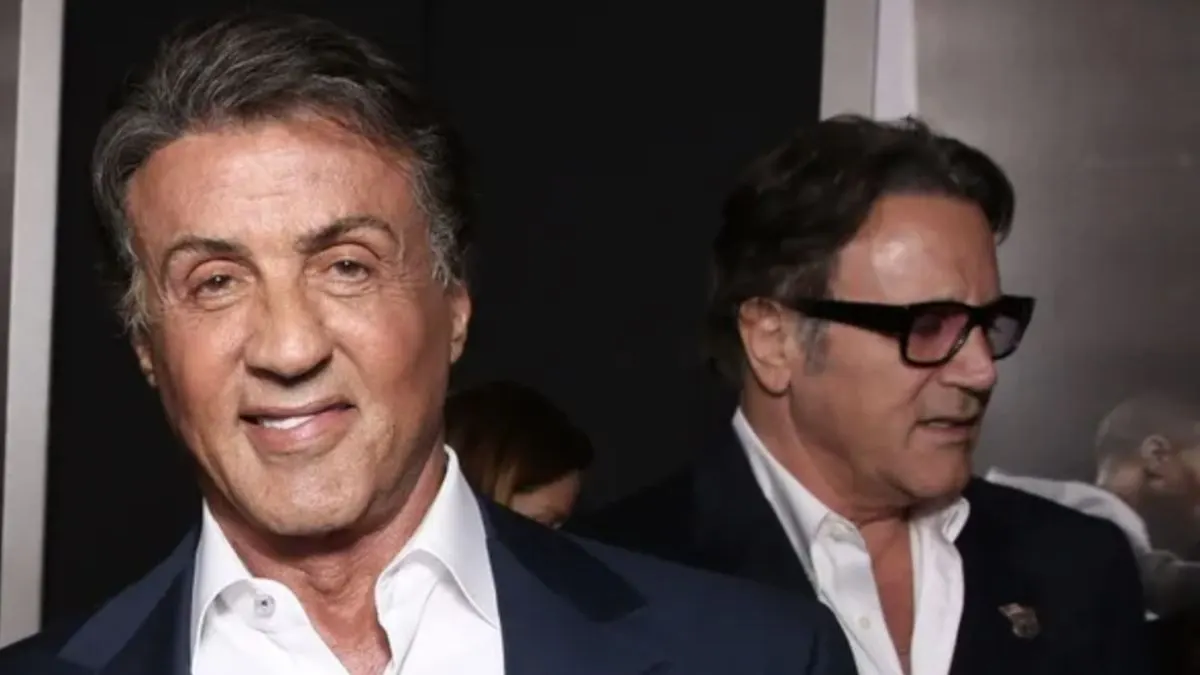
Sylvester Stallone has said he rejected Donald Trump’s proposed role as a special ambassador to Hollywood, despite being publicly announced for the position in early 2025 alongside Mel Gibson and Jon Voight. Stallone said he only learnt of the appointment while watching television and considered the role impossible because Hollywood is a decentralised, corporate industry made up of independent studios.
Jon Voight, however, has embraced the position and has campaigned for a federal tax credit for US film and television productions. Trump subsequently said he would encourage Republicans and Democrats to develop legislation offering production incentives, arguing that this could create entertainment jobs in America.
- Sources
- 2
- Outlets
- 2
- Left · Centre · Right
- 0 · 0 · 1
In short
- Stallone rejected Trump’s Hollywood ambassadorship.
- He said Hollywood’s structure made the role unworkable.
- Jon Voight is lobbying for federal film tax credits.
How this story developed
- 2 months ago Sylvester Stallone has clarified that he rejected Donald Trump's offer to serve as special ambassador to Hollywood, discovering his public appointment via television rather than direct communication.
- 2 months ago Sylvester Stallone has disclosed that he rejected an offer to serve as one of Donald Trump's special ambassadors to Hollywood, contradicting the president's public announcement made in early 2025.
- 2 months ago Sylvester Stallone has said he rejected Donald Trump’s proposed role as a special ambassador to Hollywood, despite being publicly announced for the position in early 2025 alongside Mel Gibson and Jon Voight.
Full account
Sylvester Stallone has disclosed that he declined an ambassadorial appointment offered by President Donald Trump to serve as a special envoy to Hollywood, a position that contradicts the president's public announcement naming him alongside Mel Gibson and Jon Voight. In recent remarks to The Sunday Times, the 80-year-old performer explained his decision to refuse the role, which Trump had framed as instrumental in revitalising American film and television production.
Trump announced the three-actor delegation in January 2025, shortly before his second inauguration, positioning the appointment as a means through which the individuals would serve as the president's "eyes and ears" within the entertainment sector and advise on efforts to restore Hollywood's commercial standing. Stallone discovered his assignment not through official channels but whilst watching television news coverage, experiencing the announcement simultaneously with the general public. He recalled learning of his designation through a broadcast report, expressing bewilderment at finding himself named without prior consultation.
Stallone articulated his rationale for refusing the appointment by characterising Hollywood's industrial structure as fundamentally resistant to unified external influence. He described the sector as comprising competing territorial domains, with major studios functioning as autonomous entities unlikely to accept guidance from outside figures. Drawing parallels with feudal systems, Stallone contended that his own independent working style, shared with Gibson and Voight, rendered him particularly unsuitable for a role requiring systematic coordination among rival corporate interests. He conveyed to Trump that the initiative was impractical, emphasising that Hollywood's self-directed evolution would proceed regardless of ambassadorial intervention.
The appointments have produced disparate consequences among the three designees. Whilst Stallone has distanced himself from the role, Voight has actively embraced his ambassadorial position and pursued a substantive agenda centred on federal tax incentives for domestic productions. Trump has demonstrated receptiveness to Voight's advocacy, subsequently championing bipartisan legislative efforts to establish production tax credits. Gibson, similarly surprised by his appointment upon learning of it through Trump's announcement, nevertheless indicated willingness to contribute to the initiative as a civic responsibility.
Where outlets differ
From the full account, which is AI-written from the sources:
Source 1 emphasises Stallone's direct conversation with Trump in which he declined and highlights Voight's active engagement securing Trump's backing; Source 2 emphasises the element of surprise and Stallone being blindsided by television announcement
Source 1 focuses on corporate resistance and structural impediments; Source 2 emphasises the fundamental impracticability of the ambassadorial role itself
Source 1 provides Trump's late-August statements about working with Voight on tax credits; Source 2 provides Trump's original January 16, 2025 Truth Social post with his full rhetorical language about 'Golden Age of Hollywood'
Source 2 explicitly notes Mel Gibson's reaction to being surprised; Source 1 does not emphasise Gibson's response
Steelman: both sides, in good faith
The strongest fair case each way — we don't pick a winner.
The case for
An ambassador could still serve valuable functions without needing to restructure Hollywood. Federal policy advocacy—such as negotiating tax credits, tariffs, or production incentives, as Voight is pursuing—benefits the entire industry and requires a unified advocate rather than industry consensus. An ambassador could facilitate dialogue between administration and studio leadership, coordinate on shared interests like American job creation and content preservation, and amplify the entertainment sector's concerns in government. The role need not wield authority to be substantively useful.
The case against
Stallone's assessment reflects Hollywood's structural reality: studios operate as autonomous entities with competing interests and no unified voice to coordinate. An external ambassador lacks the insider relationships, capital leverage, and cultural standing that studios actually respond to, leaving them in a position of persuasion without power. Without genuine authority to offer or withdraw, the ambassador becomes largely symbolic—unable to broker meaningful agreements or implement industry-wide initiatives. The decentralised nature means even well-intentioned advocacy founders on the fragmentation that makes any single representative implausible as a true voice for 'Hollywood'.
Explained simply
Donald Trump announced in early 2025 that he would appoint several prominent entertainment figures as special ambassadors to Hollywood. This reflected his broader strategy of using appointed representatives to engage with major American industries and business sectors. The ambassadorships were meant to give the entertainment industry a formal channel to the administration.
Sylvester Stallone was named as one of these ambassadors but has since rejected the position. He argued the role would not be viable because Hollywood operates as a collection of independent corporate entities rather than a unified industry that can be directed by a single envoy. He also discovered his appointment through television coverage rather than being asked directly.
Fellow actor Jon Voight, also appointed as an ambassador, has pursued the role actively and substantively. He has used the position to advocate for federal tax credits aimed at boosting American film and television production. Trump has subsequently endorsed legislation to create such incentives, indicating that Voight's efforts within the ambassadorship have gained traction.
Coverage · 2 sources
Celebrity Entertainment Film Government Politics